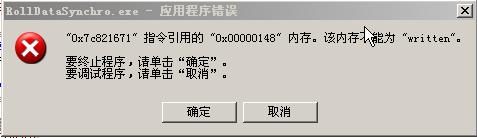
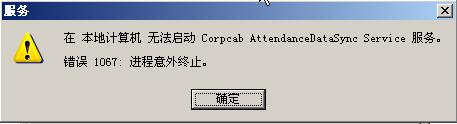
StartService 在某台机子上启动服务失败

LBJAMS 2013-09-25 07:57:01
我在我现在的机子上面编译一个服务程序,release版本的,但是运行到StartService 这个函数的时候抱,下面图片所示的错误。
如果是Debug版本不会出现这个错误,在别的机子上release,debug版本都不会出现错误,这是为什么,有大虾遇到过这个问题没?帮忙解决了!
...全文
752 8 打赏 收藏 举报
写回复
用AI写文章
8 条回复
切换为时间正序
请发表友善的回复…
发表回复
赵4老师 2013-09-27
  • 打赏
  • 举报
回复
“找出错误”和“找出发生错误的根源”不是一回事。 在发生错误的地方和调用最底层函数以及上面各层函数处加日志,输出各层函数参数及其返回值,还可以加上相关变量的值,然后运行看日志。
LBJAMS 2013-09-27
  • 打赏
  • 举报
回复
引用 6 楼 zhao4zhong1 的回复:
点击Call Stack更下边的行,查看更外层的调用。 如果还是看不出来,在各层加日志,输出函数参数及其返回值,还可以加上相关变量的值,然后运行看日志。 写日志参考下面:
#include <stdio.h>
#include <stdlib.h>
#include <string.h>
#ifdef WIN32
    #include <windows.h>
    #include <io.h>
#else
    #include <unistd.h>
    #include <sys/time.h>
    #include <pthread.h>
    #define  CRITICAL_SECTION   pthread_mutex_t
    #define  _vsnprintf         vsnprintf
#endif
//Log{
#define MAXLOGSIZE 20000000
#define MAXLINSIZE 16000
#include <time.h>
#include <sys/timeb.h>
#include <stdarg.h>
char logfilename1[]="MyLog1.log";
char logfilename2[]="MyLog2.log";
static char logstr[MAXLINSIZE+1];
char datestr[16];
char timestr[16];
char mss[4];
CRITICAL_SECTION cs_log;
FILE *flog;
#ifdef WIN32
void Lock(CRITICAL_SECTION *l) {
    EnterCriticalSection(l);
}
void Unlock(CRITICAL_SECTION *l) {
    LeaveCriticalSection(l);
}
#else
void Lock(CRITICAL_SECTION *l) {
    pthread_mutex_lock(l);
}
void Unlock(CRITICAL_SECTION *l) {
    pthread_mutex_unlock(l);
}
#endif
void LogV(const char *pszFmt,va_list argp) {
    struct tm *now;
    struct timeb tb;

    if (NULL==pszFmt||0==pszFmt[0]) return;
    _vsnprintf(logstr,MAXLINSIZE,pszFmt,argp);
    ftime(&tb);
    now=localtime(&tb.time);
    sprintf(datestr,"%04d-%02d-%02d",now->tm_year+1900,now->tm_mon+1,now->tm_mday);
    sprintf(timestr,"%02d:%02d:%02d",now->tm_hour     ,now->tm_min  ,now->tm_sec );
    sprintf(mss,"%03d",tb.millitm);
    printf("%s %s.%s %s",datestr,timestr,mss,logstr);
    flog=fopen(logfilename1,"a");
    if (NULL!=flog) {
        fprintf(flog,"%s %s.%s %s",datestr,timestr,mss,logstr);
        if (ftell(flog)>MAXLOGSIZE) {
            fclose(flog);
            if (rename(logfilename1,logfilename2)) {
                remove(logfilename2);
                rename(logfilename1,logfilename2);
            }
        } else {
            fclose(flog);
        }
    }
}
void Log(const char *pszFmt,...) {
    va_list argp;

    Lock(&cs_log);
    va_start(argp,pszFmt);
    LogV(pszFmt,argp);
    va_end(argp);
    Unlock(&cs_log);
}
//Log}
int main(int argc,char * argv[]) {
    int i;
#ifdef WIN32
    InitializeCriticalSection(&cs_log);
#else
    pthread_mutex_init(&cs_log,NULL);
#endif
    for (i=0;i<10000;i++) {
        Log("This is a Log %04d from FILE:%s LINE:%d\n",i, __FILE__, __LINE__);
    }
#ifdef WIN32
    DeleteCriticalSection(&cs_log);
#else
    pthread_mutex_destroy(&cs_log);
#endif
    return 0;
}
//1-78行添加到你带main的.c或.cpp的那个文件的最前面
//81-85行添加到你的main函数开头
//89-93行添加到你的main函数结束前
//在要写LOG的地方仿照第87行的写法写LOG到文件MyLog1.log中
我就是利用写日志找出来的错误!
赵4老师 2013-09-26
  • 打赏
  • 举报
回复
用调试器(OD,WINDBG等)调试服务程序 To debug the initialization code of a service application, the debugger must be attached when the service is started. This is accomplished by creating a registry key: HKEY_LOCAL_MACHINE\SOFTWARE\Microsoft\Windows NT\CurrentVersion\Image File Execution Options\ProgramName The ProgramName is the image file for the service application you are debugging. Do not specify a path. For example, the ProgramName might look like MyService.exe. Under this key create a string data value called Debugger. The value of this string should be set to the full path of the debugger that will be used. For example, c:\Debuggers\windbg.exe In addition to setting this registry key, the service application must be marked as "interactive". This allows your service to interact with the desktop, and allows the debugger window to appear on your desktop. This again requires modifying a registry key: you must bitwise-or the type entry for your service with 0x100 (this is the value for SERVICE_INTERACTIVE_PROCESS according to Winnt.h). The exact location and name of this registry entry varies. For example: HKEY_LOCAL_MACHINE\SYSTEM\CurrentControlSet\Services\MyServiceKey Finally, you need to adjust the service application timeout. Otherwise, the service application will kill the debugger within 20 seconds after starting. Adjusting the timeout involves setting an entry in the following registry key: HKEY_LOCAL_MACHINE\SYSTEM\CurrentControlSet\Control Under this key, create a DWORD data value called ServicesPipeTimeout. Set this entry to the amount of time in milliseconds that you want the service to wait before timing out. For example, 60,000 is one minute, while 86,400,000 is 24 hours. 设置ServicesPipeTimeout后需要重启系统才生效 Now, when the service is started, the debugger will also start. When the debugger starts, it will stop at the initial process breakpoint, before the service has begun running. This allows you to set breakpoints or otherwise configure your debugging session to let you monitor the startup of your service. Another option is to place calls to the DebugBreak function in your service from the point at which you would like to break into the debugger. (For more information, see DebugBreak in the Platform SDK documentation.) If your service is running with other services in a Service Host Process, you may need to isolate the service into its own Service Host Process. 崩溃的时候在弹出的对话框按相应按钮进入调试,按Alt+7键查看Call Stack里面从上到下列出的对应从里层到外层的函数调用历史。双击某一行可将光标定位到此次调用的源代码或汇编指令处。
LBJAMS 2013-09-26
  • 打赏
  • 举报
回复
顶!!没有大神帮忙解决问题吗?
赵4老师 2013-09-26
  • 打赏
  • 举报
回复
点击Call Stack更下边的行,查看更外层的调用。 如果还是看不出来,在各层加日志,输出函数参数及其返回值,还可以加上相关变量的值,然后运行看日志。 写日志参考下面:
#include <stdio.h>
#include <stdlib.h>
#include <string.h>
#ifdef WIN32
    #include <windows.h>
    #include <io.h>
#else
    #include <unistd.h>
    #include <sys/time.h>
    #include <pthread.h>
    #define  CRITICAL_SECTION   pthread_mutex_t
    #define  _vsnprintf         vsnprintf
#endif
//Log{
#define MAXLOGSIZE 20000000
#define MAXLINSIZE 16000
#include <time.h>
#include <sys/timeb.h>
#include <stdarg.h>
char logfilename1[]="MyLog1.log";
char logfilename2[]="MyLog2.log";
static char logstr[MAXLINSIZE+1];
char datestr[16];
char timestr[16];
char mss[4];
CRITICAL_SECTION cs_log;
FILE *flog;
#ifdef WIN32
void Lock(CRITICAL_SECTION *l) {
    EnterCriticalSection(l);
}
void Unlock(CRITICAL_SECTION *l) {
    LeaveCriticalSection(l);
}
#else
void Lock(CRITICAL_SECTION *l) {
    pthread_mutex_lock(l);
}
void Unlock(CRITICAL_SECTION *l) {
    pthread_mutex_unlock(l);
}
#endif
void LogV(const char *pszFmt,va_list argp) {
    struct tm *now;
    struct timeb tb;

    if (NULL==pszFmt||0==pszFmt[0]) return;
    _vsnprintf(logstr,MAXLINSIZE,pszFmt,argp);
    ftime(&tb);
    now=localtime(&tb.time);
    sprintf(datestr,"%04d-%02d-%02d",now->tm_year+1900,now->tm_mon+1,now->tm_mday);
    sprintf(timestr,"%02d:%02d:%02d",now->tm_hour     ,now->tm_min  ,now->tm_sec );
    sprintf(mss,"%03d",tb.millitm);
    printf("%s %s.%s %s",datestr,timestr,mss,logstr);
    flog=fopen(logfilename1,"a");
    if (NULL!=flog) {
        fprintf(flog,"%s %s.%s %s",datestr,timestr,mss,logstr);
        if (ftell(flog)>MAXLOGSIZE) {
            fclose(flog);
            if (rename(logfilename1,logfilename2)) {
                remove(logfilename2);
                rename(logfilename1,logfilename2);
            }
        } else {
            fclose(flog);
        }
    }
}
void Log(const char *pszFmt,...) {
    va_list argp;

    Lock(&cs_log);
    va_start(argp,pszFmt);
    LogV(pszFmt,argp);
    va_end(argp);
    Unlock(&cs_log);
}
//Log}
int main(int argc,char * argv[]) {
    int i;
#ifdef WIN32
    InitializeCriticalSection(&cs_log);
#else
    pthread_mutex_init(&cs_log,NULL);
#endif
    for (i=0;i<10000;i++) {
        Log("This is a Log %04d from FILE:%s LINE:%d\n",i, __FILE__, __LINE__);
    }
#ifdef WIN32
    DeleteCriticalSection(&cs_log);
#else
    pthread_mutex_destroy(&cs_log);
#endif
    return 0;
}
//1-78行添加到你带main的.c或.cpp的那个文件的最前面
//81-85行添加到你的main函数开头
//89-93行添加到你的main函数结束前
//在要写LOG的地方仿照第87行的写法写LOG到文件MyLog1.log中
LBJAMS 2013-09-26
  • 打赏
  • 举报
回复
引用 4 楼 zhao4zhong1 的回复:
崩溃的时候在弹出的对话框按相应按钮进入调试,按Alt+7键查看Call Stack里面从上到下列出的对应从里层到外层的函数调用历史。双击某一行可将光标定位到此次调用的源代码或汇编指令处。
这个我知道,我知道错误的地方在哪里了,只是不知道为什么会产生这个错误!
赵4老师 2013-09-26
  • 打赏
  • 举报
回复
崩溃的时候在弹出的对话框按相应按钮进入调试,按Alt+7键查看Call Stack里面从上到下列出的对应从里层到外层的函数调用历史。双击某一行可将光标定位到此次调用的源代码或汇编指令处。
LBJAMS 2013-09-26
  • 打赏
  • 举报
回复
现在发现出错的并不是StartServeice出错的函数是:InternetCheckConnection这个函数,这个函数的第一个格式是http:///Sco/Personnel/WebServices/AttendanceService.asmx这样的 就会报错,如果是http://189.99/Sco/Personnel/WebServices/AttendanceService.asmx这种 就不会报错,这是为什么呢?就是在 http://和/Sco/Personnel/WebServices/AttendanceService.asmx这个之间不能为空就不会报错,这是为什么呢?
源码直接下载地址: https://pan.quark.cn/s/387d7c8f6289 在使用IE浏览器的过程中,偶尔会出现重置为默认配置操作未能顺利完成的现象。这种情况的发生可能源于多种因素,包括注册表项出现偏差、浏览器附加组件之间存在不兼容、操作系统授权设置不当或受到恶意程序影响等。针对这一挑战,我们可以通过一系列系统性的方法来逐一诊断和纠正。首先需要验证当前用户是否具备管理员级别的操作权限。在执行重置配置的操作时,必须确保IE浏览器是以管理员身份启动的。具体操作方式为,使用鼠标右键单击IE程序图标,并从弹出的菜单中选择“以管理员身份运行”这一选项。其次,应当检查是否存在恶意软件。恶意程序有时会非法修改浏览器的配置信息,从而阻碍重置过程的正常进行。用户可以借助Windows系统自带的Microsoft Safety Scanner进行检测,或者选择安装并使用第三方安全防护软件执行全面的系统扫描。紧接着,需要对浏览器的缓存数据以及Cookies文件进行清理。在IE浏览器界面中,通过访问“工具”菜单并选择“Internet选项”,然后在弹出的设置界面中,切换至“常规”标签页,并执行清除浏览历史记录的操作,此过程应包含Cookies和临时互联网文件。倘若上述步骤均未能解决问题,那么可以考虑禁用或移除那些可能引发冲突的浏览器附加组件。相关操作需要在“工具”菜单下找到并打开“管理加载项”,对可疑的插件进行禁用处理,并在浏览器重新启动后再次尝试执行重置操作。再者,修复IE浏览器相关的注册表配置也是至关重要的环节。注册表编辑器是一个功能强大的系统工具,任何不当的操作都可能导致严重的系统问题,因此在进行修改前必须创建系统还原点作为安全备份。用户可以通过按下“Win+R”组合...

65,214

社区成员

发帖
与我相关
我的任务
社区描述
C++ 语言相关问题讨论,技术干货分享,前沿动态等
c++ 技术论坛(原bbs)
社区管理员
  • C++ 语言社区
  • encoderlee
  • paschen
加入社区
  • 近7日
  • 近30日
  • 至今
社区公告
  1. 请不要发布与C++技术无关的贴子
  2. 请不要发布与技术无关的招聘、广告的帖子
  3. 请尽可能的描述清楚你的问题,如果涉及到代码请尽可能的格式化一下

试试用AI创作助手写篇文章吧