


67,632
社区成员
 发帖
发帖 与我相关
与我相关 我的任务
我的任务
 分享
分享📒博客首页:崇尚学技术的科班人
🏇小肖来了
🍣今天给大家带来的文章是《手把手带你搞懂 Mybatis的多对一、一对多、动态SQL和缓存》🍣
🍣Mybatis是我们常用的框架之一,它的重要性不言而喻。🍣
🍣希望各位小伙伴们能够耐心的读完这篇文章🍣
🙏博主也在学习阶段,如若发现问题,请告知,非常感谢🙏
💗同时也非常感谢各位小伙伴们的支持💗
多对一:
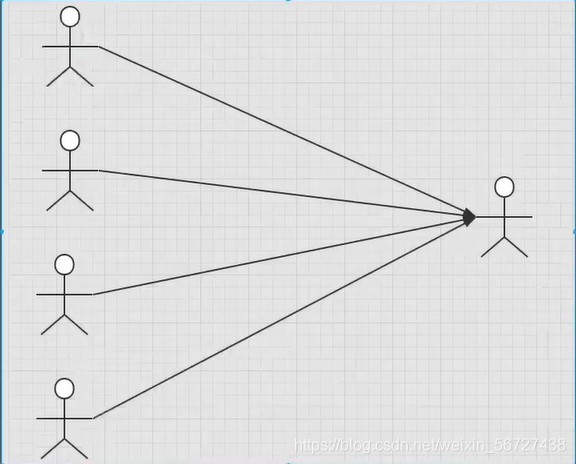
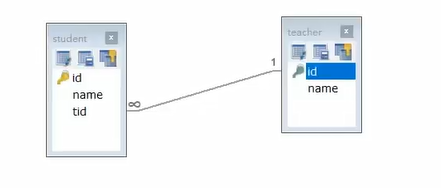
回顾Mysql多对一方式
CREATE TABLE `teacher` (
`id` INT(10) NOT NULL,
`name` VARCHAR(30) DEFAULT NULL,
PRIMARY KEY (`id`)
) ENGINE=INNODB DEFAULT CHARSET=utf8
INSERT INTO teacher(`id`, `name`) VALUES (1, '秦老师');
CREATE TABLE `student` (
`id` INT(10) NOT NULL,
`name` VARCHAR(30) DEFAULT NULL,
`tid` INT(10) DEFAULT NULL,
PRIMARY KEY (`id`),
KEY `fktid` (`tid`),
CONSTRAINT `fktid` FOREIGN KEY (`tid`) REFERENCES `teacher` (`id`)
) ENGINE=INNODB DEFAULT CHARSET=utf8
INSERT INTO `student` (`id`, `name`, `tid`) VALUES ('1', '小明', '1');
INSERT INTO `student` (`id`, `name`, `tid`) VALUES ('2', '小红', '1');
INSERT INTO `student` (`id`, `name`, `tid`) VALUES ('3', '小张', '1');
INSERT INTO `student` (`id`, `name`, `tid`) VALUES ('4', '小李', '1');
INSERT INTO `student` (`id`, `name`, `tid`) VALUES ('5', '小王', '1');
<!--  通过结果进行查询  -->
<select id="getStudent" resultMap="StudentTeacher">
    select s.id as sid, s.name as sname,t.name as tname from student s, teacher t where s.tid=t.id
</select>

<resultMap id="StudentTeacher" type="Student">
    <result property="id" column="sid"></result>
    <result property="name" column="sname"/>
    <association property="teacher" javaType="Teacher">
        <result property="name" column="tname"/>
    </association>
</resultMap>
<!--    按照查询嵌套-->
    <select id="getStudent" resultMap="StudentTeacher">
        select * from mybatis.student
    </select>
    <resultMap id="StudentTeacher" type="student">
        <result property="id" column="id" />
        <result property="name" column="name" />
<!--   复杂属性:  对象:association  集合:collection -->
        <association property="teacher" column="tid" javaType="Teacher" select="getTeacher"></association>
<!--        注意这里是select 表示 子查询-->

    </resultMap>

    <select id="getTeacher" resultType="Teacher">
        select * from mybatis.teacher where id=#{id}
    </select>
比如:一个老师拥有多个学生
对于老师而言,一个老师拥有多个学生的关系
和刚才一样
编写相应的实体类
@Data
public class Student {
    private int id;
    private String name;
    private int tid;
}
@Data
public class Teacher {
    private int id;
    private String name;

    //一个老师 拥有多个学生
    private List<Student> students;
}
<!--  按照结果查询  -->
    <select id="getTeacher" resultMap="TeacherStudent">
        select s.id sid,s.name sname,t.id tid, t.name tname
        from student s , teacher t
        where s.tid=t.id and t.id=#{tid}
    </select>

<!-- 其实就是对sql语句的所获取的字段的映射   -->
    <resultMap id="TeacherStudent" type="Teacher">
        <result property="id" column="tid"/>
        <result property="name" column="tname"/>
<!--  List 的类型获取    ofType="Studnet"
    javaType = "" 指定属性的类型!
  集合中的泛型信息,我们使用ofType获取
-->
        <collection property="students" ofType="Student">
            <result property="id" column="sid"/>
            <result property="name" column="sname"/>
        </collection>
    </resultMap>
<!--按照查询嵌套处理-->
<select id="getTeacher" resultMap="TeacherStudent">
    select * from teacher where id = #{tid}
</select>

<resultMap id="TeacherStudent" type="Teacher">
    <collection property="students" javaType="List" ofType="Student" select="getStudents" column="id" />
    <!-----这里的id就是上面的sql语句和下面这个sql语句的关联点(以上面的为准)------->
</resultMap>

<select id="getStudents" resultType="student">
    select * from mybatis.student where tid=#{id}
</select>
注意点:
慢SQL 1s 1000s
面试高频
==什么是动态SQL:是指根据不同的条件生成不同的SQL语句==
可以彻底摆脱这种痛苦。
如果你之前用过 JSTL 或任何基于类 XML 语言的文本处理器,你对动态 SQL 元素可能会感觉似曾相识。在
 MyBatis 之前的版本中,需要花时间了解大量的元素。借助功能强大的基于 OGNL 的表达式,MyBatis 3 替
 换了之前的大部分元素,大大精简了元素种类,现在要学习的元素种类比原来的一半还要少。

if
choose (when, otherwise)
trim (where, set)
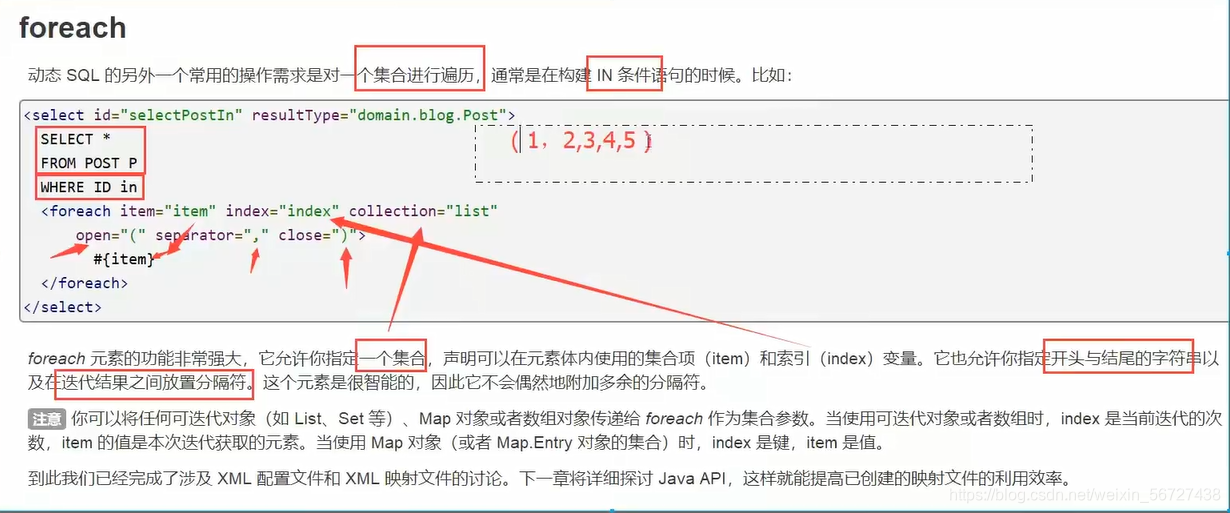
foreach
创建一个基础过程
导包
编写配置文件
编写实体类
@Data
public class Blog {
    private String id;
    private String title;
    private String author;
    private Date createTime;
    private int views;
}
编写实体类对应的Mapper接口和Mapper.xml文件
<select id="queryBlogIf" parameterType="map" resultType="blog">
    select * from mybatis.blog where 1=1
    <if test="title != null">
        and title=#{title}
    </if>
    <if test="author != null">
        and author=#{author}
    </if>
</select>
MyBatis 提供了 choose 元素,它有点像 Java 中的 switch 语句。
<select id="queryBlogChoose" parameterType="map" resultType="blog">
    select * from mybatis.blog
    <where>
        <choose>
            <when test="title != null">
                title=#{title}
            </when>
            <when test="author != null">
                and author=#{author}
            </when>
            <otherwise>
                and views=#{views}
            </otherwise>
        </choose>
    </where>
</select>
< where >: where 元素只会在子元素返回任何内容的情况下才插入 “WHERE” 子句。而且,若子句的开头为 “AND” 或 “OR”,where 元素也会将它们去除。
<select id="queryBlogIf" parameterType="map" resultType="blog">
    select * from mybatis.blog
    <where>
        <if test="title != null">
            title=#{title}
        </if>
        <if test="author != null">
            and author=#{author}
        </if>
    </where>
</select>
< set >: set 元素会动态地在行首插入 SET 关键字,并会删掉额外的逗号(这些逗号是在使用条件语句给列赋值时引入的)。
<update id="updateBlog" parameterType="map" >
    update mybatis.blog
    <set>
        <if test="title != null">
            title=#{title},
        </if>
        <if test="author != null">
            author=#{author}
        </if>
    </set>
    where id=#{id}
</update>
< trim > :他这只是描述,但是if语句的书写还是和where 、set中的一样
<update id="updateBlog" parameterType="map" >
    update mybatis.blog
    <trim prefix="set" suffixOverrides=",">
        <if test="title != null">
            title=#{title},
        </if>
        <if test="author != null">
            author=#{author}
        </if>
    </trim>
    where id=#{id}
</update>
==所谓的动态SQL,本质还是SQL语句,只是我们可以在SQL层面,去执行一个逻辑代码==
有的时候,我们会将一些公共部分抽取出来,方便复用。
使用sql将公共部分抽取出来
<sql id="if_title_author">
    <if test="title != null">
        title=#{title}
    </if>
    <if test="author != null">
        and author=#{author}
    </if>
</sql>
使用include标签将在所需要引用的地方进行引用
<select id="queryBlogIf" parameterType="map" resultType="blog">
    select * from mybatis.blog
    <where>
        <include refid="if_title_author"></include>
    </where>
</select>
注意事项:
select * from users where 1=1 and (id = 1 or id = 2 or id = 3);
<!--
    select * from mybatis.blog where 1=1 and(id = 1 or id = 2 or id = 3)
-->
<select id="queryBlogForeach" parameterType="map" resultType="blog">
    select * from mybatis.blog
    <where>
        <foreach collection="ids" item="id" open="and (" close=")" separator="or">
            id = #{id}
        </foreach>
    </where>
</select>
==动态SQL就是在拼接语句,我们只要保证SQL的正确性,按照SQL的格式,去排列组合就可以了==
建议:
1、什么是缓存 [ Cache ]?
2、为什么使用缓存?
3、什么样的数据能使用缓存?
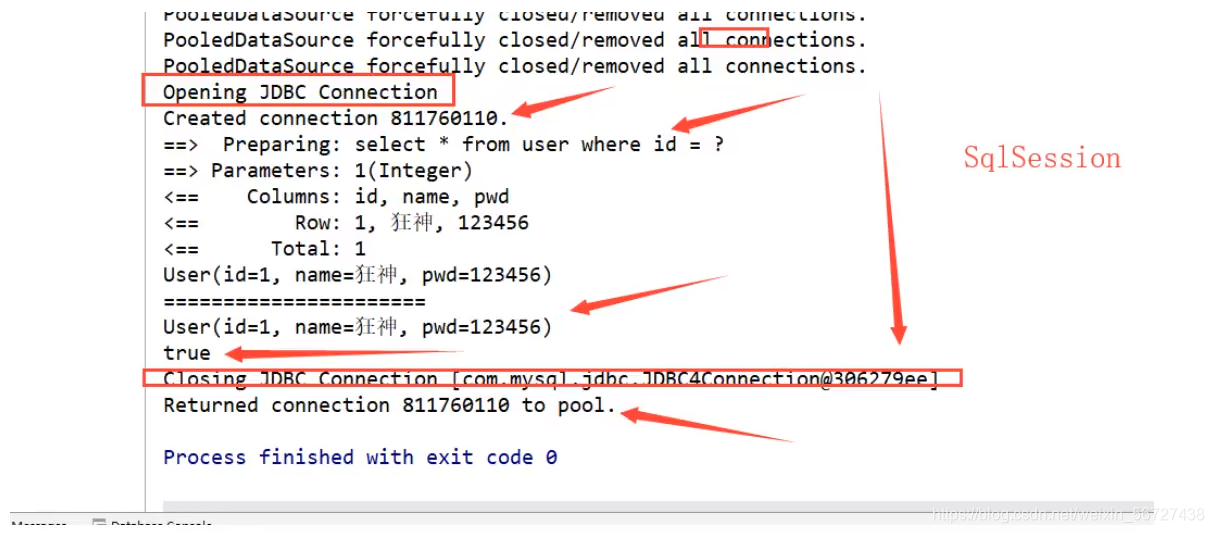
一级缓存也叫本地缓存:
测试步骤:
缓存失效的情况:
查询两次不同的记录
增删改操作,可能会改变原来的数据,所以必定会刷新缓存
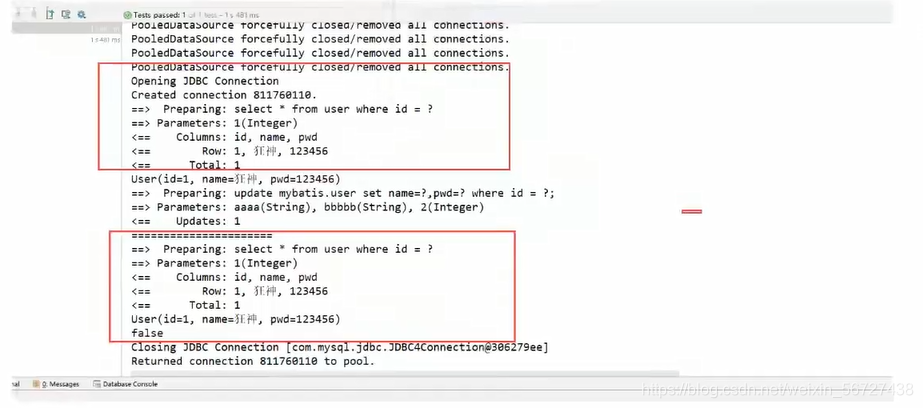
查询不同的Mapper.xml
手动清理缓存!
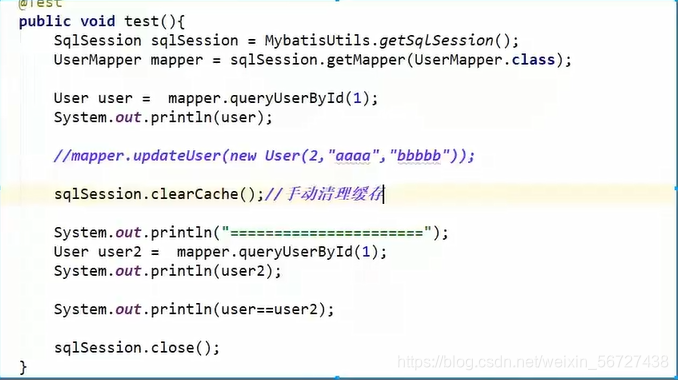
小结:一级缓存默认是开启的,只在一次SqlSession中有效,也就是拿到连接到关闭连接这个区间段
一级缓存就是一个Map。
使用步骤:
显示的开启全局缓存
<setting name="cacheEnabled" value="true"/>
在要使用二级缓存中开启
<cache/>
也可以自定义一些参数
<cache eviction="FIFO"
            flushInterval="60000"
            size="512"
            readOnly="true"/>
测试:
小结:
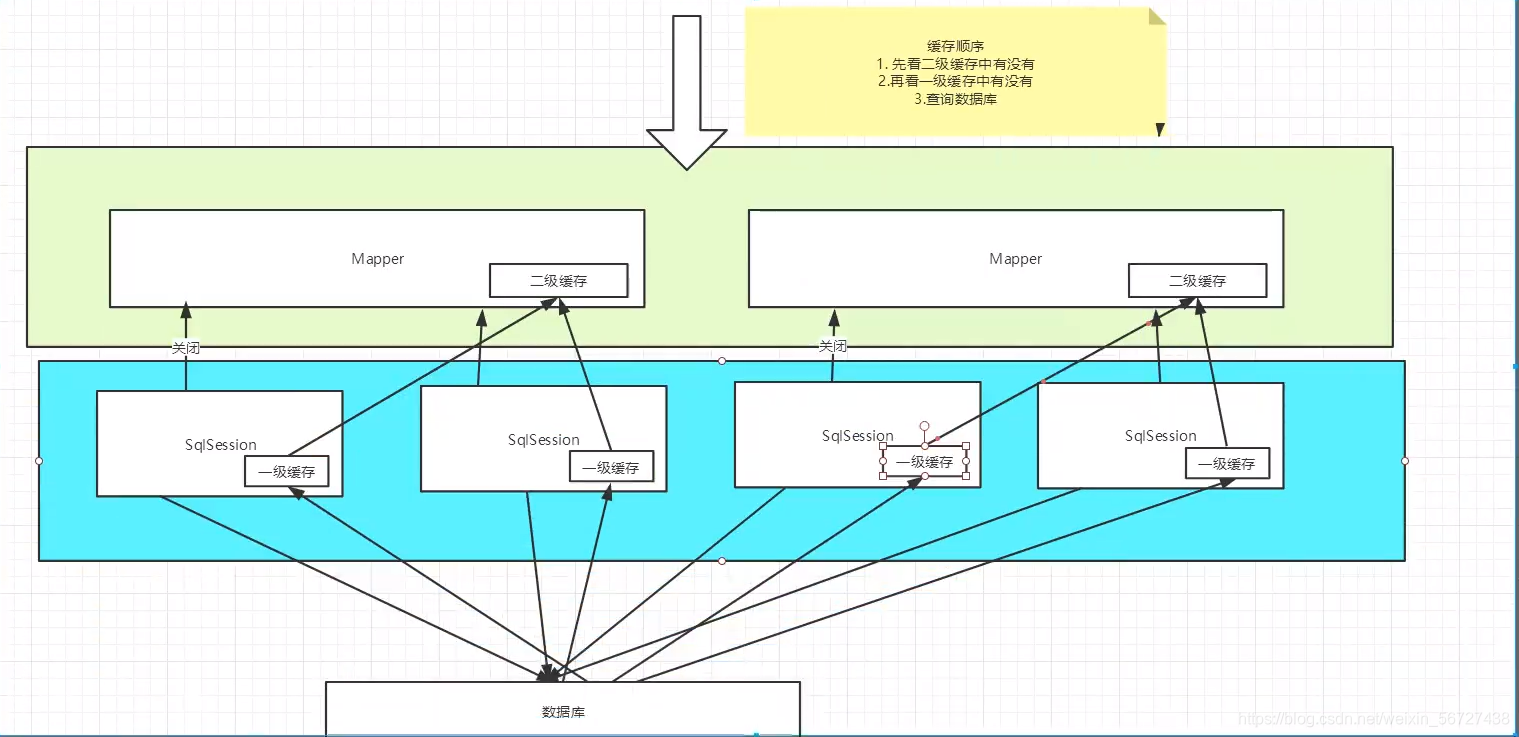
Ehcache是一种广泛使用的java分布式缓存,用于通用缓存;
要在应用程序中使用Ehcache,需要引入依赖的jar包
<!-- https://mvnrepository.com/artifact/org.mybatis.caches/mybatis-ehcache -->
<dependency>
    <groupId>org.mybatis.caches</groupId>
    <artifactId>mybatis-ehcache</artifactId>
    <version>1.1.0</version>
</dependency>
在mapper.xml中使用对应的缓存即可
<mapper namespace = “org.acme.FooMapper” >
    <cache type = “org.mybatis.caches.ehcache.EhcacheCache” />
</mapper>
编写ehcache.xml文件,如果在加载时未找到/ehcache.xml资源或出现问题,则将使用默认配置。
<?xml version="1.0" encoding="UTF-8"?>
<ehcache xmlns:xsi="http://www.w3.org/2001/XMLSchema-instance"
         xsi:noNamespaceSchemaLocation="http://ehcache.org/ehcache.xsd"
         updateCheck="false">
    <!--
       diskStore:为缓存路径,ehcache分为内存和磁盘两级,此属性定义磁盘的缓存位置。参数解释如下:
       user.home – 用户主目录
       user.dir  – 用户当前工作目录
       java.io.tmpdir – 默认临时文件路径
     -->
    <diskStore path="./tmpdir/Tmp_EhCache"/>

    <defaultCache
            eternal="false"
            maxElementsInMemory="10000"
            overflowToDisk="false"
            diskPersistent="false"
            timeToIdleSeconds="1800"
            timeToLiveSeconds="259200"
            memoryStoreEvictionPolicy="LRU"/>

    <cache
            name="cloud_user"
            eternal="false"
            maxElementsInMemory="5000"
            overflowToDisk="false"
            diskPersistent="false"
            timeToIdleSeconds="1800"
            timeToLiveSeconds="1800"
            memoryStoreEvictionPolicy="LRU"/>
    <!--
       defaultCache:默认缓存策略,当ehcache找不到定义的缓存时,则使用这个缓存策略。只能定义一个。
     -->
    <!--
      name:缓存名称。
      maxElementsInMemory:缓存最大数目
      maxElementsOnDisk:硬盘最大缓存个数。
      eternal:对象是否永久有效,一但设置了,timeout将不起作用。
      overflowToDisk:是否保存到磁盘,当系统当机时
      timeToIdleSeconds:设置对象在失效前的允许闲置时间(单位:秒)。仅当eternal=false对象不是永久有效时使用,可选属性,默认值是0,也就是可闲置时间无穷大。
      timeToLiveSeconds:设置对象在失效前允许存活时间(单位:秒)。最大时间介于创建时间和失效时间之间。仅当eternal=false对象不是永久有效时使用,默认是0.,也就是对象存活时间无穷大。
      diskPersistent:是否缓存虚拟机重启期数据 Whether the disk store persists between restarts of the Virtual Machine. The default value is false.
      diskSpoolBufferSizeMB:这个参数设置DiskStore(磁盘缓存)的缓存区大小。默认是30MB。每个Cache都应该有自己的一个缓冲区。
      diskExpiryThreadIntervalSeconds:磁盘失效线程运行时间间隔,默认是120秒。
      memoryStoreEvictionPolicy:当达到maxElementsInMemory限制时,Ehcache将会根据指定的策略去清理内存。默认策略是LRU(最近最少使用)。你可以设置为FIFO(先进先出)或是LFU(较少使用)。
      clearOnFlush:内存数量最大时是否清除。
      memoryStoreEvictionPolicy:可选策略有:LRU(最近最少使用,默认策略)、FIFO(先进先出)、LFU(最少访问次数)。
      FIFO,first in first out,这个是大家最熟的,先进先出。
      LFU, Less Frequently Used,就是上面例子中使用的策略,直白一点就是讲一直以来最少被使用的。如上面所讲,缓存的元素有一个hit属性,hit值最小的将会被清出缓存。
      LRU,Least Recently Used,最近最少使用的,缓存的元素有一个时间戳,当缓存容量满了,而又需要腾出地方来缓存新的元素的时候,那么现有缓存元素中时间戳离当前时间最远的元素将被清出缓存。
   -->

</ehcache>
以后使用redis做数据库缓存


