2301-MUSE

Extreme Programming(deadline November 19, 2023 23:59)
 墨衍会员 · AI 创作全网分发 墨衍智能分发 通过墨衍一键同步至各平台 可同步平台 CSDN微信公众号微博知乎掘金百家号博客园抖音小红书 你的文章也可以这样分发 墨衍会员 ¥399起/年,写一次发全网
我也要 关注 + 加入社区
目录
- Deadline
- 1. Basic functions
- 1. Registration and login module
- 2. Scientific Calculator functions
- 3. Interest rate calculator
- 2.Homework content
- 3.Assignment Grading Criteria and Evaluation Rule
- 4.Rules & Format
- To help teachers or teaching assistants from other schools understand the course situation, please add a format description at the beginning of the assignment:
Deadline
The deadline for this assignment is: November 19, 2023 23:59
Note: The blog needs to be reviewed after publication, please remember to publish the blog in advance to avoid affecting the assignment submission.
1. Basic functions
1. Registration and login module
- Implement login and registration pages, where users register first, and after login verification, jump to the main interface. Save their calculation history for different users.When a user logs in, their corresponding calculation history can be read.
2. Scientific Calculator functions
- The requirements are the same as the second assignment, and the functions should be as complete as possible
3. Interest rate calculator
- Function 1: Calculate deposit and loan interest
* Implement an interest rate calculator and store the interest rate table in the database (which can be modified at any time), as shown in the following figure. Use two input boxes to read the input data of the front-end, 1. Enter the deposit/loan amount 2. Deposit/loan duration (unit: year). Output the corresponding deposit/loan interest.
* Note: the interest rate must be read from the back-end database, can not use the cache - deposit interest rate:

- loan interest rate:
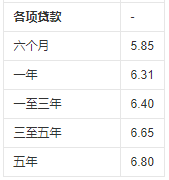
- Function 2: Modify deposit and loan interest on the front-end
* Input the modified information on the front-end page, and the values of the table in the database will be modified accordingly.
* Input: 1. Deposit/loan 2. Duration (unit: year) 3. Modified interest rate
*
2.Homework content
- Design the division of module in advance
- It's a multi-person collaborative work. Although this is a team task, we hope that each student can complete a total development process through group communication. Everyone needs to participate in coding. Establish a GitHub team repository (commit times ≥ 3) and upload relevant programs and documents to the repository before the deadline.There are no mandatory requirements for the repository directory structure, but it is important to ensure that the code provided by this repository can be relied on to build the project.
- The team need to post a blog with the following content:
* Project address (repository address, access address, and other related addresses)
* Take a screenshot of Github's submission log and count the commit times of each group
* Description of functional implementation ideas
* Screenshots and complete running video of the program
* Division of labor among team members
* Evaluate the contribution ratio of each team member, with a total score of 100 (if there is no evaluation, the team leader's score will be reduced by 50% after averaging the entire group)
* Difficulties encountered in cooperation and solutions
* Team member 1
* …
* Team member 2
* …
* PSP table (one table per team member, posted on team blog)
3.Assignment Grading Criteria and Evaluation Rule
The total score for this assignment is 100 points.
- (30’)Basic Requirements [Covering Course Objective 2]
- (10‘) Blog Formatting, using Markdown formatting; Provide the Github repository link correctly and the code standard link.
- (20‘) Description of functional implementation ideas, Program screenshot, Division of labor among team members.
- (70‘)Coding Implementation [Covering Course Objective 4]
- (10‘) Page Style
- (25‘) Registration and login function (storing users information with a database)
- (10‘) Scientific Calculator
- (25‘) Interest rate calculator (use database storage)
4.Rules & Format
To help teachers or teaching assistants from other schools understand the course situation, please add a format description at the beginning of the assignment:
|Course for This Assignment|... |
|-- |-- |
|Team Name|... |
|Assignment Requirements|... |
|Objectives of This Assignment|... |
|Other References|... |
相关推荐
【信息科学与工程学】【产品体系】第三十三篇 DPU/smartinic芯片中的学科知识03
需求实现DMA 与流边界检测优化分级超时状态机(短/中/长)+ 积压计数 + 批量触发DMA 控制器优化描述符预取(深度 4)+ 中断合并(阈值 8)Fence 语义正确性验证RTL 断言 + C 语言序列号检测 + 性能对比 + 硬件计数器所有代码均为可综合 Verilog,已在仿真器中通过基本功能测试。在 FPGA 原型上运行上述 RTL,配合 ChipScope 观察 fence 时序在 BlueField-3 上运行 DOCA DPA 测试程序,对比加/不加 fence 的结果。
【信息科学与工程学】【云计算】计算机科学与自动化——第十五篇 云计算10 云计算领域架构
:作为前端请求的统一入口,负载均衡器基于预设算法(如轮询、最小连接数)动态分配流量至后端服务器集群。:通过IP哈希或Cookie绑定,保障同一用户请求由同一服务器处理(如电商购物车场景)。:Nginx(HTTP/HTTPS反向代理)、HAProxy(TCP层负载均衡)。:实时监控服务器状态(如响应时间、连接数),自动剔除故障节点,确保服务连续性。:本地资源满载时,将流量分流至公有云(如AWS + 私有云混合架构)。:LSTM预测流量峰值,强化学习动态调整权重(如阿里云智能负载均衡)。
无人机固定翼无人机简化燃油燃烧仿真的模拟模型(Matlab代码实现)
内容概要:本文提出了一种面向固定翼无人机的简化燃油燃烧仿真模拟模型,该模型基于Matlab平台实现,旨在对无人机在飞行过程中的燃油消耗行为进行高效、准确的模拟与分析。模型在保证工程实用性的前提下,对复杂的燃烧化学反应和热力学过程进行了合理简化,重点保留了燃料消耗速率、发动机效率与飞行状态(如高度、速度、迎角等)之间的动态耦合关系,构建了一个轻量化且具备良好泛化能力的燃油经济性评估工具。该模型可用于不同飞行剖面下的续航能力预测、任务航程规划以及能源管理策略的初步设计与验证,为无人机系统级仿真与优化提供关键支撑。; 适合人群:具备Matlab编程与仿真实践能力,从事固定翼无人机总体设计、飞行任务规划、航空动力系统或绿色航空技术研究的科研人员与工程师。; 使用场景及目标:①支撑固定翼无人机在多种工况(巡航、爬升、机动等)下的燃油消耗预测与航程评估;②服务于无人机能源管理系统的概念设计与性能优化,提升任务可靠性和飞行经济性; 阅读建议:建议读者结合Matlab代码深入理解模型结构,通过调整飞行参数(空速、海拔、推力设定等)开展仿真实验,观察燃油流量与累积消耗的变化趋势,进而掌握模型的响应特性与适用边界。
风光储协同并网发电系统仿真(Simulink仿真实现)
内容概要:本文系统介绍了基于Simulink的风光储协同并网发电系统的仿真研究,聚焦风能、光伏与储能系统的多能互补协调控制策略,涵盖并网逆变器控制、虚拟同步发电机(VSG)、下垂控制、模型预测控制(MPC)、中点电位平衡、孤岛检测、低电压穿越(LVRT)等多项核心技术的建模与仿真实现。文档列举了多个典型应用场景,如风光储交直流微电网一体化控制、PEM电解槽制氢耦合系统、VSG预同步切换控制等,并强调结合参考文献与仿真模型进行SCI级别论文的复现,突出其科研指导性与工程实用性。资源包还提供详尽的设计文档、建模报告、Mathcad计算书及配套程序,支持深入理解与二次开发; 适合人群:面向具备电力系统、新能源发电、自动控制等相关专业知识背景的研究生、科研人员及工程技术人员,尤其适用于从事MATLAB/Simulink仿真实践、需完成高水平学术论文或参与实际能源系统设计的研发人员; 使用场景及目标:①用于风光储多能互补系统的并网特性分析、动态响应评估与先进控制策略验证;②支撑SCI论文复现、科研项目攻关与创新方法提出,提升科研竞争力;③服务于高校毕业设计、课程课题研究及实际工程项目中的系统优化、性能测试与方案论证; 阅读建议:建议读者结合提供的参考文献与仿真模型同步操作,优先掌握VSG、MPC、双闭环控制等核心模块的建模逻辑与参数整定方法,注重理论推导与仿真实践相结合,循序渐进地从单一单元扩展至复杂系统集成仿真,全面提升建模能力与科研素养。
基于三次谐波注入法的Z源升压逆变器仿真、更优升压能力【有参考文献】
内容概要:本文围绕基于三次谐波注入法的Z源升压逆变器展开仿真研究,重点分析该方法在提升逆变器电压增益方面的优越性。通过Simulink仿真平台构建系统模型,详细探讨三次谐波注入的作用机理,并与传统四种基本升压控制策略进行对比,验证其在相同条件下实现更高升压比的有效性。研究还结合LCL滤波器设计以优化输出电能质量,抑制高频谐波干扰,提升系统稳定性与动态响应性能。文档配套提供完整的参考资料和可复现的仿真模型,增强了研究成果的可信度与实用性,对推动新能源发电系统中高效、高可靠逆变技术的发展具有重要参考价值。; 适合人群:电力电子、电气工程及其自动化等相关专业的高校师生、科研人员及从事新能源发电系统研发的工程技术人员。; 使用场景及目标:①用于教学与科研中对Z源逆变器工作原理与先进控制策略的深入理解与实验验证;②为实际工程应用中提升逆变器升压性能提供理论支持与技术方案;③支撑SCI级别论文的复现、改进与创新性课题研究。; 阅读建议:建议结合文中提供的仿真模型与参考文献进行系统学习,重点关注三次谐波注入的实现方式及其对系统稳态精度与动态响应的影响,鼓励通过调整调制度、谐波注入比例等参数开展拓展性仿真实验,以深化对Z源网络特性和控制策略优化的理解。