2301-MUSE

User Usage Survey Report
 墨衍会员 · AI 创作全网分发 墨衍智能分发 通过墨衍一键同步至各平台 可同步平台 CSDN微信公众号微博知乎掘金百家号博客园抖音小红书 你的文章也可以这样分发 墨衍会员 ¥399起/年,写一次发全网
我也要 关注 + 加入社区
User Survey Report
| Which course does this assignment belong to | 2301-MUSE Community |
|---|---|
| Assignment Requirement | Teamwork——Beta Sprint |
| Team name | EmoGenius Crew |
| The goal of this assignment | To finish the user survey |
| Other references | 《user survey》 |
目录
- User Survey Report
- I. Introduction
- II. Survey method and sample
- 1. Basic process of investigation
- 2. Questionnaire
- 3. Survey result
- III. Summary and reflection
I. Introduction
The purpose of this report is to gain an in-depth understanding of FeelingTogether users' product experience, evaluate functional performance, and collect user recommendations on the product. At present, FeelingTogether has successfully completed beta development and testing, with most of the features and functions specified in the requirements document.
In this context, we believe that through the actual user experience, we can more fully understand the product's strengths and potential improvement room. In addition, the user survey report will provide strong support for future marketing and provide a foundation for our team to gain a foothold in a highly competitive market.
II. Survey method and sample
1. Basic process of investigation
To gain a deeper understanding of the FeelingTogether user experience, we have designed the following survey process, which combines online questionnaires and direct inquiries to obtain more comprehensive user feedback. Our team first created online questionnaires and generated connections. Through the apk file sent by us, users download our app and freely explore various functions. At the same time, our team members provide necessary explanations and guidance to users who do not understand the operation. After using the app, participants filled out an online questionnaire based on their feelings. Finally, the team collected the completed questionnaire and analyzed the results statistically.
2. Questionnaire
The questionnaire was conducted using the questionnaire Star service. The following is the specific content of the questionnaire, a total of 10 questions:
1.您的身份是*
大学生
中学生
教师
社会人士
2.您曾经有使用过类似的app吗*
有
无
3.您喜欢使用这一类的app吗*
是
否
4.您觉得界面设计如何*
非常好
一般
需要改进
5.您在使用过程中是否觉得舒心*
是
否
6.您喜欢此app的哪些功能[多选题]*
账号密码登录
人像识别登录
主界面布局
个人信息中心
情感日记
情感论坛
情感聊天机器人
音乐播放器
情感日历
7.您觉得哪些功能是没有必要存在的[多选题]*
情感日记
情感论坛
情感聊天机器人
情感日历
音乐播放器
无
8.情感日记检测是否准确*
是
否
9.您是否愿意将此app推荐给好友*
是
否
10.请问您对此app有什么建议吗
3. Survey result
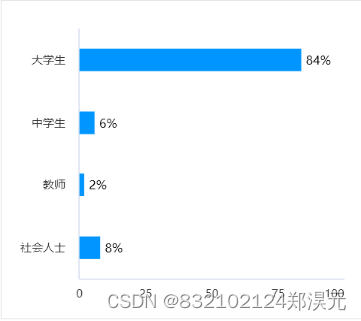
In this survey, the vast majority of users are college students, accounting for 84%, and the rest of the group accounts for relatively little.
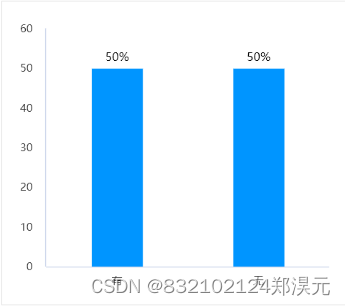
Among them, the number of people who have used similar emotional apps is the same as the number of people who have not used them, accounting for 50% of the total number.
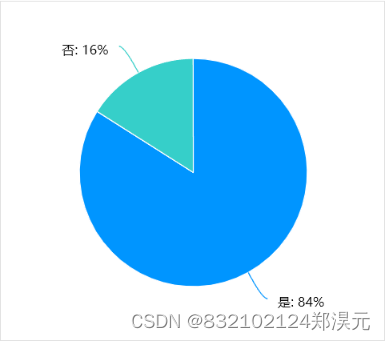
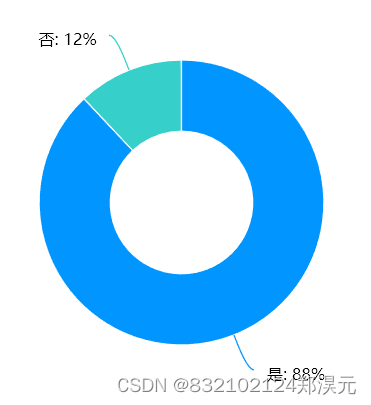
As for the preference of this type of app, most of the surveyed people like to use this type of App (84%), while a small number of people do not like to use this type of App.
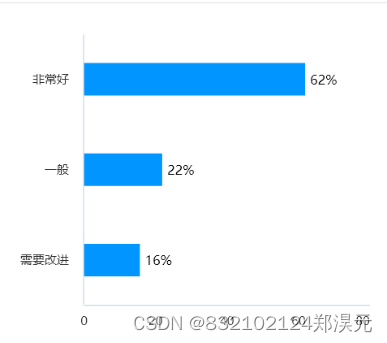
In terms of interface design, most users think that the interface design of this App is not bad, but 40% of users think that it is not good or not satisfied. This is also the focus that we need to revise in the future.
For the comfort of product use, most users recognize our app and think that the app is more comfortable to use.
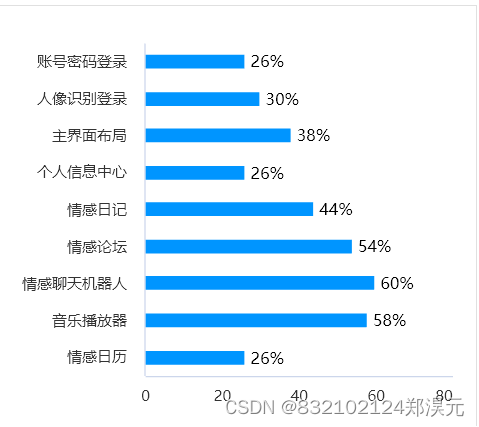
Among the main functions of the app, the three modules that make users most satisfied are emotion chatbot, music player and emotion forum. Some modules are not satisfactory, such as emotional calendar, personal information center, account password login, etc., which is also a part of our need to improve.
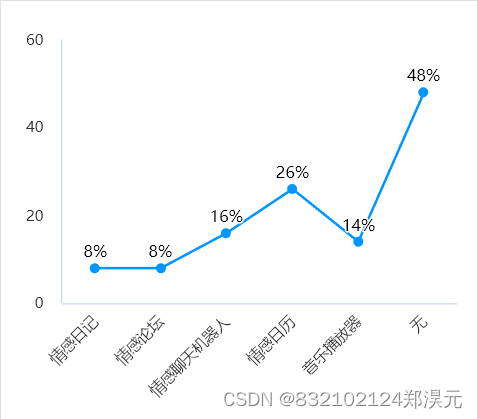
Considering the part that users want to delete most, the emotional calendar is the module with the worst user experience in this project. We will further modify it to increase users' satisfaction.
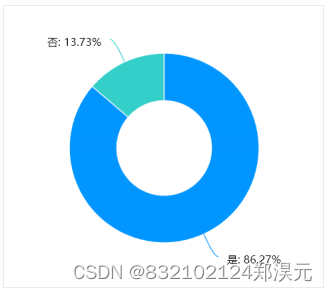
As for the detection of users' text emotions by the core function of our project, most users reflect that the detection accuracy of this function is high, which is also a point that makes us more satisfied.
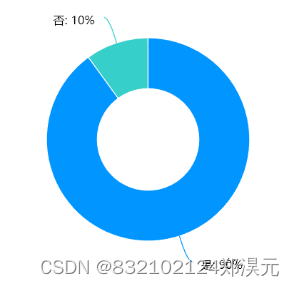
Finally, through analyzing whether users are willing to recommend our app to others, most of them are willing to recommend our app to others. This also reflects the high user satisfaction of the app.
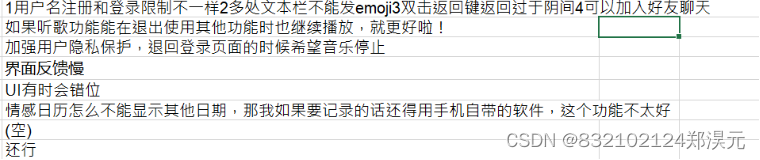
In the process of user testing, we also received some users' feedback and improvement suggestions. Our team will try to adopt these suggestions and feedback to improve the product as much as we can.
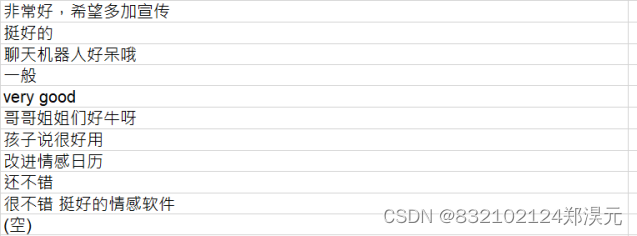
There are also some users who are positive about our app, and we are grateful for that.
III. Summary and reflection
Although this user survey report is limited by the survey method and sample, we can still learn valuable experience and summary, and provide useful reference for product improvement.
Our surveyed users mainly include those who use the product without access to the relevant software and manuals, which poses certain challenges for the ease of use of our products. To this end, we considered introducing interface prompts or writing detailed operational documentation to improve the user experience without guidance.
In addition, the statistics clearly point to the emotional calendar, the personal information center, and parts of the interface UI as areas that we need to focus on improving in the future. User feedback points us in the direction of product development, and we will focus on these aspects in subsequent development to improve the overall user experience.
Overall, users expressed a high degree of satisfaction with this product, but also put forward some functional improvements. These issues will be the focus of our future development to ensure that the product is continuously optimized to better meet the needs of users.
相关推荐
CiscoPress:802.11 Wireless Network Site Surveying and Installation.chm
Cisco - 802.11 Wireless Network Site Surveying and Installation.chm Introduction Goals and Methods Part I: Understanding the Prerequisites of a Site Survey Chapter 1. Defining a Wireless Network's Protocols and Components The Evolution of Wireless Standards Introducing 802.11 Additional Wireless Standards Wi-Fi Alliance WLAN Components Summary Chapter 2. Understanding RF Fundamentals Understanding RF Components Understanding RF Power Values Antennas Connectors Cables Understanding RF Site Propagation Summary Chapter 3. Regulating the Use of 802.11 WLANs Early Spread-Spectrum Regulations RF Regulatory Domains WLAN Frequencies of Operation Dynamic Frequency Selection and Transmitter Power Control with 801.11h Regulatory Channel Selections Maximum Transmitter Power Levels Amplifiers Antenna Connectors and Remote Antennas Health and Safety Plenum Locations Summary Recommended Reading Chapter 4. WLAN Applications and Services Typical WLAN Environments Defining the WLAN Requirements Defining Your Technology Requirements Selecting Necessary WLAN Services Building-to-Building Connectivity Summary Chapter 5. Selecting the WLAN Architecture and Hardware Key Features of a WLAN Various WLAN Architectures Selecting the Access Point Selecting the Client Products Summary Part II: The Site Survey Chapter 6. Preparing for a Site Survey Pre-Site Survey Form Information User Input Balancing Wants, Needs, and Capabilities Summary Chapter 7. Site Surveying Equipment WLAN Equipment Site Survey Kits Summary Chapter 8. Discovering Site-Specific Requirements Recommended Facility Documentation Limitations Affecting Equipment Installations Using Cookie Cutter Designs Summary Chapter 9. Discovering Wired Network Requirements Switches, Routers, and Hubs Roaming Deploying VLANs over Wireless QoS for WLANs Cabling Requirements Summary References Chapter 10. Using Site Survey Tools Types of Site Surveys Manual Site Survey Tools Automatic and Assisted Site Survey Tools Theoretical Site Survey Tools Summary Chapter 11. Performing a WLAN Site Survey Steps in the Site Survey Process Surveying with the AirMagnet Tool Assisted Site Surveys Site Surveying for Repeater Usage Dual-Band Surveys Site Surveys for Voice Final Verification Summary Part III: Installing WLAN Components Chapter 12. Installing WLAN Products Understanding Installation Issues Proper AP Mounting Proper Antenna Mounting Ethernet Considerations Summary Chapter 13. Preparing the Proper Documentation Final Site Survey Report Documenting the Work Site Survey Report-Generation Programs Summary Chapter 14. Outdoor Bridge Deployments Understanding Bridge System Characteristics Understanding Bridge Topologies Using Common Applications over Bridges Feasibility Study Interference Study Installing Bridges Summary Part IV: Appendixes Appendix A. WLAN Product References WLAN Equipment: Enterprise Class WLAN Equipment: SOHO and Personal Use WLAN Accessory Vendors Appendix B. Antenna Radiation Patterns Dipole Antennas Ceiling-Mount Antennas Mast-Mount Antennas Pillar- or Wall-Mount Omni Antennas High-Gain Omni Antennas Panel or Patch Wall-Mount Directional Antennas Longer-Range Directional Antennas 5-GHz Antennas Appendix C. Alternative Antennas Leaky Coax Cable Sectorized Panel Antenna Ceiling-Tile Antennas Appendix D. Sample Forms Pre-Site Survey Forms Sample Site Survey Report Section 1.0. Objective Section 2.0. Site Description Section 3.0. Test Procedure Section 4.0. Proposed Components Section 5.0. Existing Wireless Assessment Section 6.0. Wireless Sniffer Trace Analysis Section 7.0. Access Point/Antenna Information Locations Section 8.0. Infrastructure Notes Section 9.0. Site Plan Section 10.0. Required WLAN Hardware Overview Section 11.0. Contact Information Section 12.0. Customer Acceptance
大模型安全-生成检测-事实核查-攻击-防御-思考-记忆-融合-语音相关研究 2025年版
本文整理了关于大模型安全领域的综合性资源,包括7篇综述论文、9个安全数据集以及5篇强化学习相关的安全研究论文。主要涉及大模型的对抗攻击、隐私保护、安全评估等方向,涵盖TruthfulQA、ToxiGen等知名数据集和TrustLLM、HarmBench等关键研究。资源包括知乎博主分享、arXiv预印本和顶会论文,并附有详细的中文讲解链接,为研究者提供了系统性的安全研究参考。
Claude Code模型分工实战:Opus 4.8攻坚与Fast Mode开路策略
在AI编程工具链中,大语言模型的‘能力分层’并非简单强弱排序,而是基于认知负荷的任务适配问题。其核心原理在于:低复杂度的信息探查、结构提取与可信过滤,应由轻量模型(如Haiku/Sonnet)在Fast Mode下高效完成;而高复杂度的多跳推理、跨文件语义一致性维护、模糊需求澄清及形式化输出生成,则必须依赖Opus 4.8的Full Mode深度推理能力。这种分工带来显著技术价值——实测可降低30% token成本、缩短70%重构耗时,并提升方案采纳率至94%。典型应用场景包括微服务迁移、遗留系统升级、CI
变电站精细化设计施工标准(电气部分)
变电站精细化设计施工标准(电气部分).pdf。文档内容齐全,中间有页码不对,是因为这是两个文档合成的,不影响内容完整,内容为图片,不是源文档。
chromedriver-mac-x64-159.0.8133.0(Canary).zip
chromedriver-mac-x64-159.0.8133.0(Canary).zip