


173
社区成员
 发帖
发帖 与我相关
与我相关 我的任务
我的任务
 分享
分享| Which course does this assignment belong to | EE301 |
| Where are the requirements for this assignment? | Teamwork—beta Spring |
| Team Name |
FUZHUAN |
| The objective of this assignment | Beta Sprint Summary Blog |
| Other Reference Documents | Method of Construction ( 《构建之法》) |
目录
2. Completed and Pending Tasks
3. Review of the Alpha Phase Improvement Plan
4. Project Link and Demonstration
6. Experience, Insights, and Learnings of Each Member During the Sprint
In the Beta phase, our goal was to further optimize the FZZ Campus Second-hand Trading Platform, focusing on completing remaining feature development, improving system performance, enhancing user experience, and ensuring product stability. To comprehensively assess whether the improvement plans set during the Alpha phase were successfully implemented, this blog will review the progress made during the Beta phase and analyze each member’s contribution and the overall achievements of the team.
During the Beta phase, we followed the improvement plans made in the “Problem Summary Essay” and the “Essay on Preparing for Everything” from the Alpha phase, which outlined the features that needed improvement or addition. Below is the progress on the tasks in the Beta phase:
| Task | Status | Completion | Remarks |
|---|---|---|---|
| Improve user login and registration features | Completed | 100% | User registration, login, and password recovery features were completed and the previous bugs were fixed. |
| Improve product publishing and editing features | Completed | 100% | Product publishing interface was optimized, and the editing functionality was completed, allowing users to manage products easily. |
| Add transaction history and order management features | Completed | 100% | The order management module is complete, supporting viewing of historical transactions and updating order statuses. |
| User review and rating feature | Partially Completed | 80% | The feature is mostly complete, but further UI improvements and security enhancements are needed. |
| Optimize search and filtering features | Completed | 100% | Search functionality was improved, and product filtering by category and keywords was enhanced, with faster results loading. |
| Database performance optimization | Completed | 100% | Optimized database query efficiency, reducing loading time and improving overall system performance. |
| User experience improvements (UI/UX) | Completed | 100% | The interface layout was improved based on user feedback, making the app easier to use. |
| System stability testing and bug fixing | Completed | 100% | Comprehensive stability testing was completed, and known bugs were fixed. |
| Mobile app review and approval preparation | In Progress | 60% | Preparation for submission is underway and expected to be completed in the next phase. |
| Automated testing feature | Not Completed | 40% | The automated testing tools are under development and are expected to be finished in the next phase. |
In the Alpha phase, the team set several improvement plans, including resolving feature gaps, addressing performance issues, optimizing database structure, and enhancing user experience. Below is a review of the improvement plans set in the Alpha phase:
| Improvement Plan | Status | Completion | Remarks |
|---|---|---|---|
| Addressing incomplete core features | Completed | 100% | Core features were successfully developed and debugged. |
| Improve code quality and stability | Completed | 100% | Code refactoring and module optimization were completed, improving stability and maintainability. |
| Enhance team collaboration and communication | Completed | 100% | Regular team meetings ensured project progress and quality. |
| Improve requirements management and change control | Completed | 100% | Requirements documentation was optimized to handle changes and version control effectively. |
| Implement automated testing tools | Partially Completed | 80% | Automated testing tools were partially developed, but full implementation is pending in the Beta phase. |
These improvement plans were further implemented in the Beta phase, providing a solid foundation for the project’s progress.
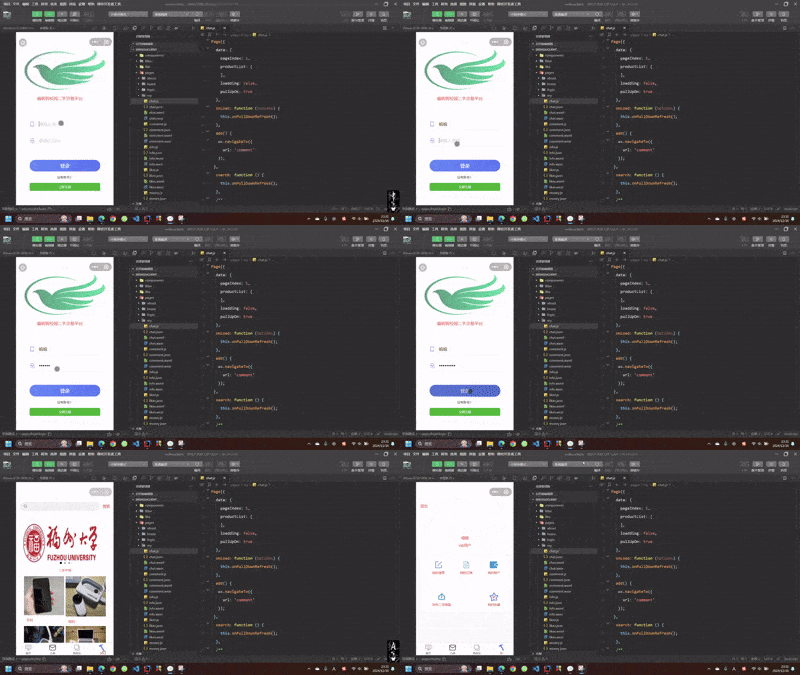
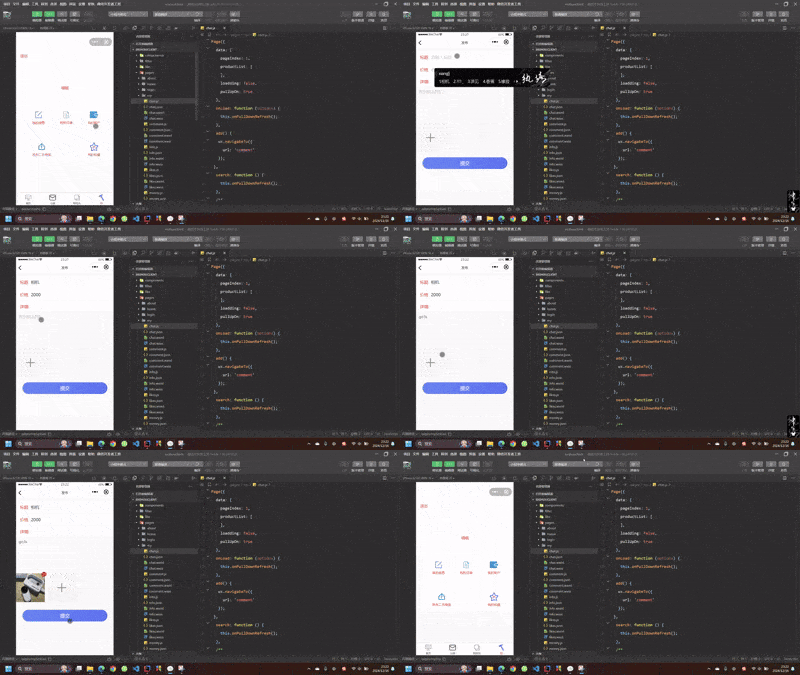
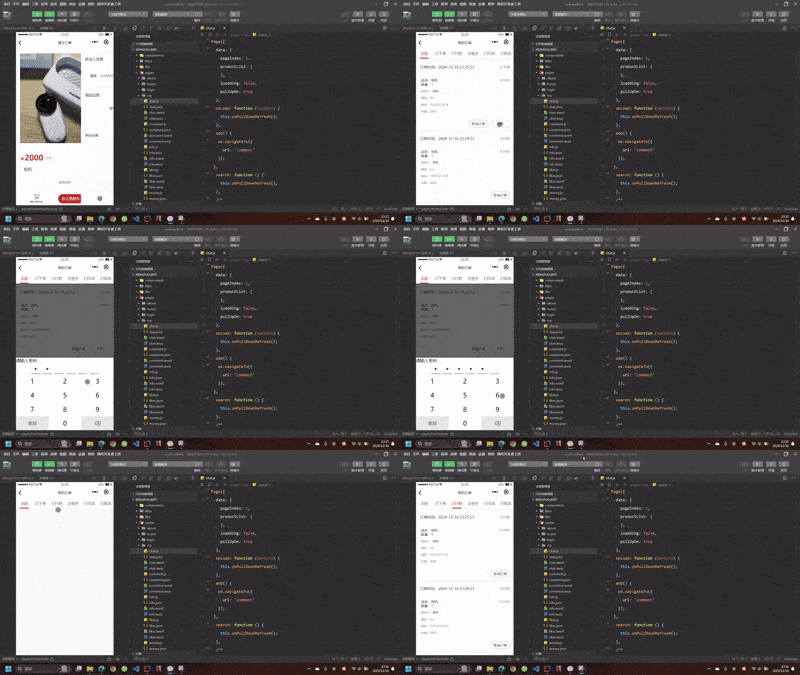
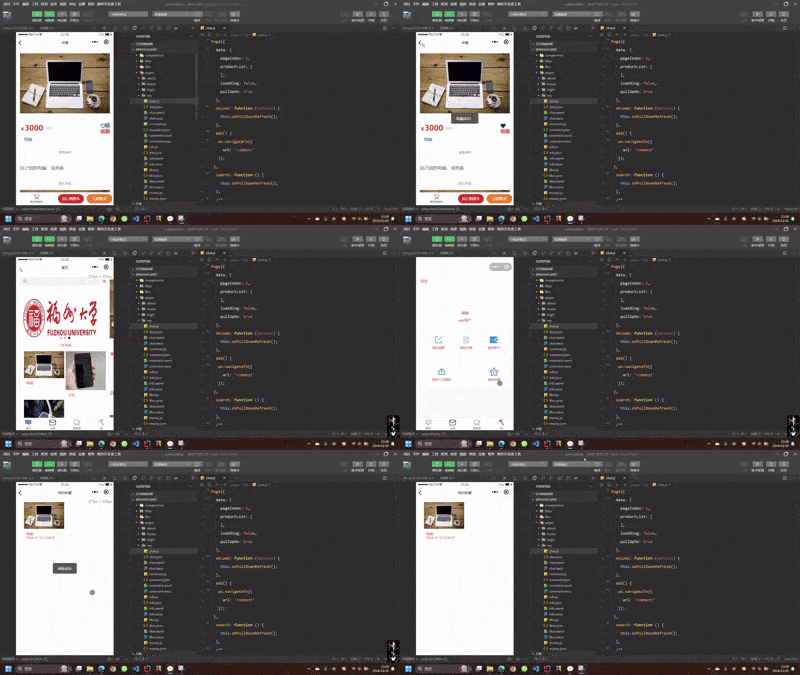
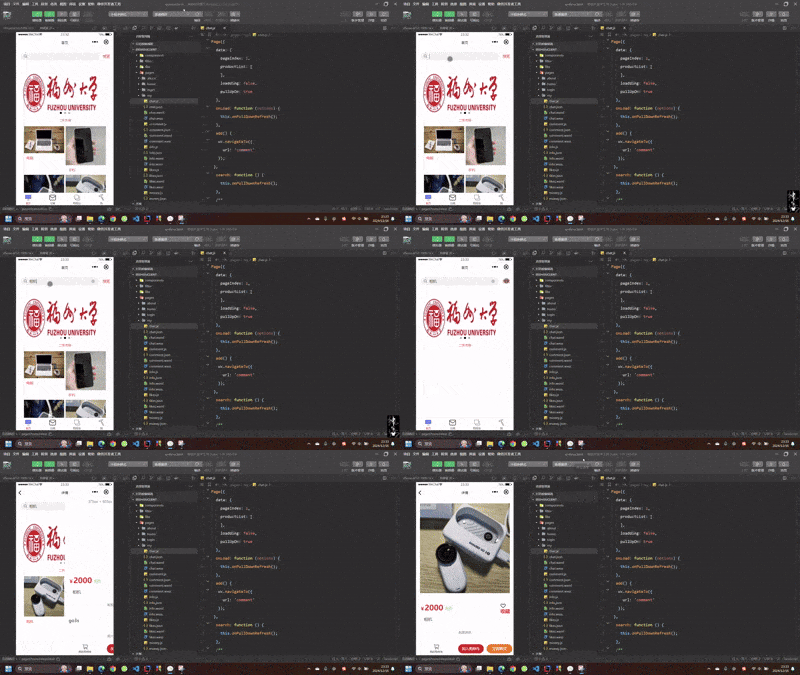
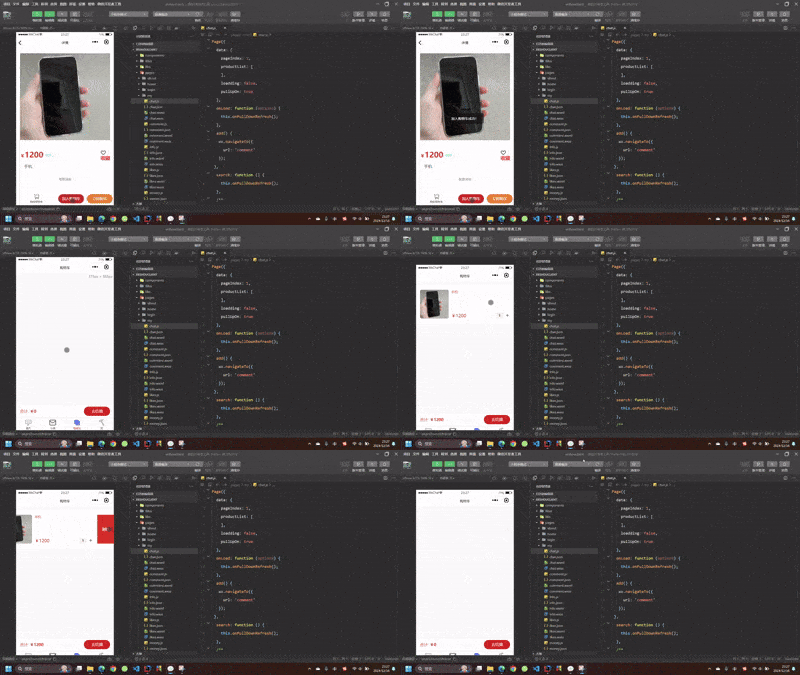
Here are some screenshots of the FZZ Mini Program in operation:
User Login and Registration Interface:
Product Publishing and Editing Feature:
Bookmarking interface:
In the Beta Sprint phase, each team member had different contributions and learning experiences. Below is a summary of individual reflections from team members:
| Member | Contribution | Experience and Insights |
|---|---|---|
| Pan Fangling (832201330) | Overall project progress control, backend development, requirement analysis support | Improved team collaboration efficiency through project management tools, learned how to better distribute tasks and coordinate resources. |
| Zhang Yuxin (832201326) | Backend development lead, requirement analysis support | Gained in-depth knowledge of backend architecture design, especially in database design and API development. |
| Jiang Huizhou (832201304) | Backend development team member | Improved Java programming skills and gained hands-on experience in API design and debugging. |
| Chen Yike (832202116) | Backend development team member | Enhanced understanding of handling concurrent requests, and learned how to improve high-concurrency systems. |
| Jin Tangruoyi (832201218) | Backend development team member | Gained experience in debugging and optimizing backend services, particularly in database query performance. |
| Sun Xing (832202106) | Backend development team member | Learned about microservice architecture and contributed to database performance tuning. |
| Lin Tianyu (832202118) | Backend development team member | Enhanced teamwork skills and gained practical experience in API development. |
| Luo Yuxin (832201320) | Frontend development lead, requirement analysis support | Deepened understanding of frontend-backend integration and gained experience in using the Vue.js framework. |
| Yong Yuxin (832201328) | Frontend development team member | Increased frontend development efficiency, especially in UI design and interaction optimization. |
| Lin Jiahui (832202119) | Frontend development team member | Gained experience in optimizing user interfaces and responsive layout techniques. |
| Yang Ruoxin (832201211) | Frontend development team member | Gained valuable insights into frontend performance optimization, particularly in image loading and rendering. |
| Fang Shuyi (832201204) | Frontend development team member | Learned how to manage data flow and user interaction in frontend development. |
| Liu Ningle (832201208) | Requirement analysis and documentation management | Ensured smooth progress of the development and design process by managing requirements and documentation. |
| Wang Yinxuan (832201301) | Requirement analysis and documentation management | Learned how to manage and control requirement changes effectively to ensure on-time project delivery. |
Through the Beta Sprint, the FUZHUAN team made significant progress in both development and optimization, completing the tasks planned for this phase. Team members not only improved their technical skills but also gained valuable experience in actual project development. Through continuous feedback and testing optimization, we ensured system stability and enhanced the user experience. Going forward, we will continue iterating based on user feedback and technical requirements, preparing for the official launch of the campus second-hand trading platform.

