173
社区成员
 发帖
发帖 与我相关
与我相关 我的任务
我的任务
 分享
分享| Course for This Assignment | 2401_MU_SE_FZU |
|---|---|
| Team Name | NoFantasy |
| Assignment Requirements | Teamwork—beta Spring |
| Objectives of This Assignment | Beta Sprint |
| Other References | No Reference |
| Team Member | Task Completed | Time Spent | Issues Encountered | Tomorrow's Arrangement |
|---|---|---|---|---|
| Liu Zhe | Warm-up for defense PPT | 1h | Lack of clear project updates may result in incomplete or misaligned presentation content | Continue to follow up on PPT progress based on project development |
| You CongHan | Warm-up for defense PPT | 2h | Limited time may affect the depth and polish of the presentation. | Continue to follow up on PPT progress based on project development |
| Lin YuLiang | Warm-up for defense PPT | 2h | None | Continue to follow up on PPT progress based on project development |
| Ou ZhiHua | Backend development | 3h | None | Backend development |
| Lin Yi | Backend development | 2h | None | Backend development |
| Xu MingJun | Backend development | 3h | None | Backend development |
| Guo ShaoSong | Alpha problem summary blog writing | 2h | None | None |
| Gao Yu | Alpha problem summary blog writing | 2h | None | None |
| Wang ZiChong | Alpha problem summary blog writing | 3h | None | None |
| Huang XingCheng | Front-end development | 2h | Complex UI/UX tasks may lead to delays or suboptimal functionality. | Front-end development |
| Zhou ShiHao | Front-end development | 1h | None | Front-end development |
| Hou JiaAo | Front-end development | 2h | Integration issues between front-end and back-end | Front-end development |
Home page module back-end code implementation
The backend architecture is springboot. This task cycle realizes the design and implementation of controller, service, mapper, entity, and xml.
| Team Member | Task Completed | Time Spent | Issues Encountered | Tomorrow's Arrangement |
|---|---|---|---|---|
| Liu Zhe | Warm-up for defense PPT | 1h | Lack of clear project updates may result in incomplete or misaligned presentation content | Continue to follow up on PPT progress based on project development |
| You CongHan | Warm-up for defense PPT | 2h | Limited time may affect the depth and polish of the presentation. | Continue to follow up on PPT progress based on project development |
| Lin YuLiang | Warm-up for defense PPT | 2h | None | Continue to follow up on PPT progress based on project development |
| Ou ZhiHua | Backend development | 3h | None | Backend development |
| Lin Yi | Backend development | 2h | None | Backend development |
| Xu MingJun | Backend development | 3h | None | Backend development |
| Guo ShaoSong | Alpha problem summary blog writing | 2h | None | None |
| Gao Yu | Alpha problem summary blog writing | 2h | None | None |
| Wang ZiChong | Alpha problem summary blog writing | 3h | None | None |
| Huang XingCheng | Front-end development | 2h | Complex UI/UX tasks may lead to delays or suboptimal functionality. | Front-end development |
| Zhou ShiHao | Front-end development | 1h | None | Front-end development |
| Hou JiaAo | Front-end development | 2h | Integration issues between front-end and back-end | Front-end development |
1.2 Home page module back-end code implementation
Home page module back-end code implementation
The backend architecture is springboot. This task cycle realizes the design and implementation of controller, service, mapper, entity, and xml.

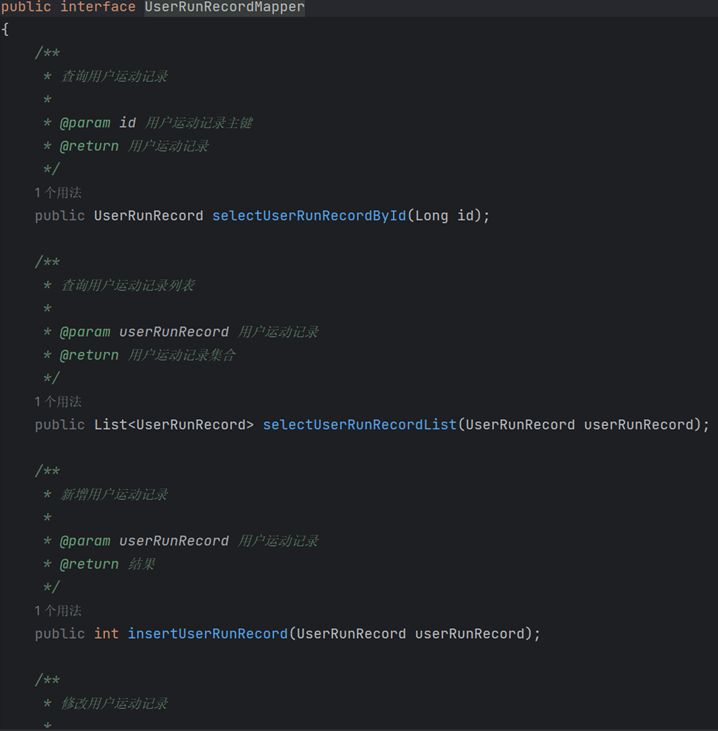
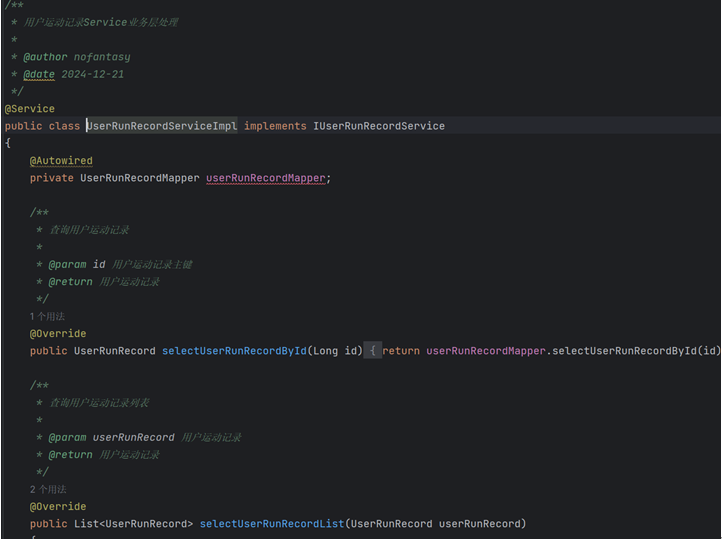
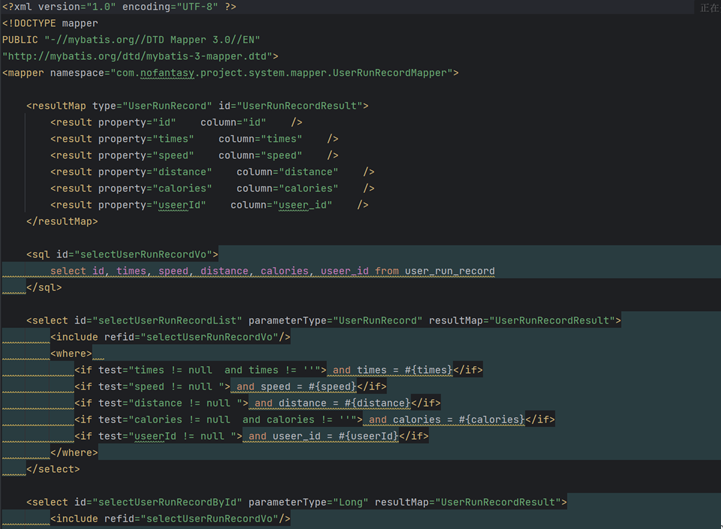
According to the above code example: realize the user's motion record. Points generation. Plan customization and other related business back-end implementation.