


164
社区成员
 发帖
发帖 与我相关
与我相关 我的任务
我的任务
 分享
分享| Which course does this assignment belong to | EE308FZ |
|---|---|
| Where are the requirements for this assignment? | Team up and Topic selection |
| Team Name | Lightning Vision |
| The objective of this assignment | Introduction to team members and description of the team project |
| Other Reference Documents |

| Member Name (Nickname is acceptable) | CSDN Personal Profile | Personality | Technical Expertise | Hobbies | Required Software Engineering Role | Slogan |
|---|---|---|---|---|---|---|
| Gao Weixiang | https://blog.csdn.net/2402_82509661?type=blog | Cheerful and rigorous | Computer Vision, Python, C++, OpenCV, COMSOL 3D Modeling | Basketball, Programming, Travel, etc | Backend Algorithm Engineer | Reconstruct efficiency with technology, solve pain points with products |
| Yang Lihao | https://blog.csdn.net/2402_84395081?spm=1000.2115.3001.5343 | Cheerful, lively, fond of challenges | Computer Vision (CV), robot operating system (ROS), C++, OpenCV, object detection and tracking, 3D reconstruction | Basketball, photography, programming, etc. | Research and Development(RD) | Strive to become a full-stack robot engineer! |
| Lin Canran | https://blog.csdn.net/lcrrrrrrr_?type=sub&subType=community | Steady, amicable | UI Design | Music, Travel | UI Engineer | Take it as it comes |
| Zhang Xiaohan | https://blog.csdn.net/2403_88692592?type=blog | Optimistic, Detail-oriented | UI Design | Traveling, Reading | UI Engineer | Look before you leap. |
| Huang Lin'ge | https://blog.csdn.net/2301_79919887?spm=1008.2028.3001.5343 | Delicate and patient, good at listening to needs; logically rigorous, skilled in breaking down complex business tasks; adept at communication and willing to share technical solutions. | Front-end development, UI/UX design, etc. | Programming, photography, design, etc | Front-end Development Engineer | May every line of code be warm, and every interface have a soul. |
| Gao Jieming | https://blog.csdn.net/2303_80925420?spm=1000.2115.3001.5343 | Lazy | Embedded development, UI Design, Back-end Development | Play video game | Back-end Development Engineer | A complete white flash |
| Zheng Yijie | https://blog.csdn.net/2503_90189779?type=bbs | Lazy | Embedded Software | Traveling, Hiking | Embedded Software Engineer | Aim first, then fire an empty gun. |
| Huang Yihao | https://blog.csdn.net/2401_85170019?spm=1000.2115.3001.5343 | Lazy | Front-end development | Traveling, Hiking | Front-end Development Engineer | He won the game. |
| Zheng Ningning | https://blog.csdn.net/2401_82905415?spm=1011.2266.3001.5343 | Steady and reliable, with a strong sense of responsibility | Front-end development | Piano、Photography | Front-end Development Engineer | Every step leaves a mark, shaping my memories. |
| Guo Yining | https://blog.csdn.net/SVTforever?type=bbs | Outgoing | Back-end development | Travel | Back-end Development Engineer | Seize the day. |
| Xiong Liukun | https://blog.csdn.net/Stephen_Xiong121?type=sub&subType=community | Amicable | Front-end Development | Photography, Music, Traveling | Development Engineer | Never say never |
| Xu Yihan | https://blog.csdn.net/xyhxyh___?type=bbs | Outgoing, always deliver on time | STM32 bare-metal / HAL development, PID tuning, Matlab/Simulink modeling, LaTeX drawing | Badminton, subway photography | Embedded Engineer | Let’s go! |
Highly aligned. Initial objective: To address the pain point of "difficult to detect subtle surface defects under single lighting conditions" in industrial vision. Target: To develop a Minimum Viable Product (MVP) with complete image processing workflow, with potential for 3D reconstruction expansion. Application scenarios: PCB inspection, metal surface scratch detection, etc., with clear and specialized application scenarios.
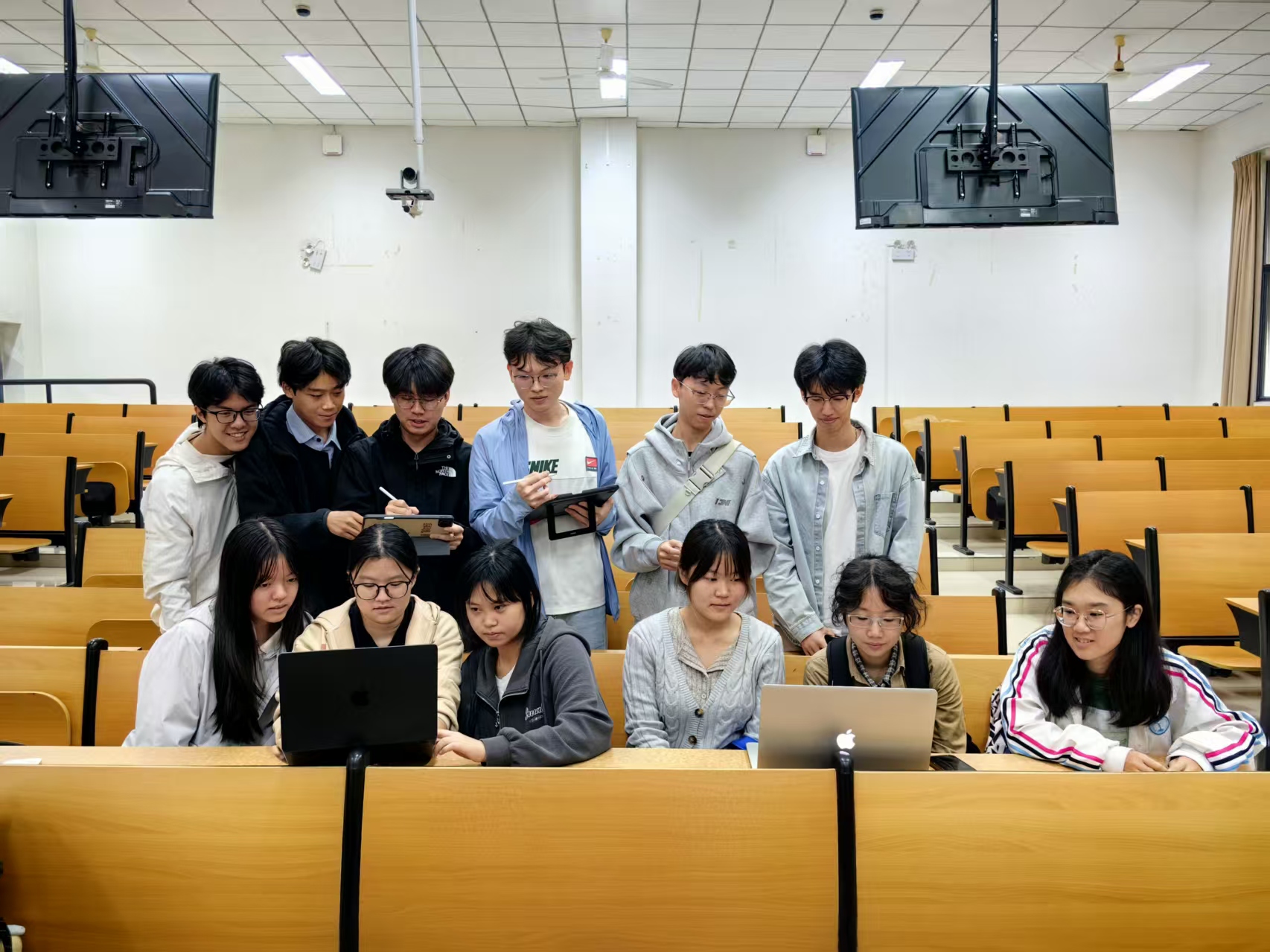
| Student ID | Work Description | Contribution |
|---|---|---|
| Gao Weixiang | Core Backend Algorithm Engineer | 1. Implement the core photometric stereo algorithm using OpenCV; 2. Focus on solving industrial pain points like "subtle surface defect detection" (PCB, metal scratches); 3. Ensure algorithm accuracy error rate ≤5% (quantifiable KPI in OKR framework); 4. Conduct in-depth debugging of algorithm logic to optimize defect contrast enhancement. |
| Yang Lihao | Backend Algorithm Optimization Engineer | 1. Assist the core algorithm engineer in refining surface normal map calculation logic; 2. Test algorithm compatibility with industrial scenarios (e.g., adapting to different lighting conditions for photometric stereo); 3. Collaborate with testers to adjust algorithm parameters based on test feedback; 4. Support verification of algorithm stability in large datasets. |
| Gao Jieming | Dynamic Library Development Engineer | 1. Encapsulate C++ algorithms into dynamic libraries; 2. Test dynamic library calling logic and compatibility with Visual Studio; 3. Provide dynamic library usage specifications for frontend-backend interaction; 4. Ensure dynamic library efficiency and low coupling with frontend modules. |
| Zheng Yijie | CMake & Version Control Engineer | 1. Manage the entire project using CMake; 2. Responsible for Git version control (review code submissions, maintain commit records as per performance evaluation requirements); 3. Maintain project dependency configuration (OpenCV, QT) to ensure consistent development environments; 4. Update CMakeLists.txt to support module expansion (e.g., future 3D reconstruction). |
| Huang Yihao | Software Testing & QA Engineer | 1. Formulate quantifiable performance evaluation plans (document’s "20’ Performance Evaluation Plan"); 2. Verify algorithm accuracy, software stability, and functional completeness (e.g., defect detection success rate); 3. Record test results, track defects, and propose optimization suggestions for backend modules; 4. Ensure alignment of test standards with industrial application requirements (PCB inspection, cultural relic digitization). |
| Xiong Liukun | Deployment & Environment Engineer | 1. Package the software into executable programs (document’s "D (Delivery)" in NABCD model); 2. Configure backend development/test environments (OpenCV, C++ compiler) to ensure compatibility; 3. Assist in migrating industrial datasets (e.g., scratch samples) and verifying data consistency; 4. Provide technical support for backend deployment and post-deployment debugging. |
| Lin Canran | Frontend Architecture Engineer | 1. Design the "frontend QT interface-API-backend algorithm dynamic library" decoupled architecture; 2. Define API specifications for frontend-backend interaction to ensure low coupling; 3. Ensure the scalability of the QT framework to support future 3D reconstruction expansion (document’s team vision); 4. Guide frontend developers to comply with industrial software architecture standards. |
| Zhang Xiaohan | QT Interface Development Engineer | 1. Develop QT/C++ interface components and interactive functions; 2. Implement QT multi-threaded algorithm operation to avoid interface freezes; 3. Integrate key modules: parameter configuration, surface normal map display, and defect result feedback; 4. Ensure 100% completion rate of interface modules (quantifiable KPI). |
| Huang Lin'ge | UI/UX & Localization Engineer | 1. Responsible for QT software beautification and Chinese translation adaptation; 2. Optimize interface layout and user operation flow to meet industrial user habits (e.g., quality inspectors); 3. Ensure visual consistency (unified button style, parameter display format); 4. Test interface usability and adjust based on feedback from potential industrial users. |
| Zheng Ningning | Frontend Visualization Engineer | 1. Develop visualization functions for algorithm results (e.g., surface normal maps, defect enhancement effects); 2. Generate data visualizations (normal distribution plots, augmented visualizations) for defense presentations; 3. Ensure real-time display of algorithm running status on the frontend; 4. Collaborate with backend engineers to synchronize data update logic. |
| Guo Yining | Demo & Defense Support Engineer | 1. Prepare on-site defense demonstration data (e.g., objects with scratches, PCB defect samples); 2. Test on-site software operation (frontend interface response, result display) to ensure smooth demonstration; 3. Collaborate with the visualization engineer to highlight "defect enhancement" effects for judges; 4. Debug frontend-related issues during the demonstration rehearsal. |
| Xu Yihan | Frontend Technical Documentation Engineer | 1. Compile frontend-related technical documents (QT interface development logs, API usage manuals); 2. Update CSDN blog with frontend development progress, technical challenges, and solutions (document’s hidden bonus points); 3. Write user operation manuals for the frontend interface (e.g., parameter configuration guides); 4. Ensure frontend documentation is consistent with actual interface functions and updates. |
The project adopts the Objective and Key Results (OKR)/Key Performance Indicator (KPI) management method. Specifically, the implementation approach is as follows:
Define project-level OKRs: The core objective is "Q[X] Deliver a demonstrable photometric stereo machine vision software prototype", decomposed into four key results: algorithm development, interface development, engineering integration, and deliverable output.
Establish differentiated OKRs and KPIs for four role categories:
Divide project management into four phases:
Flexible adjustment principles: Align with industrial project requirements, avoid over-reliance on data. Focus on core indicators to ensure compatibility with the project’s technical depth and engineering standardization requirements.


