


164
社区成员
 发帖
发帖 与我相关
与我相关 我的任务
我的任务
 分享
分享|
Course Name |
EE308FZ Software Engineering |
|
Assignment Requirements |
Second assignment-- Team up and Topic selection-CSDN Community |
|
Team Name |
SchoolDash校速达 |
|
Project Objective |
The goal is to optimize the e-commerce experience within the school through technology. |
|
Reference Documents |
None |
SchoolDash校速达
|
Role Category |
Name |
Fuzhou University ID (FZU ID) |
Partner University ID (MU ID) |
CSDN Profile |
Personality |
Technical Expertise |
Hobbies |
|
Product (PM) |
Shi Haokun |
832301312 |
23124920 |
832301312_施昊坤 |
outgoing |
frontend and development |
football |
|
Front-end |
Ou Yang |
832301301 |
23125403 |
oy |
Serious |
Front-end Development |
Playing Badminton |
|
Back-end |
Mo Xinyan |
832301314 |
23126582 |
11mxy |
dedicated |
Frontend development |
walking |
|
Back-end |
Sun Xuhang |
832301114 |
23125934 |
2301_81190553 |
Persistent |
Backend development |
Photography |
|
Front-end |
:ZHENG DINGNAN |
832301305 |
23126540 |
832301305_郑丁南 |
all-around |
frontend development |
take exercise |
|
Back-end |
Li Yan |
832301329 |
23131977 |
ly |
focused |
Backend development |
Wandering |
|
Testing |
Lin Xie |
832301230 |
23125322 |
zzz |
all-around |
Coding |
basketball |
|
Front-end |
WANG JUNQI |
832301103 |
23125187 |
Skade7 |
sincere |
Front-end Development |
Table tennis |
|
Back-end |
GUO ZIKAI |
832301318 |
23126591 |
832301318gzk |
responsible |
Back-end Development |
reading |
|
Testing |
Zhou Jinlin |
832301304 |
23125497 |
Zhou |
Persistent |
Front-end Development |
running |
|
Testing |
Hu Yichen |
832301311 |
23125497 |
Angersious |
nice |
Back end Development |
soccer |
|
Front-end |
Shi Haozhen |
832301106 |
23125438 |
DoN QuiXote 004 |
curious |
Back end Development |
Table tennis |
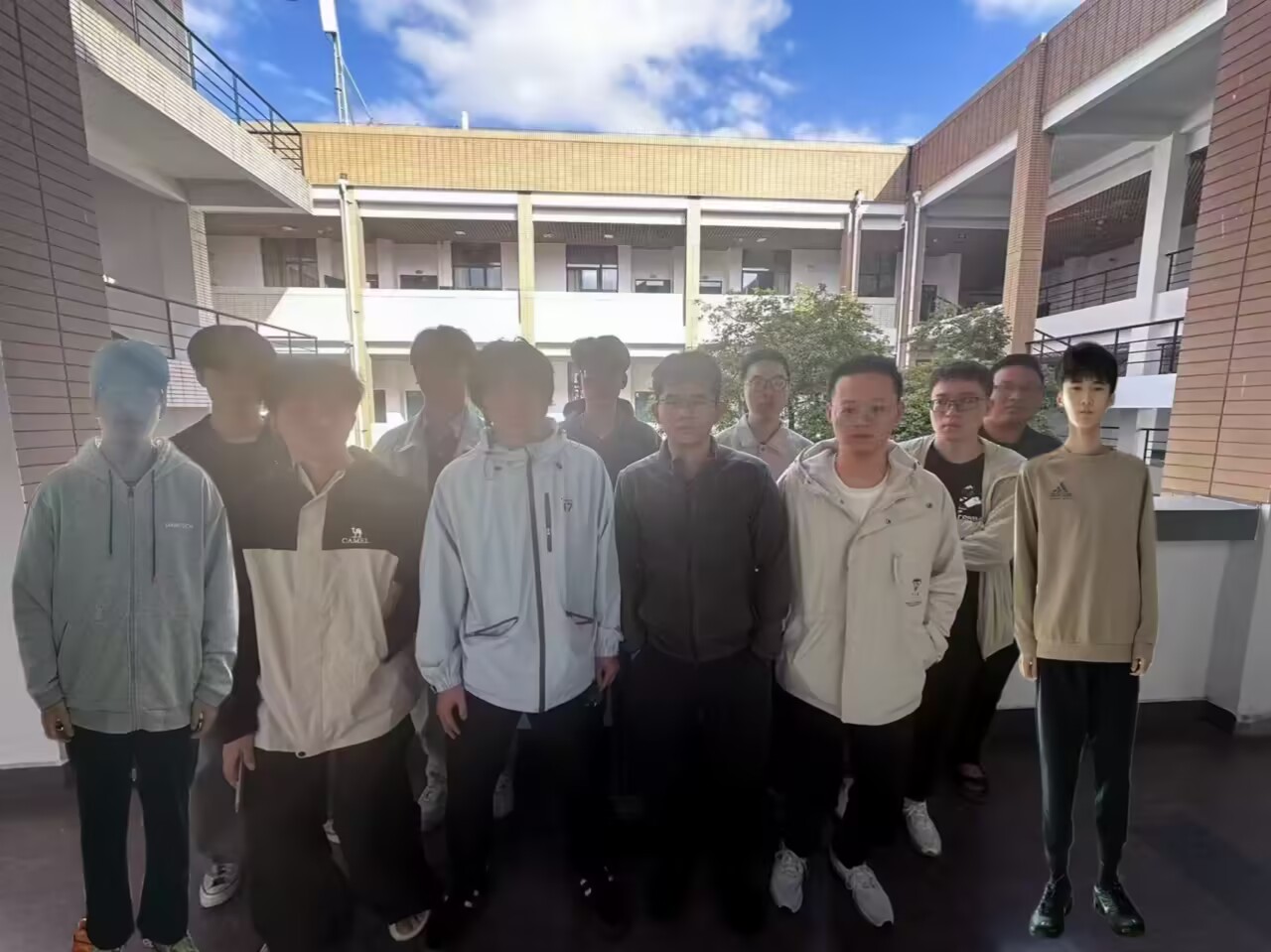
SchoolDash is a campus supermarket delivery platform that enables on-campus supermarkets to deliver goods to dormitories, meeting the daily needs of students and teachers on campus.
A user-friendly campus e-commerce platform connecting students with on-campus supermarkets, offering convenient one-stop shopping for daily necessities and efficient order/inventory management.
|
Module Category |
Number of Functional Points |
Details of Functional Points |
|
User End |
6 |
1.Account login / registration (including simple verification with campus identity) 2. Product browsing and category filtering (sort by category, price, and sales volume) 3. Shopping Cart Operations (Adding/Deleting Items, Modifying Quantities) 4. Offline ordering and order submission (selecting self-pickup/delivery method) 5. Order Inquiry and Status Tracking (Pending Payment / Pending Acceptance / Pending Pickup / Completed) 6. Personal Center (Modify Profile, Address Management, Order History) |
|
Management End |
5 |
1.Product management (adding/editing products, putting products on or off the shelves, updating prices and inventories) 2. Order Management (View orders, accept/cancel orders, update order status) 3. Inventory Management (Real-time inventory synchronization, low inventory warning prompts) 4. User Management (Viewing the list of registered users, simple permission control) 5. Data statistics (basic sales volume and order volume statistics, no need for complex reports) |
|
Platform |
2 |
1.Campus delivery / self-pickup connection (linking supermarkets with student pickup points) 2. Data Synchronization (Real-time interaction of product, inventory, and order information) |
|
Technology Category |
Tools/Frameworks |
|
Front-end Development |
Visual Studio Code (VS Code) + Figma (prototype/UI design) + Chrome DevTools (debugging)/Vue 3 + Element Plus (component library) |
|
Back-end Development |
IntelliJ IDEA Community (Java) / PyCharm Community (Python) + Postman (API testing)/Spring Boot (Java) / Django (Python) |
|
Testing & Deployment |
MySQL (database) + Navicat Premium (visual management) + DrawSQL (ER diagram design)+Git + GitHub/Gitee (code hosting) + Feishu/WeChat Work (communication & document collaboration)/RESTful API (for frontend-backend interaction) |
2.4 Group Composition and Labour Division
|
Role Category |
Number of Members |
Member Names |
Specific Responsibilities |
Scope of Responsible Functional Points |
|
Project Management |
1 |
Shi Haokun |
Coordinate the project schedule, assign tasks, facilitate cross-module communication, organize stage discussions, liaise with teachers to receive submitted results, ensure quality control, and be responsible for classroom presentations. |
8.3% |
|
Front-end Developmen |
4 |
Ou Yang/Shi Haozhen/ZHENG DINGNAN/WANG JUNQI |
Responsible for the full-page development of both the user end and the management end, covering the home page, product category/detail pages (including add to cart), login/registration, shopping cart, personal center (order inquiry), checkout/order confirmation/payment result pages, as well as product/order/user management back-end pages. Ensure that the interface is usable and the operation process is coherent. |
33.2% |
|
Back-end Developmen |
4 |
GUO ZIKAI/Li Yan/Sun Xuhang/Mo Xinyan |
Supporting data and business logic, one person designs the database tables (such as users, products, orders, etc.) and implements operations for adding, deleting, modifying, and querying data. Two people are respectively responsible for the user system (login/registration verification, permissions) and product management, shopping cart (addition, deletion, modification of products) and order process (creation, status update). One person is responsible for the development and integration testing of front-end and back-end interfaces to ensure smooth data interaction. |
33.2% |
|
Testing |
3 |
Zhou Jinlin/Hu Yichen/Lin Xie |
Verify the functions of each module (such as login, placing orders, payment, etc.), check the consistency of the interface and the accuracy of the data, assist in troubleshooting, and ensure the system's availability. |
25.3% |
2.5 Project Timetable
1. Requirement clarification and preparation stage: Define core functions (product browsing, adding to cart, placing order, supermarket data synchronization, campus delivery/self-pickup), identify user roles (students, supermarket administrators), produce requirement documents and product prototypes; determine technology stack and design database table structure; complete team division of labor and development environment setup.
2. Core Function Development Phase: The front-end separately implements the development of user-end (home page, product page, shopping cart, order page, etc.) and management-end (product/order/inventory management page) pages; the back-end completes the development of the data layer, business logic (login registration, product query, order processing, inventory synchronization), and core interfaces. Each module independently completes the coding and self-testing of basic functions.
3. Integration and Optimization Phase: Front-end and back-end are integrated for testing to ensure smooth data interaction; Core processes (browsing - adding to cart - placing order - order synchronization - delivery/collect) are tested, bugs are fixed; Page interaction experience and process smoothness are optimized, exception handling (such as insufficient inventory, order failure prompts) is supplemented; The supermarket data synchronization function is improved.
4. Conclusion and Presentation Phase: Compile technical documents (database design, interface specifications, environment configuration, etc.); Sort out deliverables (source code, prototypes, documentation); Create presentation PPTs, outline key highlights and presentation procedures; Conduct internal rehearsals to ensure the results can be presented properly.
This plan's evaluation cycle is divided into a short-term assessment conducted every two weeks, an interim assessment when the project progress reaches 50%, and a final assessment within one week after the project acceptance. The total score is 100 points, with 40 points allocated to task completion rate, based on the completion rate on time, quality compliance, and work volume achievement, and deductions are made for delayed delivery or non-compliance with quality standards, and for incomplete work volume proportionally; 20 points are allocated to technical ability and output, assessed by the technical leader based on the rationality of the technical plan, problem-solving efficiency, and the reusability of the output; 20 points are allocated to team collaboration and communication, with 10 points from peer evaluations and 10 points from the project manager's assessment, focusing on the speed of communication response, cross-role coordination, and participation in meetings; 15 points are allocated to responsibility awareness and initiative, scored by the team leader based on the performance of taking responsibility actively, reporting risks, and optimizing processes; 5 points are allocated to documentation standards and knowledge accumulation, verified by the document leader regarding the completeness and standardization of relevant documents and the participation of members in knowledge sharing. The evaluation organization structure is that the team leader coordinates the process, the technical leader and core developers form the technical scoring group, the demand leader and test leader form the collaboration scoring group, ordinary members participate in peer evaluations and self-evaluations, and the specific process is that the project manager organizes the task list and schedule 3 days before the evaluation, the technical group and collaboration group collect daily work records, then members complete individual performance self-evaluation within 1 day, next 2 days conduct anonymous peer evaluation and professional scoring, and finally the team leader integrates all scores to calculate the final score and grade. In special circumstances, task adjustments due to demand changes are recalculated after confirmation by the team leader.

