

165
社区成员
 发帖
发帖 与我相关
与我相关 我的任务
我的任务
 分享
分享This blog post belongs to the Software Engineering (EE308FZ) Alpha Sprint assignment. The sprint period is Dec 12–Dec 21, 2025, and our team publishes one sprint log every two days (5 logs in total). The detailed requirements are provided on the course assignment page and group announcements.
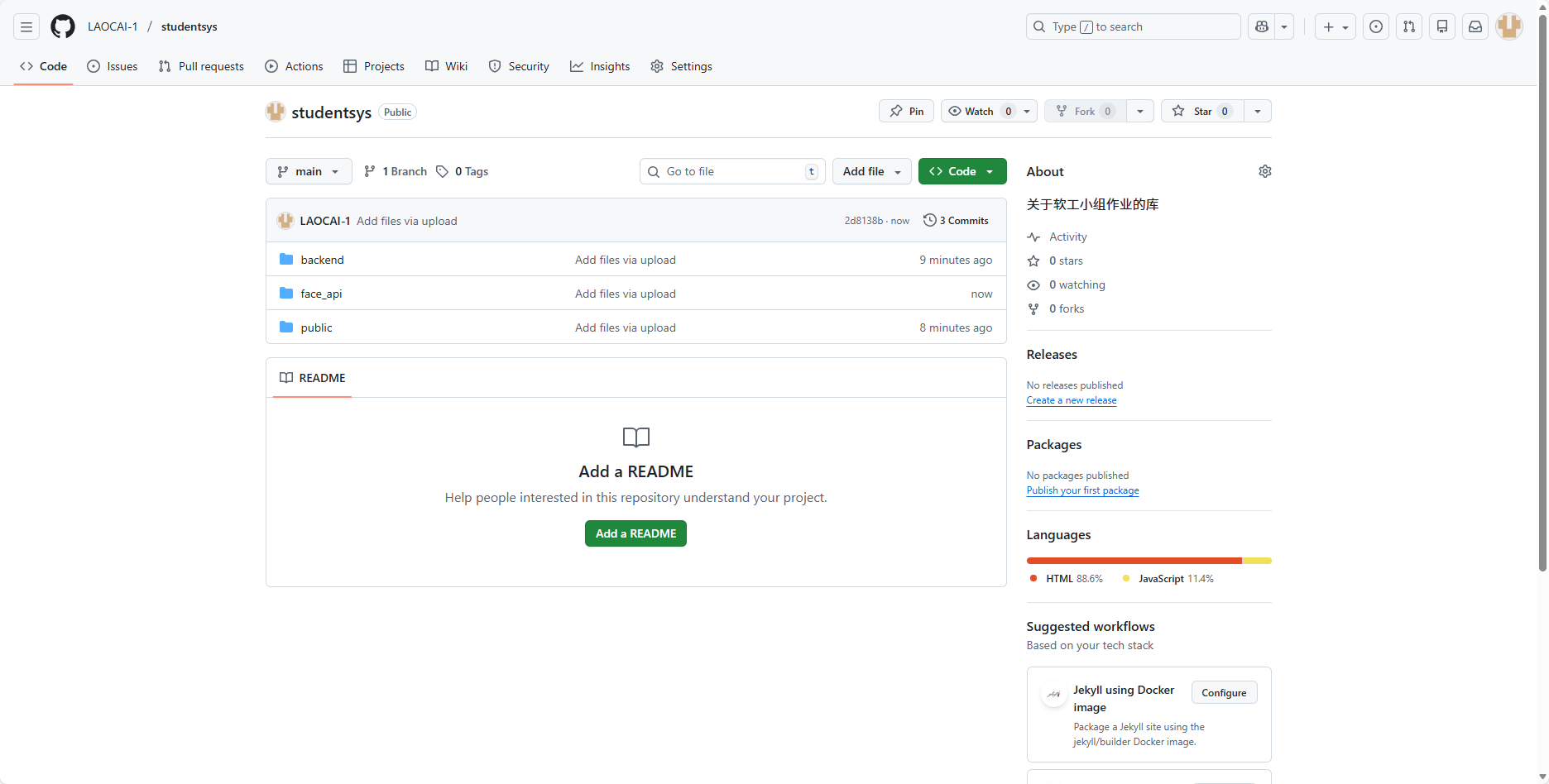
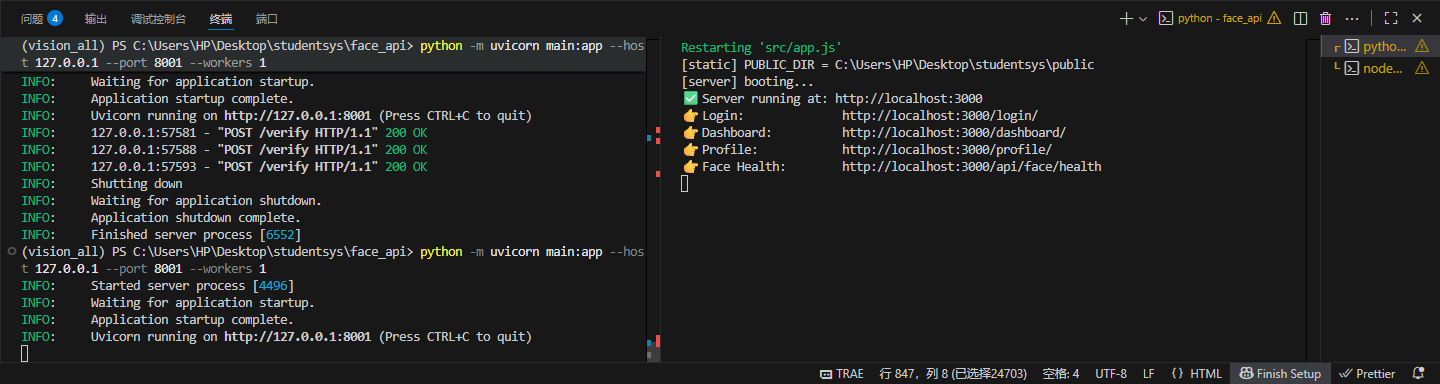
This log records what we built, evidence of progress (burndown chart + running screenshots/videos), and evidence of contributions (GitHub commits / PRs).
Goal: To upgrade the system from a "runnable prototype" to a "stable and deliverable" product:
Ensure the stable integration and debugging of the three core functions.
Complete key interfaces for supporting modules to prove system completeness.
Introduce automated/regression testing processes (to gather materials for the "testing paper").
Focus Areas: Integrate supporting features such as message notifications, campus map, dormitory repair, and personal profile display. Implement unified error handling mechanisms. Conduct preliminary testing.
Accomplished Tasks (with Implementation Details):
✅ Supporting Modules Integrated & Functional:
Academic Message Notification Center: Implemented a real-time notification feed that pulls announcements and alerts from the academic backend system. Features include unread count badges, categorization (Academic/System/Personal), and a "mark as read" function.
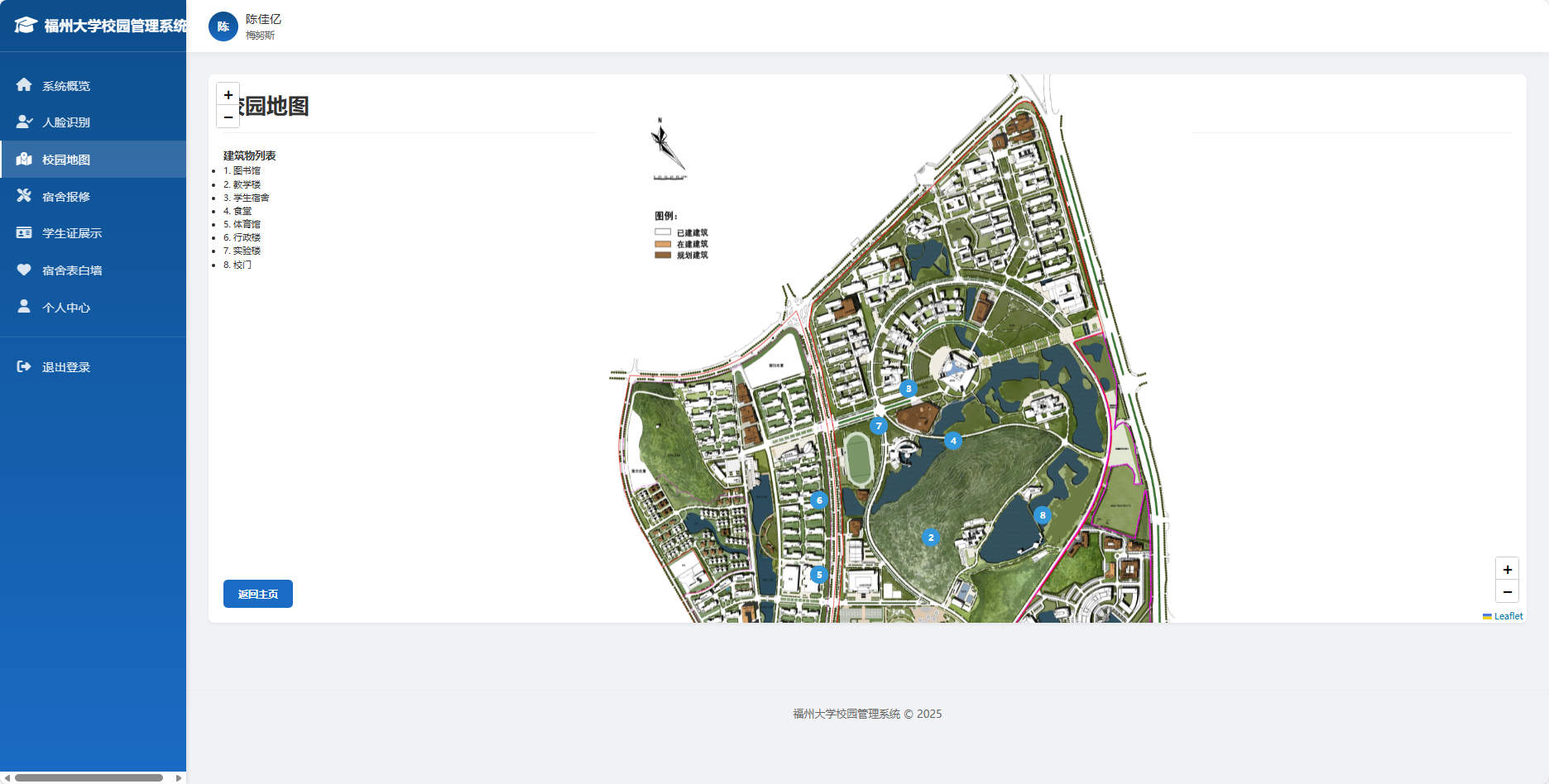
Interactive Campus Map: Integrated a dynamic map displaying key campus locations (libraries, cafeterias, departments). Each point is clickable, showing a brief description and navigation options. Successfully cached geolocation data to optimize load times.
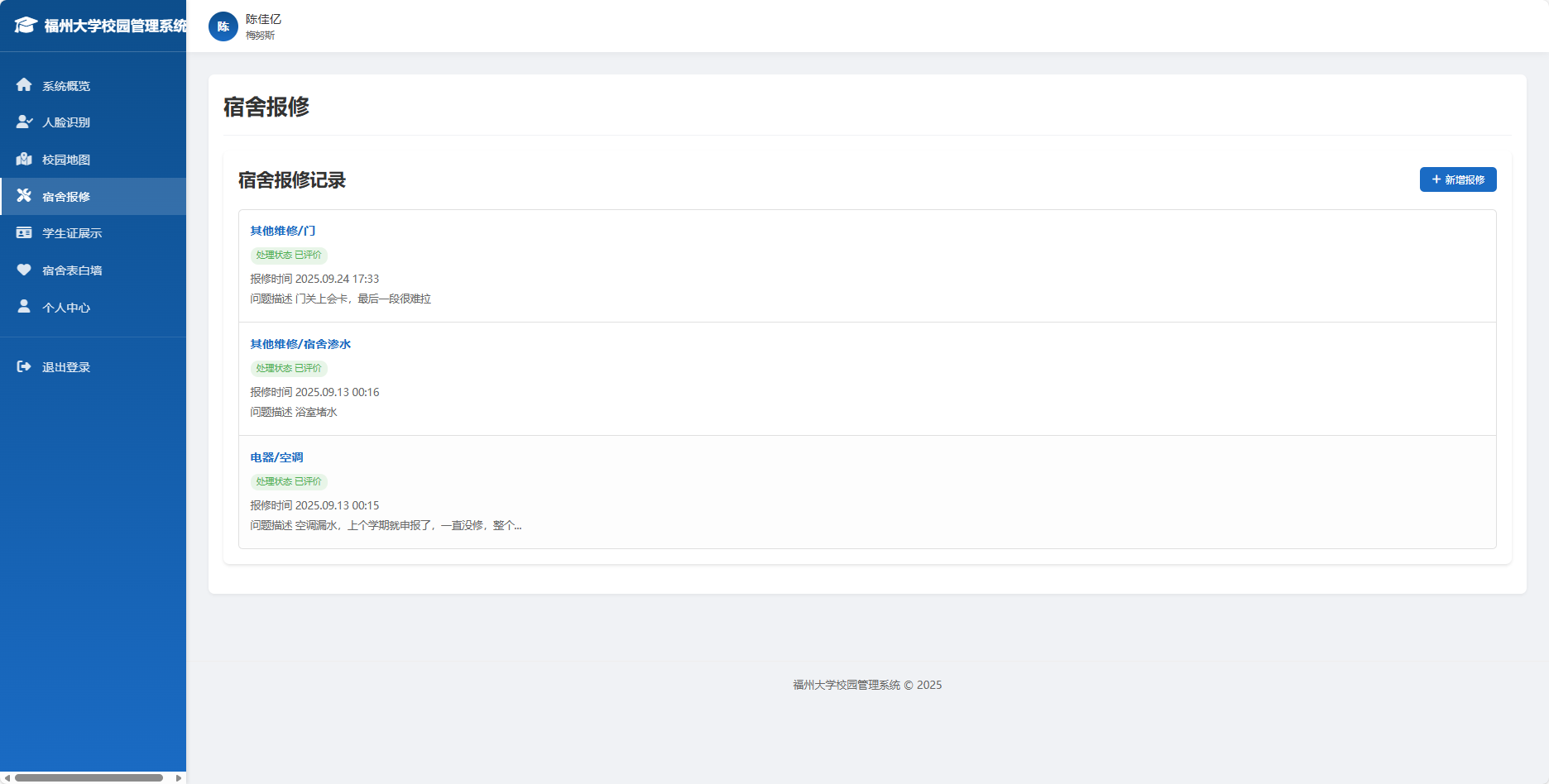
Dormitory Repair System: Developed a complete workflow from fault reporting to status tracking. Users can submit repair requests with descriptions and photos, and view the history and current status (Pending/In Progress/Resolved) of their tickets.
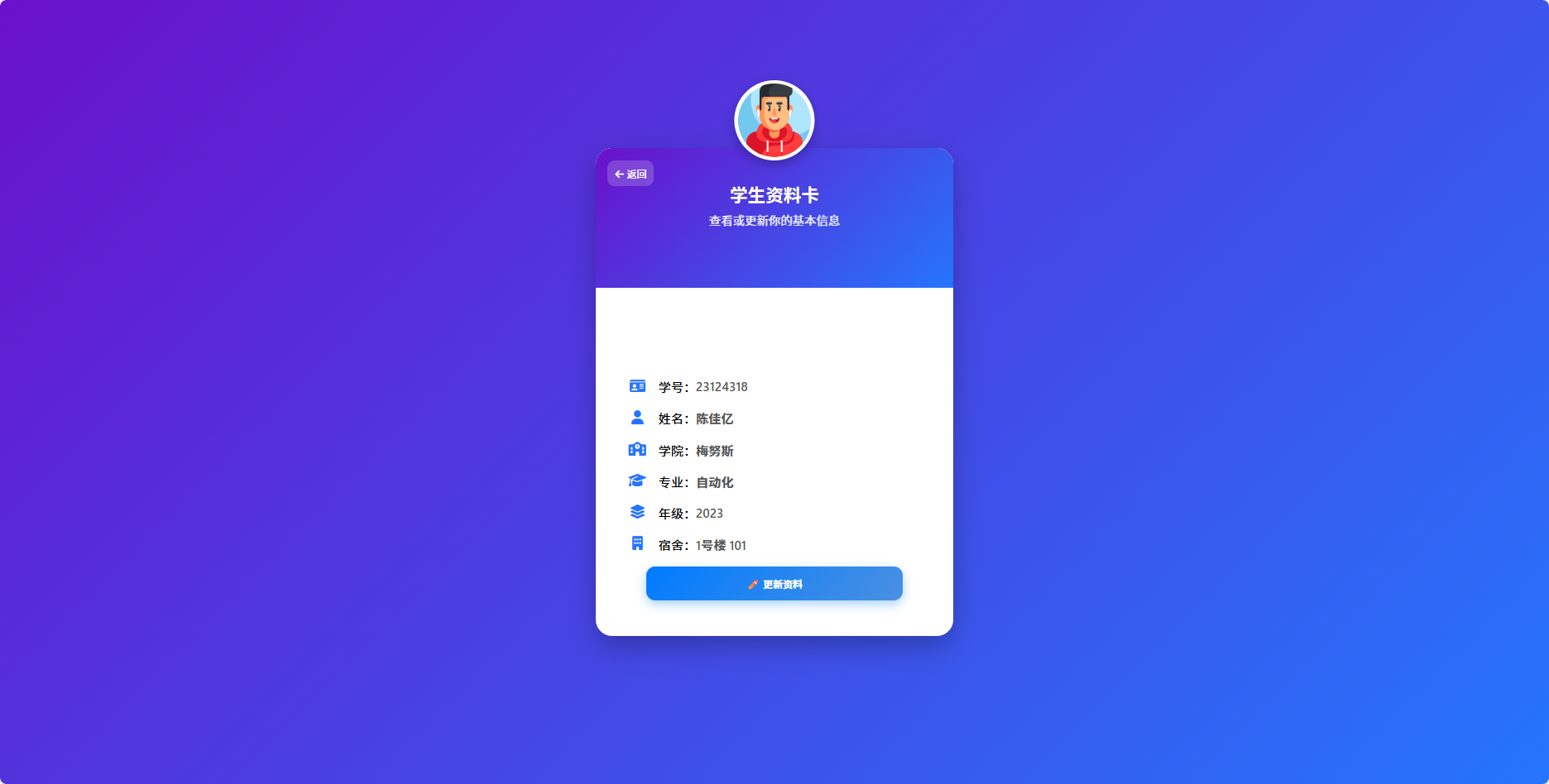
User Profile Dashboard: Built a profile management page where students can view and edit their basic information (avatar, name, contact details) and academic status. The backend successfully fetches and updates this data via the student information system API.
✅ Unified Error & Response Handling Framework:
Designed and implemented a global HTTP response interceptor on the frontend. This interceptor now standardizes all API communications, automatically parsing success responses and converting any HTTP error (4xx, 5xx, network timeouts) into consistent, user-friendly toast notifications.
Created a central error code mapping file to translate backend-specific error codes (e.g., AUTH_401, ORDER_404) into clear, actionable messages for end-users, eliminating raw technical error displays.
✅ Foundational Testing Pipeline Established:
API Contract Testing: Utilized Postman collections and Newman CLI to execute a full regression test suite against all 12 core endpoints. This ensures backend API stability and validates request/response schemas.
Frontend Smoke Testing: Created and ran a set of automated scripts (using Playwright) that simulate critical user journeys: system login, navigation to all main modules, and execution of a primary action (e.g., submitting a repair request). This confirms the application's basic health and usability.
Initial Test Reports: Generated and documented test execution reports, providing a baseline for future regression testing.
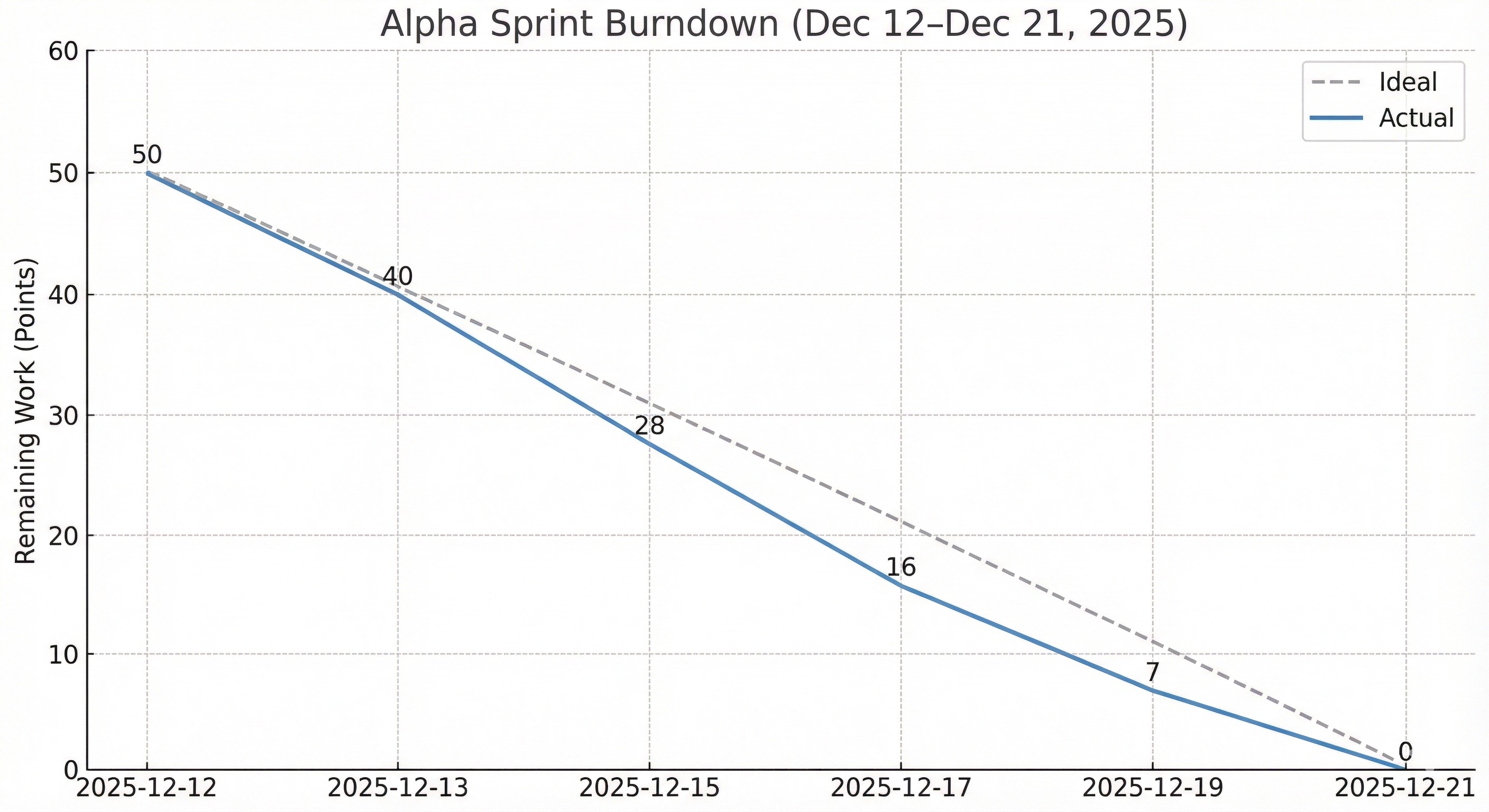
We use a simplified point-based burndown to track progress. Total sprint workload was initially estimated at 50 points, distributed across core modules and supporting tasks.
Remaining Work (Points)
| Date | Remaining Points |
|---|---|
| 2025-12-18 | 12 |
| 2025-12-19 |
7 |
Burndown Chart Image:
Poor API Response Times: The campus map module experiences significant latency (2-3 second delays) when loading dynamic location data, which could lead to user frustration in production environments.
Limited Test Coverage: Current testing is minimal - only basic smoke tests exist. There are no unit tests for individual components, and integration testing between the recognition model and backend services is insufficient.
Key Tasks:
Prepare a cohesive, scripted demonstration showcasing all three core functions.
Conduct final UI consistency checks and update all project documentation.
Perform a final round of regression testing and capture evidence.
Expected Deliverables: A single integrated demo video (60-120s), final test pass screenshots, and a version release. The burndown is projected to reach 0 points.
 Group10 :Sprint Log 5 (12.20~21) — Final Polishing + Final Version Freeze + Presentation Preparation
