2601_FZU-MU_SE

Fubangbang_Group3 — Second Assignment: Team Up and Topic Selection
 墨衍会员 · AI 创作全网分发 墨衍智能分发 通过墨衍一键同步至各平台 可同步平台 CSDN微信公众号微博知乎掘金百家号博客园抖音小红书 你的文章也可以这样分发 墨衍会员 ¥399起/年,写一次发全网
我也要 关注 + 加入社区
This blog records the team formation, project topic, project plan, division of labor, and preliminary performance assessment scheme of Team Fubangbang(福帮帮).
Note: The functional design, Version 1 scope, milestones, and member contribution percentages described in this blog are current project plans. Planned workload does not represent final actual contribution. Optional features may be adjusted according to the actual development progress.
0.1 Format Description
| Item | Content |
|---|---|
| Course | EE308FZ - Software Engineering |
| Assignment Requirements | Second Assignment - Team Up and Topic Selection |
| Course Group | Group 3 |
| Team Name | Fubangbang(福帮帮) |
| Project Name | Fubangbang |
| Assignment Objective | Complete team formation and topic selection, deliver the overall project plan, division of labor scheme and Software Requirements Specification, and prepare the 8-minute topic presentation. |
| Other Reference Documents | The Art of Construction, Course Slides |
0.2 Blog Content Index
目录
- 0.1 Format Description
- 0.2 Blog Content Index
- 1. Team Introduction
- 1.1 Basic Team Information
- 1.2 Team Members
- 1.2.1 Chen Jiayuan(陈嘉源)
- 1.2.2 Chen Haoyang(陈浩洋)
- 1.2.3 Chen Junjie(陈俊洁)
- 1.2.4 Zhu Chaoyang(朱朝阳)
- 1.2.5 Zhou Qican(周祺粲)
- 1.2.6 Zhu Mingqian(朱鸣谦)
- 1.2.7 Ye Jiahui(叶嘉辉)
- 1.2.8 Zhang Sufang(张溯昉)
- 1.2.9 Wu Sifan(吴思凡)
- 1.2.10 Chen Zhijun(陈致均)
- 1.2.11 Chen Mohan(陈墨瀚)
- 1.2.12 Chen Wei(陈唯)
- 1.2.13 Zeng Wenhan(曾文涵)
- 1.2.14 Zheng Bowei(郑博为)
- 1.3 Team Vision
- 1.4 Team Group Photo
- 2. Team Project Plan
- 2.1 Project Background and Overview
- Campus Second-hand Trading
- Campus Guide Sharing
- 2.2 Problems to Be Solved
- 2.2.1 Information Fragmentation
- 2.2.2 Unclear Timeliness
- 2.2.3 Separation Between Information and Resources
- 2.2.4 Fragmented User Process
- 2.3 NABCD Topic Selection Analysis
- 2.3.1 N — Need
- 2.3.2 A — Approach
- Campus Second-hand Trading
- Campus Guide Sharing
- 2.3.3 B — Benefit
- 2.3.4 C — Competitors
- 2.3.5 D — Delivery
- 2.4 Core Functional Modules
- 2.4.1 Campus Second-hand Trading
- 2.4.2 Campus Guide Sharing
- 2.5 Typical User Scenarios
- Scenario 1: Exam Preparation
- Scenario 2: Freshman Enrollment
- Scenario 3: Graduation
- 2.6 Scope of the First Version
- Must-have Features
- Optional Features
- Features Not Included in Version 1
- 2.7 Project Milestones
- 3. Project Division of Labor
- 3.1 Team Structure and Responsibilities
- 3.1.1 Backend Team
- 3.1.2 Frontend Team
- 3.1.3 UI & Presentation Team
- 3.1.4 Execution Support Team
- 3.2 Member Workload and Contribution Table
- 4. Team Performance Assessment Plan
- 4.1 Assessment Principles
- 4.1.1 Fairness
- 4.1.2 Result-Oriented Assessment
- 4.1.3 Process Records
- 4.1.4 Continuous Improvement
- 4.2 Assessment Indicators
- 4.3 Assessment Implementation Process
- Stage 1: Task Assignment
- Stage 2: Progress Tracking
- Stage 3: Stage Review
- Stage 4: Comprehensive Evaluation
- Stage 5: Feedback and Adjustment
- 4.4 Application of Assessment Results
- 5. Attachments
- 5.1 Software Requirements Specification
- Attachment
1. Team Introduction
1.1 Basic Team Information
| Item | Content |
|---|---|
| Team Name | Fubangbang(福帮帮) |
| Team Size | 14 members |
| Team Leader / Overall Project Lead | Chen Jiayuan(陈嘉源) |
| Project Name | Fubangbang |
| Target Users | Students of Fuzhou University |
| Core Module 1 | Campus Second-hand Trading |
| Core Module 2 | Campus Guide Sharing |
| Current Stage | Project Planning and Requirements Analysis |
The name Fubangbang(福帮帮) reflects the core idea of the project.
The first character “Fu” refers to Fuzhou University and emphasizes that the platform is designed for campus scenarios. “Bangbang” expresses the idea of mutual help, resource sharing, and information exchange among students.
Our team hopes to start from the real needs of Fuzhou University students and develop a campus-oriented resource-sharing and life-service platform through software engineering methods.
1.2 Team Members
Team Fubangbang consists of 14 members.
According to the needs of the project, the team is divided into four groups:
- Backend Team
- Frontend Team
- UI & Presentation Team
- Execution Support Team
The following profiles include each member's FZU/MU student IDs, CSDN profile, personality, technical expertise, hobbies, desired software engineering role, and personal slogan.
1.2.1 Chen Jiayuan(陈嘉源)
- FZU ID: 832402203
- MU ID: 24125415
- CSDN Profile: C1256998535
- Personality: Careful and responsible, good at team communication and coordination, capable of organizing and leading the team, and willing to explore innovative ideas
- Technical Expertise: C++, Java, Python, Word, Excel, and team organization
- Hobbies: Football, travelling, fitness
- Desired Role: Software Planner
- Personal Slogan: To dare is to do
1.2.2 Chen Haoyang(陈浩洋)
- FZU ID: 832402202
- MU ID: 24125407
- CSDN Profile: cenay
- Personality: Careful, logical, interested in technical problems, and cooperative in teamwork
- Technical Expertise: Python, FastAPI, RESTful API, PostgreSQL, Git, backend development, reinforcement learning and embodied intelligence
- Hobbies: Programming practice, reading AI papers, exploring frontier technologies
- Desired Role: Backend Development Engineer / AI Algorithm Engineer
- Personal Slogan: Think rigorously and turn ideas into reliable code
1.2.3 Chen Junjie(陈俊洁)
- FZU ID: 832402204
- MU ID: 24127540
- CSDN Profile: 2503_91156489
- Personality: Optimistic, enthusiastic, and outgoing
- Technical Expertise: Backend development
- Hobbies: Exercise, gaming, reading
- Desired Role: Backend Development Engineer
- Personal Slogan: Study hard and make progress every day
1.2.4 Zhu Chaoyang(朱朝阳)
- FZU ID: 832402229
- MU ID: 24125920
- CSDN Profile: 2501_90403243
- Personality: Practical and easy to communicate with
- Technical Expertise: Frontend development
- Hobbies: Programming, sports
- Desired Role: Frontend Development Engineer
- Personal Slogan: Finish every task carefully and deliver successfully
1.2.5 Zhou Qican(周祺粲)
- FZU ID: 832402228
- MU ID: 24125911
- CSDN Profile: 2603_97141239
- Personality: Optimistic
- Technical Expertise: Frontend development
- Hobbies: Photography
- Desired Role: Frontend Development Engineer
- Personal Slogan: Stay disciplined in action and focused in exploration
1.2.6 Zhu Mingqian(朱鸣谦)
- FZU ID: 832402230
- MU ID: 24127591
- CSDN Profile: 2401_87507427
- Personality: Calm
- Technical Expertise: Backend development
- Hobbies: Sleeping
- Desired Role: Software Development Engineer
- Personal Slogan: AI leads human progress
1.2.7 Ye Jiahui(叶嘉辉)
- FZU ID: 832402225
- MU ID: 24125474
- CSDN Profile: fateyh1
- Personality: Creative, detail-oriented, responsible and collaborative
- Technical Expertise: UI/UX design
- Hobbies: Running, designing, and coding
- Desired Role: Frontend Developer
- Personal Slogan: Design with purpose, code with passion
1.2.8 Zhang Sufang(张溯昉)
- FZU ID: 832402226
- MU ID: 24126519
- CSDN Profile: 2501_91442240
- Personality: Clear logical thinking, reliable and responsible, good at teamwork and problem decomposition, and willing to embrace new technical challenges
- Technical Expertise: Java backend development, UI design
- Hobbies: Solving algorithm problems, outdoor cycling, studying open-source projects, and digital product reviews
- Desired Role: UI Designer
- Personal Slogan: Write every line of code steadily, and perfect every function meticulously
1.2.9 Wu Sifan(吴思凡)
- FZU ID: 832402222
- MU ID: 24126420
- CSDN Profile: xdzjldy
- Personality: Creative and collaborative
- Technical Expertise: UI design
- Hobbies: Coding
- Desired Role: UI Designer and Presentation
- Personal Slogan: Design with purpose, code with passion
1.2.10 Chen Zhijun(陈致均)
- FZU ID: 832402207
- MU ID: 24127248
- CSDN Profile: 2401_89663587
- Personality: Patient and careful, good at communication, willing to actively search for solutions, and able to handle disagreements rationally during teamwork
- Technical Expertise: Basic Java, C, C++, and document tools such as Word
- Hobbies: Reading, gaming, learning new technologies
- Desired Role: Software Testing Engineer
- Personal Slogan: Keep glory in mind and move forward bravely
1.2.11 Chen Mohan(陈墨瀚)
- FZU ID: 832402205
- MU ID: 24126446
- CSDN Profile: CS9999999999
- Personality: Easy-going and cooperative
- Technical Expertise: Frontend development
- Hobbies: Photography
- Desired Role: Frontend Development Engineer
- Personal Slogan: Keep going and we will win
1.2.12 Chen Wei(陈唯)
- FZU ID: 832402206
- MU ID: 24126713
- CSDN Profile: 2402_89221747
- Personality: Willing to learn
- Technical Expertise: Backend development
- Hobbies: Travelling
- Desired Role: Backend Development Engineer
- Personal Slogan: Learn through practice and grow through exploration
1.2.13 Zeng Wenhan(曾文涵)
- FZU ID: 832402201
- MU ID: 24127183
- CSDN Profile: ZwHctytvb
- Personality: Active thinker and willing to try new technologies
- Technical Expertise: Programming and software development
- Hobbies: Writing technical blogs, playing basketball
- Desired Role: Backend Development Engineer
- Personal Slogan: Code steadily and keep learning
1.2.14 Zheng Bowei(郑博为)
- FZU ID: 832302218
- MU ID: 23124377
- CSDN Profile: 2401_84244096
- Personality: Calm, practical, careful and focused
- Technical Expertise: Basic software testing and office software
- Hobbies: Programming, listening to music
- Desired Role: Testing Engineer / Documentation Engineer
- Personal Slogan: Work steadily and complete the project successfully
1.3 Team Vision
During this semester's Software Engineering project, we hope to address two common problems faced by Fuzhou University students:
- Fragmented campus information
- Inefficient circulation of campus resources
At present, information about second-hand trading, course experience, examination preparation, campus life and other topics is scattered across QQ groups, Xiaohongshu, Xianyu and other platforms.
Students often need to search across several platforms before finding useful information, while the timeliness and campus relevance of that information cannot always be guaranteed.
Therefore, we plan to develop Fubangbang, a campus resource-sharing and life-service platform designed for students of Fuzhou University.
The platform combines two main scenarios:
- Campus Second-hand Trading
- Campus Guide Sharing
Our goal in this semester is not to build an extremely complicated platform. Instead, we aim to produce a working software prototype with complete core workflows.
The first stage will prioritize user registration and login, second-hand item publishing and searching, item status management, guide publishing and browsing, and a simple tag-based connection between campus guides and related resources.
We hope Fubangbang can serve not only as a course assignment but also as a complete simulation of the software engineering process, including requirements analysis, product design, software development, testing, and iteration.
1.4 Team Group Photo
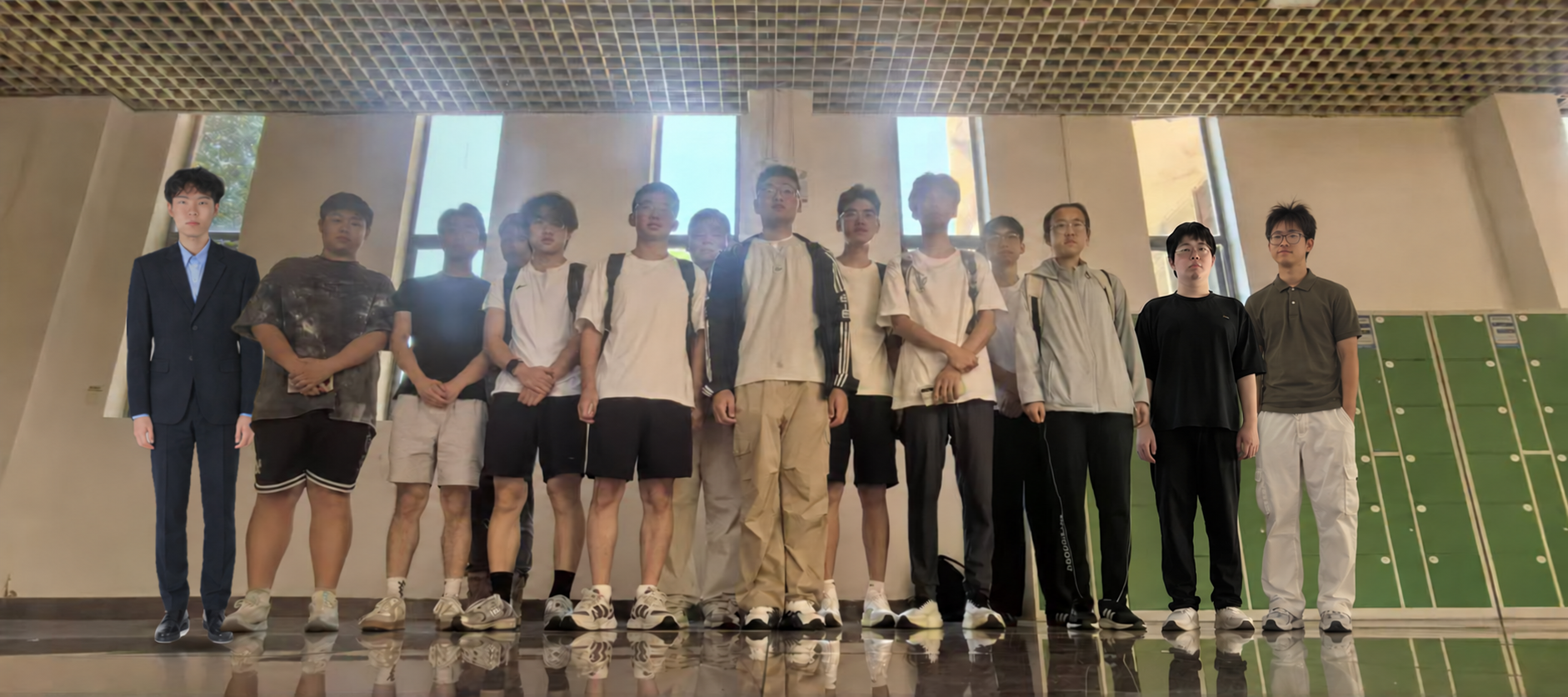
Photo Description: The first group photo of Fubangbang(福帮帮).
2. Team Project Plan
2.1 Project Background and Overview
Fubangbang is a campus resource-sharing and life-service platform designed for students of Fuzhou University.
The project focuses on two high-frequency campus scenarios:
Campus Second-hand Trading
Campus-based exchange of second-hand resources.
Campus Guide Sharing
Sharing useful academic and campus-life experience.
The project aims to bring campus resources and experience information that are currently scattered across different social platforms into one system.
Compared with general-purpose platforms such as Xianyu and Xiaohongshu, Fubangbang focuses more specifically on Fuzhou University scenarios, such as:
- textbook trading;
- exam-preparation materials;
- graduation-season second-hand items;
- course-selection experience;
- exam-review experience;
- canteen and dormitory information;
- freshman guides;
- general campus-life information.
Current Status: The project is currently in the requirements analysis and planning stage. The functions described below represent planned requirements rather than completed or user-validated features.
2.2 Problems to Be Solved
2.2.1 Information Fragmentation
Second-hand items, course experience, revision materials, and campus-life guides are currently distributed across QQ groups, Xiaohongshu, Xianyu, and other platforms.
Students often need to search across several platforms to obtain the information they need.
2.2.2 Unclear Timeliness
Some campus information is highly time-sensitive.
For example, a second-hand item may already have been sold while the original post remains available. Similarly, a course guide may become outdated after the course content changes.
2.2.3 Separation Between Information and Resources
Information and related resources are often separated.
For example, after reading an examination guide, a student may still need to search another platform for the recommended textbook or revision material.
2.2.4 Fragmented User Process
The process from discovering information to contacting a resource provider and completing an offline exchange currently involves several different platforms.
Fubangbang aims to integrate these campus scenarios into one platform as much as possible.
2.3 NABCD Topic Selection Analysis
2.3.1 N — Need
The project focuses on several common campus needs.
| User Need | Current Problem |
|---|---|
| Centralized campus resource information | Second-hand items, learning materials and campus experience are distributed across multiple platforms |
| Better information timeliness | Sold items and outdated guides may still remain visible |
| Connection between information and resources | Students may need to search another platform after reading a guide |
| Simpler user workflow | Searching, contacting and exchanging resources often require different platforms |
The main target users are students of Fuzhou University, especially students who need textbooks, exam-preparation materials, graduation-season items, freshman information and course experience.
These needs are currently based on the team's preliminary analysis of common campus scenarios. Further user feedback and testing will be required during later development stages.
2.3.2 A — Approach
Fubangbang plans to address these needs through two core modules.
Campus Second-hand Trading
The module will support:
- publishing second-hand items;
- publishing wanted-item posts;
- category-based organization;
- search and filtering;
- item status management;
- item detail pages;
- publisher contact information;
- campus-oriented categories;
- text-based guidance for common on-campus meeting locations.
Campus Guide Sharing
The module will support:
- guide publishing;
- guide browsing;
- guide searching;
- tag classification;
- course-selection experience;
- revision and examination experience;
- postgraduate study experience;
- canteen, dormitory and delivery information;
- freshman guides;
- general campus-life information.
A basic tag system will also be used to create a lightweight relationship between guide content and related second-hand resources.
The first version will use an independent account registration and login system and will not integrate with the university database.
2.3.3 B — Benefit
The expected value of Fubangbang includes:
| Expected Benefit | Planned Design |
|---|---|
| Reduce cross-platform searching | Combine campus trading and guide information in one platform |
| Improve the usability of resource information | Use item status management to distinguish available and sold items |
| Improve campus relevance | Provide campus-specific categories such as textbooks, exam materials and graduation items |
| Connect experience with resources | Use tags to create lightweight relationships between guides and related resources |
| Simplify the resource exchange process | Support information discovery, resource searching and publisher contact within one platform |
These are expected benefits rather than experimentally verified results. Specific improvements will need to be evaluated during later testing and user feedback.
2.3.4 C — Competitors
Fubangbang is positioned relative to several commonly used campus information and resource-sharing solutions.
| Existing Solution | Typical Strength | Fubangbang's Planned Focus |
|---|---|---|
| QQ / WeChat Groups | Fast communication within student communities | More structured search, classification and item-status management |
| Xianyu | Mature second-hand trading platform | More focus on Fuzhou University textbooks, exam materials and graduation-season scenarios |
| Xiaohongshu | Rich experience-sharing and lifestyle content | Combine campus guides with campus resources in one platform |
| Fubangbang | Campus-oriented integrated service | Campus Second-hand Trading + Campus Guide Sharing + lightweight tag-based connection |
This comparison is intended to explain the positioning of the project rather than claim that the existing platforms do not provide similar functions.
2.3.5 D — Delivery
The project is planned according to the course development schedule.
- W6: Confirm requirements, team division and initial prototype.
- W7-W10: Develop the user system and core second-hand trading workflow.
- W11-W12: Develop the guide-sharing module, tag system and system integration.
- W13-W14: Conduct functional testing, bug fixing and prepare demonstration content.
- W15-W16: Complete final optimization, project delivery, presentation slides and project blog.
The current delivery target is the course project. The functional design may be adjusted according to actual development progress and user feedback.
2.4 Core Functional Modules
2.4.1 Campus Second-hand Trading
The Campus Second-hand Trading module is responsible for publishing, browsing and exchanging campus second-hand resources.
The first version plans to support:
- publishing second-hand items;
- publishing wanted-item posts;
- item categories;
- search and filtering;
- item status management;
- item detail pages;
- contacting publishers;
- campus-specific categories such as textbooks, graduation items and exam-preparation materials;
- text guidance for common on-campus meeting locations.
The module mainly serves campus scenarios involving textbooks, daily necessities, digital devices, dormitory supplies and graduation-season items.
2.4.2 Campus Guide Sharing
The Campus Guide Sharing module is used for organizing and sharing campus experience and information.
Planned content includes:
- course-selection experience;
- course revision and examination experience;
- postgraduate entrance examination and postgraduate recommendation experience;
- canteen, dormitory and delivery information;
- freshman guides;
- general campus-life information.
The first version will prioritize guide publishing, browsing, searching and tag classification.
Community interaction functions such as likes, favorites and comments will be considered according to development progress.
The team also plans to use a simple shared tag mechanism to create a certain degree of connection between campus guides and related second-hand resources.
2.5 Typical User Scenarios
Scenario 1: Exam Preparation
A student reads a course or examination preparation guide
→ learns about recommended textbooks and materials
→ searches for the related textbook in the second-hand trading module
→ contacts the seller
→ completes an offline exchange on campus.
Scenario 2: Freshman Enrollment
A freshman reads campus and dormitory guides
→ identifies necessary daily items
→ browses second-hand items published by senior students
→ contacts the publisher
→ collects the item on campus.
Scenario 3: Graduation
A graduating student organizes unused dormitory items
→ publishes them on the platform
→ junior students browse the listings
→ both sides make contact
→ the resources are reused within the campus.
2.6 Scope of the First Version
Considering the course development period, team experience and practical workload, the first version will focus on complete core workflows rather than excessive functional complexity.
Note: The following Must-have Features represent the planned Version 1 baseline and do not mean that these functions have already been implemented.
Must-have Features
- User registration and login
- Basic user information management
- Second-hand item publishing
- Item browsing, searching and classification
- Item status management
- Guide publishing
- Guide browsing and searching
- Basic tag system
Optional Features
Depending on project progress, the following functions may also be implemented:
- Likes
- Favorites
- Comments
- More complete relationships between guides and items
- Additional campus-related categories
Features Not Included in Version 1
The following functions are not currently planned for Version 1:
- Online payment
- Complex campus credit system
- Intelligent recommendation algorithms
- Instant messaging system
The first stage will use independent account registration and login so that the project can be developed and operated independently under the current conditions.
2.7 Project Milestones
| Stage | Time | Main Tasks | Expected Output |
|---|---|---|---|
| Project Initialization | W6 | Confirm requirements, team division and prototype | Project description, prototype and task division |
| Core Development | W7-W10 | Develop user system and second-hand trading module | Basic registration/login and complete trading workflow |
| Extended Development & Integration | W11-W12 | Develop guide module and complete system integration | Guide sharing module, tagging and system integration |
| Testing & Optimization | W13-W14 | Functional testing, bug fixing and content preparation | Stable version, test records and demonstration content |
| Final Delivery | W15-W16 | Final optimization and presentation preparation | Final software, presentation slides and project blog |
3. Project Division of Labor
To ensure the orderly progress of the Fubangbang project, the 14 team members are divided into four groups according to project development and delivery requirements:
- Backend Team
- Frontend Team
- UI & Presentation Team
- Execution Support Team
The groups are responsible for backend development, frontend development, interface design and presentation, software testing, and documentation.
The overall project lead is Chen Jiayuan(陈嘉源), who is responsible for requirement coordination, project progress management and external communication.
3.1 Team Structure and Responsibilities
3.1.1 Backend Team
Leader: Chen Haoyang(陈浩洋)
Members: Chen Jiayuan(陈嘉源), Chen Junjie(陈俊洁)
Main responsibilities:
- Design and maintain data related to users, second-hand items and campus guides.
- Implement backend APIs and business logic for the trading and guide-sharing modules.
- Prepare API documentation and perform basic data validation.
- Cooperate with the frontend team during system integration and problem solving.
3.1.2 Frontend Team
Leader: Zhu Chaoyang(朱朝阳)
Members: Zhou Qican(周祺粲), Zhu Mingqian(朱鸣谦)
Main responsibilities:
- Develop pages and interactions for the second-hand trading module.
- Develop pages and interactions for the campus guide-sharing module.
- Develop shared components and maintain page adaptation and integration.
- Cooperate with the backend team during API integration and debugging.
3.1.3 UI & Presentation Team
Leader: Ye Jiahui(叶嘉辉)
Members: Zhang Sufang(张溯昉), Chen Zhijun(陈致均), Wu Sifan(吴思凡)
Main responsibilities:
- Define the overall visual style, interface design and interaction guidelines.
- Provide page designs, layouts and visual materials for frontend development.
- Optimize interface consistency across modules.
- Prepare presentation slides, blog formatting and related visual materials.
- Participate in presentation script preparation and final project presentation.
3.1.4 Execution Support Team
Leader: Chen Mohan(陈墨瀚)
Members: Chen Wei(陈唯), Zeng Wenhan(曾文涵), Zheng Bowei(郑博为)
Main responsibilities:
- Conduct functional testing according to the project requirement list.
- Record discovered problems, collect bug screenshots and conduct regression testing.
- Assist in preparing test cases and test records.
- Support documentation formatting, sample content, screenshots and demonstration materials.
- Cooperate with the development and presentation teams before final delivery.
3.2 Member Workload and Contribution Table
The following percentages represent the team's preliminary planned workload distribution.
They do not represent final contribution scores or completed work.
Actual contribution may be reviewed and adjusted according to task completion, output quality, collaboration performance and verifiable work records.
| Member / Student ID | Work Description | Planned Workload |
|---|---|---|
| Chen Jiayuan(陈嘉源) FZU: 832402203 MU: 24125415 | Overall project coordination, requirement management, progress management and backend development | 12% |
| Chen Haoyang(陈浩洋) FZU: 832402202 MU: 24125407 | Backend team coordination, database design and backend API development | 11% |
| Chen Junjie(陈俊洁) FZU: 832402204 MU: 24127540 | Database maintenance, backend business logic and API integration support | 9% |
| Zhu Chaoyang(朱朝阳) FZU: 832402229 MU: 24125920 | Frontend team coordination, frontend development and module integration | 11% |
| Zhou Qican(周祺粲) FZU: 832402228 MU: 24125911 | Frontend page development, interaction implementation and integration support | 7% |
| Zhu Mingqian(朱鸣谦) FZU: 832402230 MU: 24127591 | Frontend page development, common components and page adaptation | 9% |
| Ye Jiahui(叶嘉辉) FZU: 832402225 MU: 24125474 | UI and presentation coordination, interface design and presentation organization | 11% |
| Zhang Sufang(张溯昉) FZU: 832402226 MU: 24126519 | Visual interface design, page layout and visual material production | 7% |
| Chen Zhijun(陈致均) FZU: 832402207 MU: 24127248 | Interaction guideline organization, interface optimization and presentation material preparation | 6% |
| Wu Sifan(吴思凡) FZU: 832402222 MU: 24126420 | Project blog formatting, presentation materials and presentation preparation | 7% |
| Chen Mohan(陈墨瀚) FZU: 832402205 MU: 24126446 | Execution support coordination, testing progress and problem management | 3% |
| Chen Wei(陈唯) FZU: 832402206 MU: 24126713 | Functional testing, bug screenshots, test-case preparation and regression testing | 2% |
| Zeng Wenhan(曾文涵) FZU: 832402201 MU: 24127183 | Documentation, sample content, screenshot preparation and demonstration materials | 3% |
| Zheng Bowei(郑博为) FZU: 832302218 MU: 23124377 | Functional testing, documentation, test records and demonstration preparation | 2% |
| Total | 100% |
The planned workload distribution may be adjusted if the actual division of labor changes significantly during the project.
4. Team Performance Assessment Plan
To ensure that assigned tasks can be effectively implemented and that team contribution can be evaluated in a fair and traceable manner, the team has established the following performance assessment plan.
The assessment focuses mainly on actual outputs while also considering task completion, output quality, teamwork and process records.
4.1 Assessment Principles
4.1.1 Fairness
Members will be evaluated according to their assigned responsibilities and actual work.
Contribution will not be judged only by job title, work type or amount of code.
Different roles will use evaluation criteria appropriate to their responsibilities.
4.1.2 Result-Oriented Assessment
The assessment focuses on whether assigned tasks are completed and whether the submitted results are complete, usable and of acceptable quality.
Development, design, testing and documentation work are all included.
4.1.3 Process Records
Task lists, progress reports, code, design files, test records and document versions will be used to record the working process and provide evidence for evaluation.
4.1.4 Continuous Improvement
Performance assessment is not only used to evaluate contribution but also to identify project risks and problems.
When members encounter difficulties or delays, the team should communicate and coordinate in time.
4.2 Assessment Indicators
The team will use a 100-point stage-based evaluation system.
| Assessment Indicator | Weight | Main Evaluation Criteria |
|---|---|---|
| Task Completion | 35% | Whether assigned tasks are completed according to the plan and whether delays are reported in time |
| Output Quality | 30% | Whether the submitted work is complete, accurate, usable and meets the role-specific requirements |
| Team Collaboration | 15% | Whether the member actively supports group and cross-group cooperation |
| Documentation & Process Records | 10% | Whether related documents, task records, test records and outputs are updated properly |
| Progress Reporting & Meeting Participation | 10% | Whether progress is reported as required and blockers are communicated in time |
| Total | 100% |
Different roles will use different evidence.
For example:
- Development members will mainly be evaluated through implemented functions, API integration and technical outputs.
- UI & Presentation members will mainly be evaluated through design drafts, interface guidelines, slides and presentation materials.
- Execution Support members will mainly be evaluated through test cases, bug records, regression results, documents and demonstration materials.
4.3 Assessment Implementation Process
Stage 1: Task Assignment
Each group divides milestone goals into specific tasks and defines:
- task owner;
- expected output;
- completion time.
Stage 2: Progress Tracking
Group leaders update progress every 2-3 days.
Members should report completed work and existing blockers in time.
The team will hold a short meeting every week to discuss current progress, problems and the next stage of work.
Stage 3: Stage Review
At the end of major stages such as core development, integration and testing, each group reviews:
- completed tasks;
- unresolved problems;
- related work records.
For unfinished tasks, the reason and follow-up plan should be recorded.
Stage 4: Comprehensive Evaluation
The overall project lead and group leaders evaluate members based on the assessment indicators and actual work records.
Evaluation results should be supported by observable work outputs or process records.
Stage 5: Feedback and Adjustment
Members will receive feedback on the evaluation.
If there is disagreement, the result can be reviewed according to actual task records and work outputs.
If task difficulty or division of labor changes significantly, the workload allocation may also be adjusted.
4.4 Application of Assessment Results
The assessment is mainly used to:
- track project progress;
- evaluate actual member contribution;
- improve teamwork;
- adjust future task allocation.
It does not directly represent the final course grade.
Members who complete additional work or help other groups will have the extra contribution recorded during the final evaluation.
At the end of the project, the team will review the preliminary workload distribution according to stage assessments, final outputs and actual contribution.
5. Attachments
5.1 Software Requirements Specification
The Software Requirements Specification (SRS) of Fubangbang is provided as an attachment to this blog.
The document describes:
- project scope;
- target users;
- functional requirements;
- typical user scenarios;
- requirements priority;
- Version 1 functional boundaries;
- basic system requirements.
The SRS will serve as a reference for subsequent system design, development, integration, testing and project evaluation.
The first version of Fubangbang mainly focuses on:
- Campus Second-hand Trading
- Campus Guide Sharing
Attachment
Attachment Status: Draft 1.0. The document reflects the current requirements baseline and may be refined during later development stages.
相关推荐
基于MATLAB的复合弹性模量分析,采用混合法则,结合纤维体积分数变化和图形结果。.zip
1.版本:matlab2014a/2019b/2024b 2.附赠案例数据可直接运行。 3.代码特点:参数化编程、参数可方便更改、代码编程思路清晰、注释明细。 4.适用对象:计算机,电子信息工程、数学等专业的大学生课程设计、期末大作业和毕业设计。
基于MATLAB的自适应纯追踪曲线跟踪机器人仿真,采用多路径、自适应速度控制和图形界面可视化。.zip
1.版本:matlab2014a/2019b/2024b 2.附赠案例数据可直接运行。 3.代码特点:参数化编程、参数可方便更改、代码编程思路清晰、注释明细。 4.适用对象:计算机,电子信息工程、数学等专业的大学生课程设计、期末大作业和毕业设计。
【数据库优化】通信行业B/O域查询性能提升:基于分区裁剪与覆盖索引的秒级溯源系统实现
内容概要:本文围绕通信行业中海量话单与信令数据的查询性能问题,系统阐述了从全表扫描到秒级响应的数据库优化路径。文章以运营商 cdr_detail 表为案例,揭示了因使用函数操作索引列(如DATE(call_start_time))和深分页(LIMIT offset, size)导致的全表扫描问题,并提出完整的优化方案:通过时间范围RANGE分区实现分区裁剪、构建msisdn与时间的联合覆盖索引、消除索引列函数运算、采用游标分页替代OFFSET等方式,使查询性能从P95 8.3秒降至290毫秒。同时介绍了执行计划分析(EXPLAIN)在调优中的关键作用,并展望了HTAP架构、向量化执行与AI自治优化器等未来方向。; 适合人群:具备一定数据库基础知识,从事通信行业数据开发、DBA或后端研发的技术人员,尤其是面对大规模时序数据查询性能瓶颈的工程师;; 使用场景及目标:①解决营业厅用户详单查询、网间结算对账、VoNR信令分析等高并发、低延迟查询场景下的性能问题;②掌握如何通过分区策略、索引设计和SQL改写实现从全表扫描到精准索引访问的优化落地; 阅读建议:建议结合实际生产环境中的大表查询案例,对照本文的反例与正例进行执行计划对比分析,并在测试环境中实践分区表创建、覆盖索引构建及游标分页改写,深入理解每项优化技巧的实际效果。
石墨提纯全球市场结构与产业发展趋势分析报告(QYResearch最新研究).docx
石墨提纯全球市场结构与产业发展趋势分析报告(QYResearch最新研究)
政府科技管理者如何提升科技成果转化政策的精准匹配与执行效率?.docx
政府科技管理者如何提升科技成果转化政策的精准匹配与执行效率?