


169
社区成员
 发帖
发帖 与我相关
与我相关 我的任务
我的任务
 分享
分享Assignment 2 | Team Formation and Topic Selection: MoodSky**
| Item | Content |
|---|---|
| Which course does this assignment belong to? | EE308FZ |
| Where are the requirements for this assignment? | Assignment 2: Team Up and Topic Selection |
| Team Name | MoodSky |
| The objective of this assignment | Introduce our team and project, set clear milestones, assign responsibilities, and establish a preliminary performance assessment plan |
@
Our team name, MoodSky, combines Mood and Sky. It suggests that everyone has a sky of their own, with changing weather representing different feelings. The name is short and easy to remember, and reflects our project's idea of recording moods through weather symbols and collecting those days in a private Weather Universe.
Xiang Hong
| Item | Introduction |
|---|---|
| Student ID | FZU:832401205 MU:24125130 |
| CSDN Profile | Xiang Hong |
| Personality | easygoing |
| Technical Expertise | Back-end Developer |
| Hobbies | Football |
| Desired Software Engineering Role | Project Manager and Back-end Developer |
| Slogan | study hard |
Junhan Huang
| Item | Introduction |
|---|---|
| Student ID | FZU:832401207 MU:24127396 |
| CSDN Profile | Junhan Huang |
| Personality | Optimistic |
| Technical Expertise | Front-end development, debugging, and page design |
| Hobbies | Saxophone |
| Desired Software Engineering Role | Back-end Developer |
| Slogan | I can accept failure,but I can't accept not trying. |
Jiawei Fang
| Item | Introduction |
|---|---|
| Name | Jiawei Fang |
| Student ID | FZU: 832401110 MU: 24125075 |
| CSDN Profile | Jiawei Fang |
| Personality | Teamwork and communication |
| Technical Expertise | Front-end development, UI design and responsive web design |
| Hobbies | Playing video games and exploring new tech |
| Desired Software Engineering Role | Back-end Developer |
| Slogan | Build together, learn together, and never stop improving. |
Linghan Chen
| Item | Introduction |
|---|---|
| Student ID | FZU: 832401201 MU: 24125601 |
| CSDN Profile | Linhan Chen |
| Personality | Rigorous, responsible, patient, and detail-oriented |
| Technical Expertise | Strong hands-on ability, practical problem-solving, basic front-end development, and careful debugging |
| Hobbies | hands-on practice, and exploring new technologies |
| Desired Software Engineering Role | Front-End Engineer |
| Slogan | Turn ideas into reality, one careful step at a time. |
Yifan Ji
| Item | Introduction |
|---|---|
| Student ID | FZU:832401209 MU:24126411 |
| CSDN Profile | Yifan Ji |
| Personality | Easygoing and patient |
| Technical Expertise | Front-end development |
| Hobbies | Dancing and badminton |
| Desired Software Engineering Role | Front-end interaction Developer |
| Slogan | The harder you work, the luckier you will become. |
Zhifeng Dai
| Item | Introduction |
|---|---|
| Student ID | FZU:832401203 MU:24127001 |
| CSDN Profile | Zhifeng Dai |
| Personality | Enthusiastic, easygoing, and eager to learn |
| Technical Expertise | Front-end interaction development |
| Hobbies | Discovering delicious food |
| Desired Software Engineering Role | Front-end interaction Developer |
| Slogan | Listen to TWICE when you're feeling down. |
Qinghan Zhang
| Item | Introduction |
|---|---|
| Student ID | FZU:832401226 MU:24125482 |
| CSDN Profile | Qinghan Zhang |
| Personality | easygoing & curious |
| Technical Expertise | Front-end development |
| Hobbies | Football |
| Desired Software Engineering Role | Frontend Developer |
| Slogan | Take it easy |
Jiaqi Zhu
| Item | Introduction |
|---|---|
| Student ID | FZU:832401229 MU:24125202 |
| CSDN Profile | Jiaqi Zhu |
| Personality | Patient, easy-going and inclusive |
| Technical Expertise | UI design |
| Hobbies | Playing video games |
| Desired Software Engineering Role | Front-end development or UI design |
| Slogan | To strive, to seek, to find, and not to yield. |
Yuen Lin
| Item | Introduction |
|---|---|
| Student ID | FZU:832401211 MU:24125491 |
| CSDN Profile | Yuen Lin |
| Personality | Calm, easygoing |
| Technical Expertise | Know the basics of HTML, CSS and JavaScript |
| Hobbies | Musicals |
| Desired Software Engineering Role | Software Test Engineer |
| Slogan | I will not throw away my shot. |
Xiang Yu
| Item | Introduction |
|---|---|
| Student ID | FZU:832401124 MU:24125661 |
| CSDN Profile | Xiang Yu |
| Personality | Kind and cheerful |
| Technical Expertise | Front-end development |
| Hobbies | Football and basketball |
| Desired Software Engineering Role | Database Engineer |
| Slogan | lose yourself to find yourself |
Qizhen Chen
| Item | Introduction |
|---|---|
| Student ID | FZU:832401304 MU:24126837 |
| CSDN Profile | Qizhen Chen |
| Personality | Easy-going & responsible |
| Technical Expertise | Front-end interaction Developer, good at page layout |
| Hobbies | Photography |
| Desired Software Engineering Role | Front-end interaction Developer |
| Slogan | Learn continuously, code sincerely |
Qizhen Cai
| Item | Introduction |
|---|---|
| Student ID | FZU:832401301 MU:24125229 |
| CSDN Profile | Qizhen Cai |
| Personality | Prudent, cooperative, and patient |
| Technical Expertise | Finding and solving programming problems and improving code |
| Hobbies | Listening to music, watching TV |
| Desired Software Engineering Role | Software Test Engineer |
| Slogan | Learn constantly and strive for improvement. |
We want MoodSky to make recording a feeling as simple as choosing the weather. Students should be able to save a short entry and revisit it when they want to reflect on a past day.
Our goal for this semester is to complete a usable version and learn to coordinate requirements analysis, design, development, and testing. Each member will have an agreed deliverable, and the team will review complete user journeys during integration.
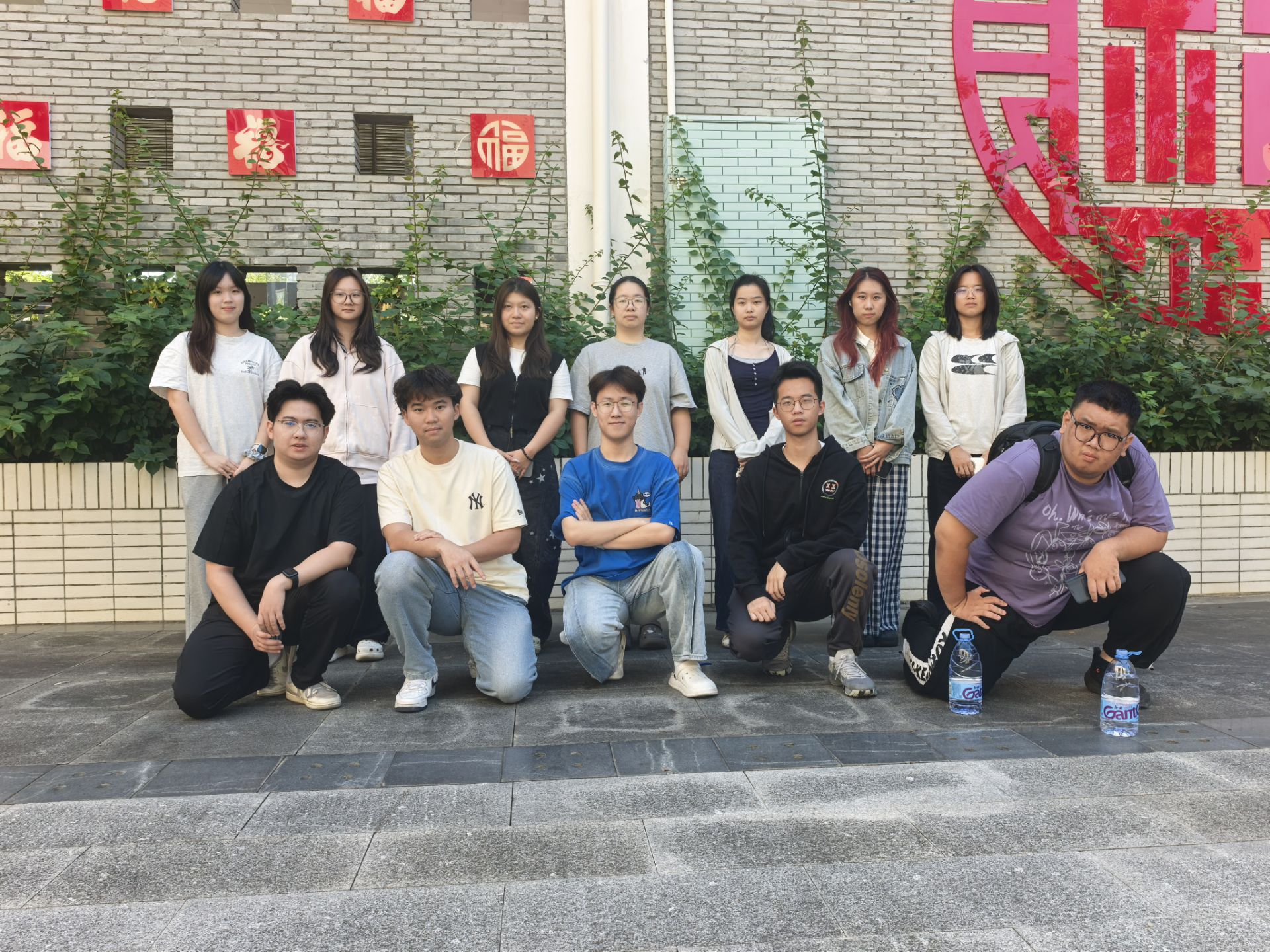
Project name: MoodSky
Brief description: We plan to build MoodSky as a WeChat mini program for university students to record feelings through weather symbols and revisit them in a private monthly archive. It will also provide campus place information and optional activities for everyday campus life.
Users choose Sunny, Partly Cloudy, Cloudy, Rainy, or Stormy. Weather alone is enough to save an entry; tags and a short note are optional. Each recorded day can later be found through a calendar, timeline, or monthly weather card.
For example, a student who feels tired after studying could choose Rainy, add the Study tag, and write a sentence about the day. At the weekend, they could revisit that entry in October's archive. If they want a change of surroundings, they could open Campus and browse places for a walk.
The weather is chosen and interpreted by the user. It is a form of personal expression and does not provide psychological diagnoses.
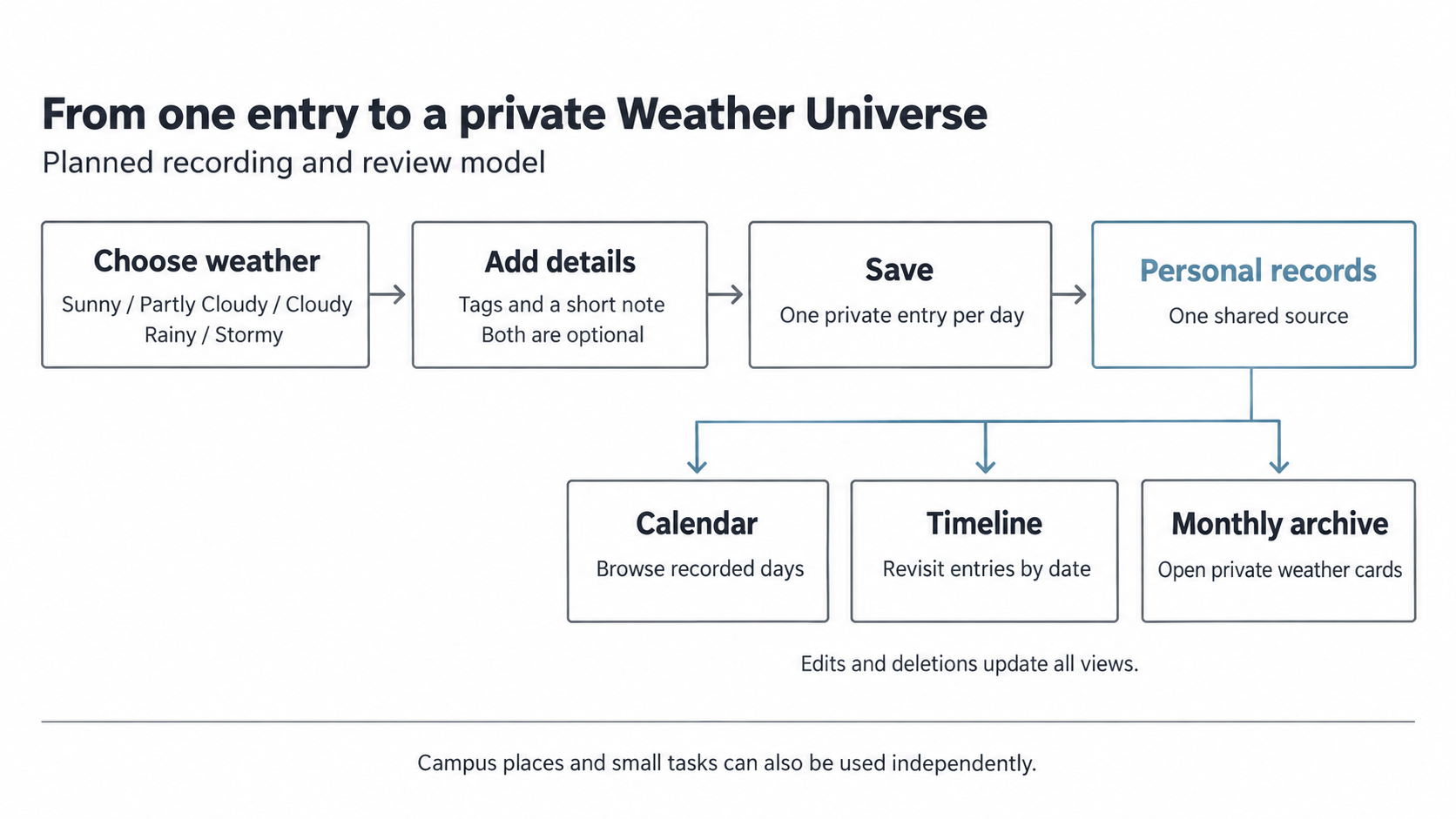
Figure 1. Planned recording and review model. Calendar, timeline, and monthly archive views use the same private entries and update together after edits or deletion.
| Module | Planned Functions |
|---|---|
| Weather Recording | Choose weather, add optional tags and notes, add missing entries for today or the previous 29 days, edit, and delete |
| Personal Review | Browse a weather calendar, category distribution, and a timeline arranged by date |
| Weather Universe | Revisit private monthly archives and weather cards, with a small set of static stickers and backgrounds |
| Campus Places | Browse lists or maps, filter by activity or setting, check opening information, navigate, save favorites, and submit corrections |
| Optional Small Tasks | Choose an activity, complete, replace, or skip it, and review personal task history |
| Personal Settings and Information Management | Manage privacy and display preferences, export entries, delete an account and check cleanup progress, and browse campus support resources |
MoodSky has four main tabs: Today, Campus, Weather Universe, and Me. A user can record an entry, review their archive, or go directly to places and tasks.
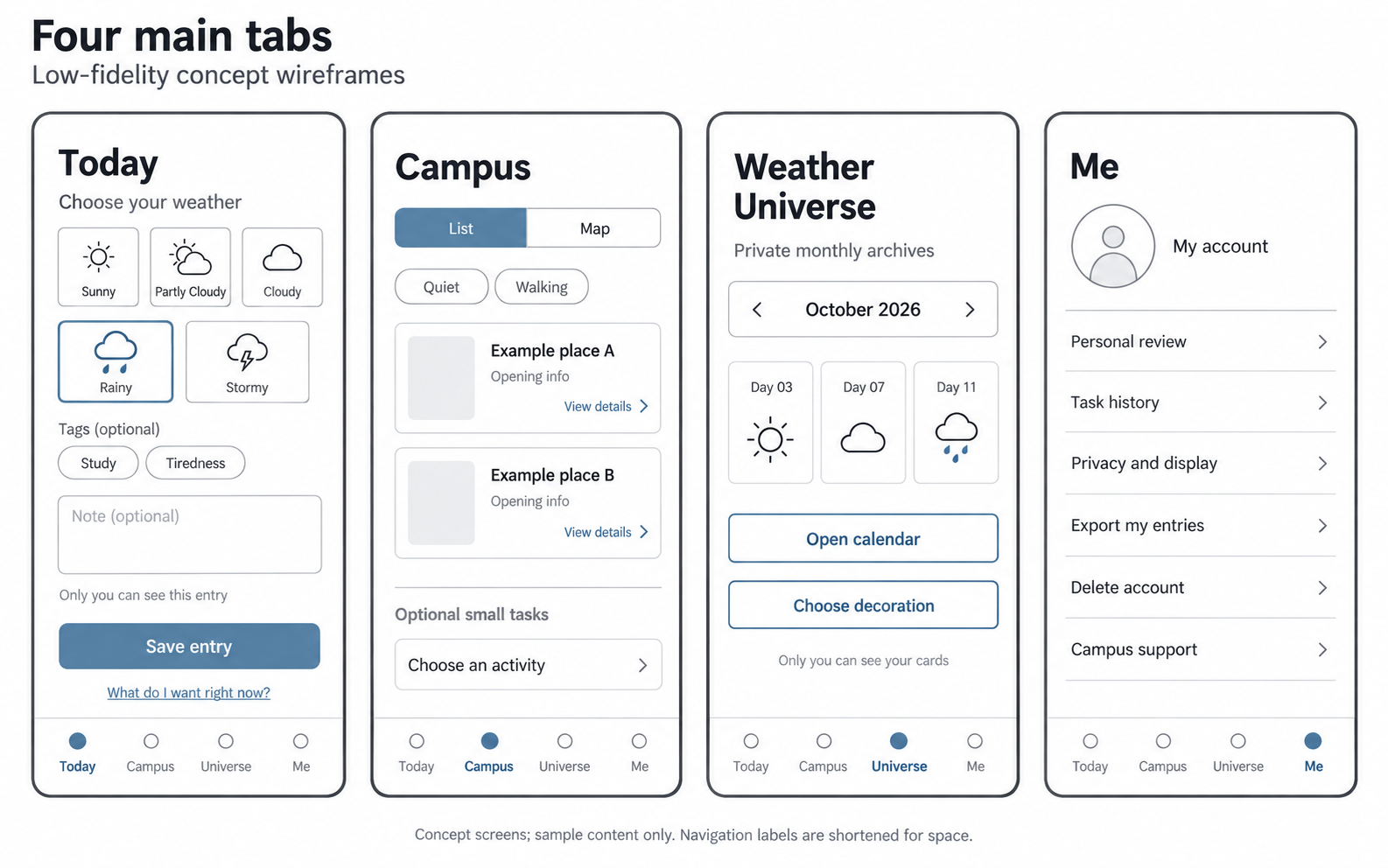
Figure 2. Low-fidelity concept wireframes for the four main tabs. The entries and places shown are examples, not screenshots of a completed product.
The first Weather Universe will focus on monthly archives and weather cards. It will offer up to six static stickers and two backgrounds, with decoration that users can disable or reset. Edits and deletions will update the calendar, cards, and archives together.
Diaries, favorites, and task history will remain private by default. Campus places will also be available as a list when location access is declined. The first release will include a clearly labeled Campus Weather simulation; it will not collect real campus mood contributions or include a public discussion space.
We plan to build the student interface as a native WeChat mini program using JavaScript. WeChat Cloud Development will provide identity, cloud functions, data storage, and the business logic needed for the first release. A separate information administration interface will maintain campus places, task templates, and support resources. Official CloudBase documentation
The front end will use shared components, consistent weather icons, and clear text prompts. Cloud Functions will validate input and check identity and permissions before accessing data. Students will access their own private records, while authorized information operators will maintain campus information without reading private diaries.
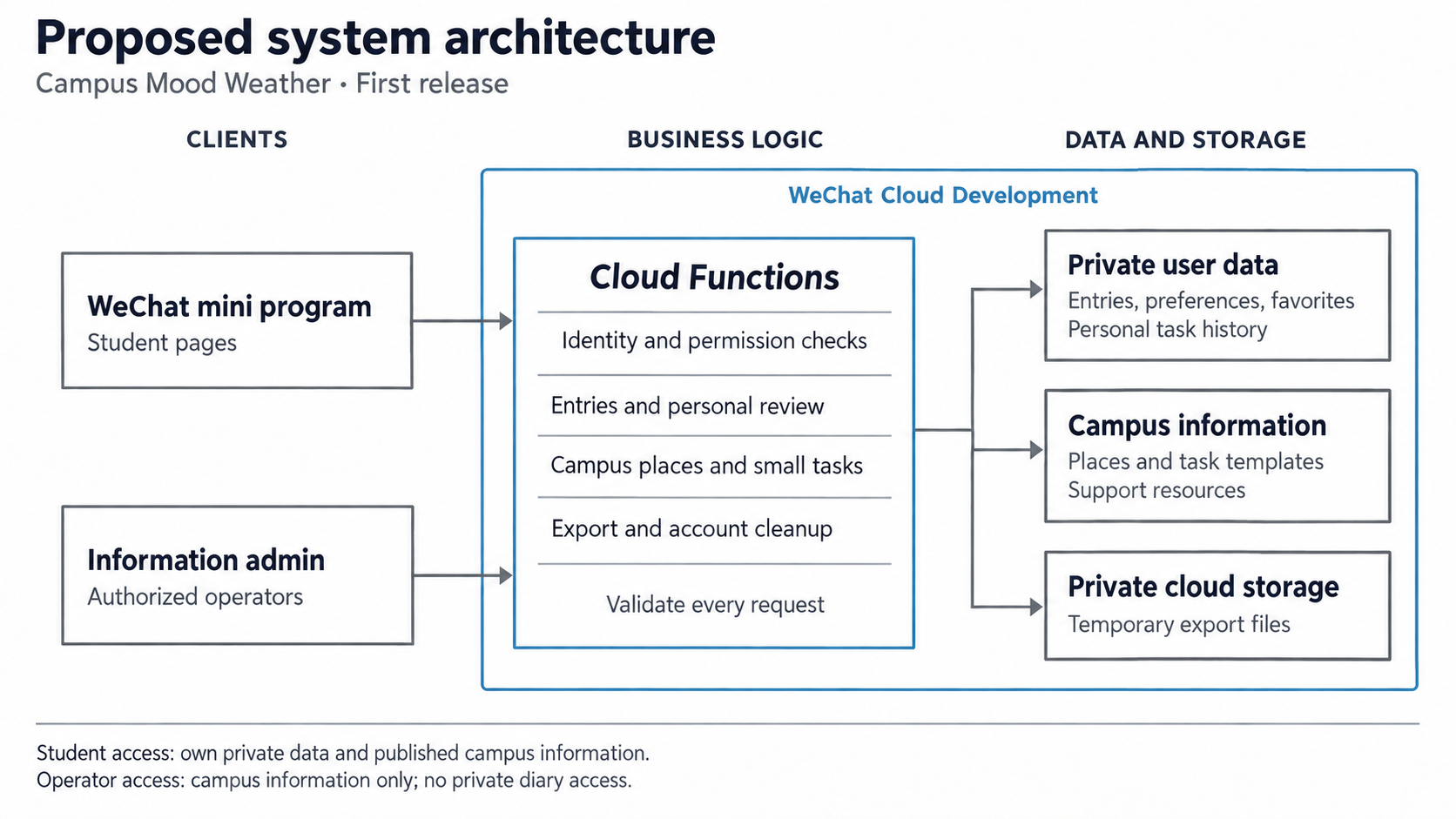
Figure 3. Proposed architecture. Student and operator requests go through Cloud Functions, which check identity and permissions before accessing data or storage.
We will test complete user journeys: saving an entry, finding it in different views, editing and deleting it, browsing places, completing or skipping tasks, exporting data, and closing an account. Compatibility checks will cover Android and iOS.
N — Need
Our target users are university students who want a quick way to record feelings, revisit past days, and find campus places for a break. A long diary entry can be difficult to start, while a plain list of notes can be inconvenient to browse over time. We want to explore whether weather symbols and monthly archives make these actions easier.
In Week 1, we plan to interview 12 students about their recent experiences with recording, revisiting entries, and finding places to rest. Following the requirements analysis approach in 构建之法, we will turn these situations into user stories and acceptance criteria.
One example is: “As a student who does not want to write a long diary entry, I want to save a weather choice so that I can revisit it later.” We will check that an entry can be saved without a note, that the owner can view and edit it, and that the same day does not receive duplicate entries.
A — Approach
We connect three everyday actions: record, revisit, and choose. Weather selection provides a simple starting point, the Weather Universe organizes entries by month, and campus places and small tasks offer optional choices for daily life.
These modules can also be used independently. A student does not need to record a feeling before browsing a place or choosing an activity.
B — Benefit
The intended benefits are quicker recording, easier access to past entries, and more useful information when choosing a campus place. We will assess them through a usability test with 12 participants.
| Task | Planned Validation Target |
|---|---|
| Save a first weather entry | At least 90% success; median completion time no longer than 30 seconds |
| Identify who can see an entry | At least 90% understand that entries are private |
| Find a campus place matching a preference | At least 80% find one within three steps |
| Find a specified archived entry | Reach the month and find the entry within three steps |
These figures are targets for testing. Interview findings and actual test results will be recorded after the work takes place.
C — Competition
| Alternative | Main Strength | What Our Project Aims to Add |
|---|---|---|
| Paper Diary | Flexible personal writing | Quick weather input and browsing by month |
| Phone Notes or General Diary Tools | Convenient text recording | Weather cards and private monthly archives |
| Campus Maps or Place Guides | Location and place information | Filters for activities such as resting or walking, alongside optional recording and task functions |
The proposed value lies in combining weather expression, a private monthly archive, and campus place information. Prototype feedback will help us judge whether that combination is useful to students.
D — Delivery
We will invite classmates, friends, and other willing campus participants to try the mini program. After essential functional and data access checks pass, we plan a one-week trial with 12 students. We will collect feedback on recording, monthly review, and place discovery, then improve the product before considering a wider trial.
Our proposed schedule covers eight weeks after topic preparation. Dates will be adjusted to the course schedule.
| Phase | Planned Dates in 2026 | Planned Work and Milestone |
|---|---|---|
| Topic Preparation | October 10–11 | Complete the project proposal, blog, requirements specification, responsibilities, and assessment plan |
| Week 1: Planning and Design | October 12–18 | Conduct interviews, produce a clickable prototype, and check technical and cost feasibility |
| Week 2: Recording | October 19–25 | Complete weather recording, tags, missing entries, editing, and deletion |
| Week 3: Review and Archives | October 26–November 1 | Complete the calendar, category distribution, timeline, monthly archives, and weather cards |
| Week 4: Campus and Decoration | November 2–8 | Add simple decoration, place browsing, favorites, corrections, and information administration; prepare a milestone demo with simulated data |
| Week 5: Complete User Journeys | November 9–15 | Complete tasks and history, support resources, the choice entry point, simulated Campus Weather, export, and account deletion |
| Week 6: Testing and Trial | November 16–22 | Run device and data access tests; begin the voluntary one-week trial after critical checks pass |
| Week 7: Improvements | November 23–29 | Resolve reported issues, retest affected functions, improve interactions, and prepare platform review materials |
| Week 8: Acceptance and Delivery | November 30–December 6 | Prepare a candidate release, test report, user guide, and demonstration; submit for platform review when ready |
We will prioritize reliable recording and review, data access controls, export, and account deletion. Export and deletion flows will be designed in Week 1 and developed alongside the core features; Week 5 is their planned integration milestone. We will review the workload at the end of each week. If progress falls behind, static decoration and the simulated Campus Weather page will be deferred first. Any change to the delivery scope will be recorded in the requirements specification and task allocation.
Planning will be coordinated by Xiang Hong, with Jiaqi Zhu preparing the interface prototype and the developers and testers reviewing requirements. During implementation, front-end and back-end members will work together on complete features. Yuen Lin and Qizhen Cai will lead testing, while Qizhen Chen, Xiang Hong, and Xiang Yu will coordinate integration, cloud configuration, and delivery within their respective responsibilities.
The team will hold a weekly progress discussion to review deliverables, resolve issues, and agree on the next week's tasks.
Responsibilities are assigned according to the roles in our member introductions. Xiang Hong combines project management with back-end development. Junhan Huang and Jiawei Fang complete the back-end group. Linhan Chen, Yifan Ji, Zhifeng Dai, Qinghan Zhang, and Qizhen Chen divide the front-end modules; Jiaqi Zhu focuses on UI/UX design; Xiang Yu manages database design; and Yuen Lin and Qizhen Cai handle testing.
Integration and release work will be shared by the relevant front-end, back-end, and database members. Each feature will have development and testing responsibilities, with Xiang Hong coordinating scope and progress.
The table uses FZU student IDs. The percentages are our initial planned workload ratios, totaling 100%; actual contributions will be reviewed against accepted deliverables.
| Student ID | Name | Work Description | Contribution |
|---|---|---|---|
| 832401205 | Xiang Hong | Project Manager and Back-End Developer: Coordinate requirements, milestones, team tasks, and the opening presentation; implement weather entry and review services, including same-day uniqueness and synchronized views | 9% |
| 832401207 | Junhan Huang | Back-End Developer: Implement campus place queries and filters, favorites, corrections, support resource services, and authorized information administration | 8% |
| 832401110 | Jiawei Fang | Back-End Developer: Implement small-task selection and status, personal history, privacy preferences, entry export, and account closure and cleanup workflows | 8% |
| 832401201 | Linghan Chen | Front-End Engineer: Build the mini program structure, shared components, navigation, personal settings, export and account deletion pages, and the simulated Campus Weather interface | 8% |
| 832401209 | Yifan Ji | Front-End Interaction Developer: Build weather selection, tags and notes, saving, missing-entry creation, editing, deletion, and the secondary choice entry point | 9% |
| 832401203 | Zhifeng Dai | Front-End Interaction Developer: Build the calendar, category distribution, timeline, monthly archives, weather cards, and simple decoration interactions | 9% |
| 832401226 | Qinghan Zhang | Front-End Developer: Build campus place lists and maps, filters, details, navigation, favorites, corrections, and support resource pages | 8% |
| 832401229 | Jiaqi Zhu | UI/UX Designer: Design the four-tab prototype, shared visual guidelines, five weather icons, weather cards, stickers, and backgrounds; review interface consistency | 8% |
| 832401211 | Yuen Lin | Software Test Engineer: Prepare and execute functional and integration tests, check normal and exceptional user journeys, test Android/iOS compatibility, and track defects and regression results | 8% |
| 832401124 | Xiang Yu | Database Engineer: Define collections, fields, indexes, access constraints, uniqueness and deletion rules; prepare campus data and document backup restoration rules | 8% |
| 832401304 | Qizhen Chen | Front-End Interaction Developer: Build small-task selection, completion, replacement, skipping, and history pages; coordinate front-end integration, interface debugging, and demonstration preparation | 9% |
| 832401301 | Qizhen Cai | Software Test Engineer: Test account isolation, operator permissions, export and deletion, disabled accounts, and restoration behavior; assess performance and usability | 9% |
Design, coordination, data verification, testing, and documentation count as workload alongside implementation. Members will agree on deliverables before work starts and review the allocation if the project scope changes.
We will assess both completed work and the way members work together. Delivery and quality account for 70% of the score; collaboration and documentation account for the remaining 30%.
| Dimension | Weight | Assessment Criteria | Application to Our Project |
|---|---|---|---|
| Task Completion | 40% | Completeness of agreed deliverables and progress against milestones | Whether an assigned feature, prototype, data definition, or test report is delivered and meets its acceptance criteria |
| Quality and Testing | 30% | Correctness, maintainability, relevant tests, and resolution of defects | Reliable saving and review, consistent views after deletion, correct data access, and documented normal and exceptional cases |
| Collaboration | 20% | Communication, peer review, integration, and support for teammates | Clear front-end/back-end handoffs, timely reporting of issues, and constructive help during integration |
| Documentation and Demonstration | 10% | Clear requirements notes, test records, user guidance, and presentation materials | Traceable changes, understandable test results, and a demonstration that accurately explains the product |
Each dimension receives a score from 0 to 100. Reviewers will use the expectations agreed for that dimension: 90–100 means they are fully met with only minor issues; 75–89 means the main expectations are met but some follow-up is needed; 60–74 means they are partly met and substantial improvement is needed; below 60 means key expectations are unmet. Each score must include a brief reason referring to specific deliverables or collaboration records.
Phase performance score = Task Completion × 40% + Quality and Testing × 30% + Collaboration × 20% + Documentation and Demonstration × 10%.
Members will be assessed on their assigned responsibilities. For example, a designer provides prototypes and visual assets, a database engineer provides data definitions and rules, and a tester provides test cases, results, and defect records.
Peer feedback should refer to specific work, such as an interface review, a resolved integration issue, or a completed test report.
Planned workload percentages and performance scores serve different purposes. The former describe the amount of work assigned; the latter assess completion, quality, and collaboration.
Before a task starts, its owner and reviewer agree on the expected effort and coordination required, then assign difficulty points:
| Difficulty Points | Typical Scope |
|---|---|
| 1 | A small, self-contained deliverable, such as one icon revision or a focused documentation update |
| 2 | A feature or deliverable with several related steps, such as a page prototype, a module's data definition, or its test cases |
| 3 | Work spanning several modules or requiring substantial coordination, such as an export/deletion workflow or a cross-module integration review |
Acceptance is 0 when no agreed milestone has been accepted, 0.5 when a halfway milestone defined before work starts has been completed and accepted, and 1 when all agreed acceptance criteria are met. The reviewer records the accepted deliverable and the reason for the level.
A task's workload points equal its difficulty multiplied by its acceptance level. A member's actual contribution ratio equals their accepted points divided by the team's total accepted points. No actual ratio will be calculated before work has been accepted.
The team will agree on how shared work is recorded before a task starts, so one deliverable is not counted in full for several members. This preliminary assessment plan will also be included in the opening presentation and refined through phase feedback.
The companion requirements specifications describe the planned features, data access rules, exceptional cases, and acceptance criteria:
Our planned deliverables are a clickable prototype, the MoodSky WeChat mini program, a campus information administration interface, a test report, a user guide, and demonstration materials. Requirements changes will be reflected in the specification and project plan, with responsibilities reviewed alongside them.


