


174
社区成员
 发帖
发帖 与我相关
与我相关 我的任务
我的任务
 分享
分享| Item | Content |
|---|---|
| Course | EE308FZ Software Engineering (2026 Fall) |
| Where are the assignment requirements | Second assignment — Team up and Topic selection |
| Team Name | Gamers2 |
| Project Name | 拾光 FindBack — a campus lost-and-found platform with image-based smart matching |
| CSDN Team Account | Gamers_2 (already added to the class community) |
| GitHub Organization | To be created — the team repository will be set up in milestone M2 (Oct 19 – Nov 1) |
| Assignment Objective | Form the team and lock the semester topic; deliver a milestone-based project plan, a clear division of labor with workload ratios, a team performance-assessment scheme, an NABCD topic analysis, and the Requirements Specification Document as an attachment |
| Other References | The Method of Construction (Zou Xin), Chapter 8 "Requirements"; the NABCD requirement-analysis model; IEEE 830 / GB/T 8567 (software requirements specification) |
Team Name: Gamers2 — our CSDN team account is Gamers_2.
Gamers2 is the name our team has used since we started working together. It carries the "player" mindset we bring to the semester: we treat the project as a long game rather than a sprint — read the map first, keep playing after a lost round, and win by coordination instead of by one lucky move. It is short, easy to remember, and it is also the nickname of our CSDN team account.
Project Name: 拾光 FindBack — a campus lost-and-found platform with image-based smart matching.
The project name carries the idea we actually care about. The Chinese name 拾光 is a deliberate play on words on 时光 ("time"): 拾 means "to pick up (what was lost)", and 光 means "light" — the light that shows an item the way home. Put together, 拾光 means picking up what was lost and lighting its way back. FindBack says the same thing in one word: our product does not stop at finding, it goes all the way to back to its owner.
That is exactly what our project is about. On campus, things are lost every day — campus cards, keys, earphones, umbrellas, water bottles, USB drives. The items are usually found; what is missing is a channel that actually connects the loser and the finder and then proves who the real owner is. Group chats bury the message in five minutes; the pile of unclaimed items at the service desk just keeps growing.
Project Slogan:
Pick up what was lost. Light the way back.
拾起遗失,光照归途
Team CSDN account: our team account is Gamers_2. CSDN generated the URL slug 2603_97191685 automatically, and the account nickname Gamers_2 matches our team name. The account has been registered and added to the class CSDN community, and the teaching assistant has been notified in the group chat so the team can be admitted.
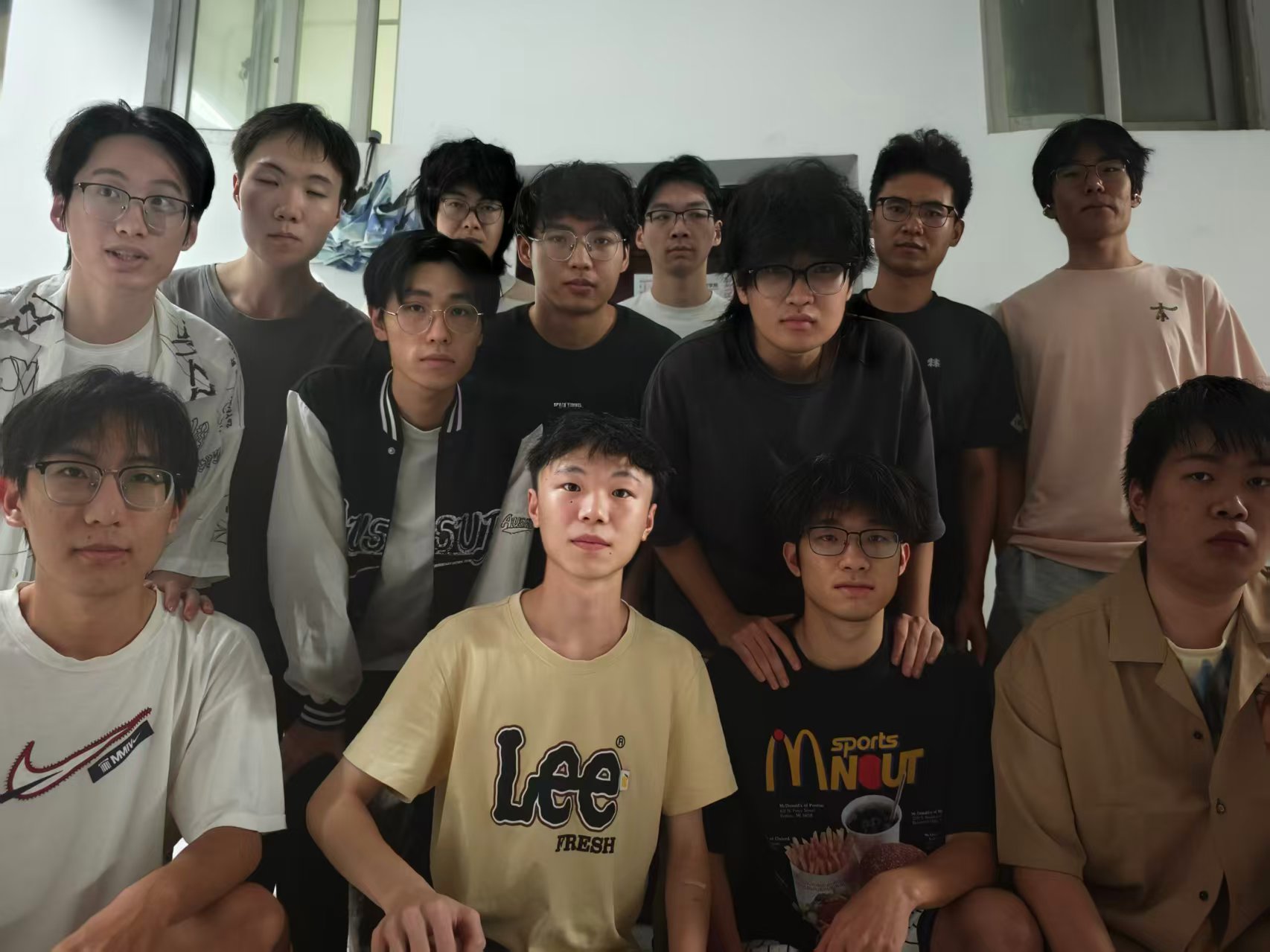
14 members in total, with 1 team leader. We are organised into six role groups: Project Management, Product Requirements, Frontend Development (incl. UI/UX design), Backend Development, Algorithm, and Testing.
Roster (names, student IDs and CSDN profiles):
| # | Name | Student ID | Role Group | CSDN |
|---|---|---|---|---|
| 01 | Sun Zikun (Team Lead) | 832401315 | Project Management | bluejay33 |
| 02 | Luo Yuhan | 832401313 | Backend Development / DevOps | Zarvik188 |
| 03 | Zhou Debin | 832401329 | Product Requirements | 832401329周德斌 |
| 04 | Zheng Ziyang | 832401327 | Product Requirements | 832401327 郑子阳 |
| 05 | Wu Junjia | 832401223 | Frontend Development (UI/UX) | 832401223吴浚嘉 |
| 06 | Zheng Zongyuan | 832401328 | Frontend Development | shizhong233 |
| 07 | Zuo Xiangrong | 832401230 | Frontend Development | XXXz602 |
| 08 | Li Jianhang | 832401210 | Frontend Development | 832401210_李健航 |
| 09 | Liu Peikun | 832401213 | Backend Development | 832401213 刘培坤 |
| 10 | Wang Qiushi | 832401317 | Backend Development | 832401317王秋实 |
| 11 | Xiao Zhengyu | 832401318 | Backend Development | 8324018 肖正宇 |
| 12 | Liu Junye | 832401212 | Algorithm | 832401212 刘君烨 |
| 13 | Xu Yichao | 832401319 | Testing | 832401319徐一超 |
| 14 | Zhou Shengdong | 832401330 | Testing | shade-afk |
Why we chose this topic. Campus lost-and-found today has a strange property: the finding is rarely the problem — the returning is. Group chats have no search, no matching and no persistence, so a "found" post and a "lost" post about the same pair of earphones can sit in the same group for a week without ever meeting. Service-desk piles are authoritative but passive: nobody notifies you, nobody can search by photo, and eventually unclaimed items are thrown away. We want to close that loop with software, and image matching is the piece that makes the loop actually close — because the most natural way to describe a lost item is a picture, not a paragraph.
Our vision in three moves: 不沉底 · 讲凭据 · 留痕迹.
How far we intend to get. We do not aim to be big and all-inclusive. By the end of this semester we want one campus to be genuinely usable: a runnable MVP (publish, browse, search, smart matching, notification, ownership verification, handover confirmation, credit, admin console) validated by a real beta test with 30–50 students, with the recovery rate measured before and after. If time allows, we add subscription alerts, a "where things get lost" hotspot map for campus service improvement, and anonymous handover via service points.
Where it can be used. The same mechanism transfers well beyond one campus: other universities, parks and scenic spots, shopping malls, railway stations and airports, and any property-management or community scenario where "someone lost it, someone picked it up" happens every day. Inside the campus itself it can plug into the security office (保卫处) and logistics service points, turning an offline pile of unclaimed items into a searchable, notifiable, verifiable service.

The crest is a shield, and that is the first thing we want it to say: from the moment a found item is posted until it is handed back, we take custody of the case and we do not drop it. Inside the shield stands a hooded figure — the everyday helper on campus, the person who picks something up and does the right thing without expecting anything in return, and who usually stays anonymous. A magnifier is held over the figure's eye: the search itself, plus the promise that a case is looked at again and again rather than filed away. Inside the lens burns a sharp red eye: attention that never blinks, on every single item, however small.
Almost every student has experienced this sequence at least once: you realise your campus card / keys / earphones / umbrella / water bottle / USB drive is gone; you retrace your steps; you post "寻物启事" in three class groups and two club groups; the message is buried within minutes; you refresh the lost-and-found pile at the teaching-building service desk and find a stack of items with no photos and no dates; a week later you give up and buy a replacement — while the person who picked your item up has already stopped checking.
The pain has four distinct parts, and they need different fixes:
[To be filled with real data in M1] We deliberately do not invent survey numbers here. In milestone M1 (Oct 12 – Oct 18) we will run a campus survey and short interviews (target: 120 valid responses plus 8–10 in-depth interviews) to quantify how often students lose items, how long they search, how they currently get them back, and how much they trust a "found item" post. The Requirements Specification Document will be updated with those real numbers.
拾光 FindBack is a campus lost-and-found platform with image-based smart matching. It helps the person who lost something and the person who found it meet each other automatically, verifies that the item goes to its real owner, and records the handover so that the loop closes.
Core features:
| Feature | Description |
|---|---|
| Publish Lost / Found Item | Post a lost or found item in ~30 seconds: photo(s), category, short description, time and place |
| Smart Matching | Image feature retrieval + text similarity + time/place filtering rank candidate matches between a new post and the existing pool |
| Match Feed & Notification | Both sides are notified of new candidates; the match list shows a score and the reasons behind it |
| Ownership Verification | Hidden feature questions (colour, marks, serial, contents) plus a proof photo; optional service-desk check for high-value items |
| Handover Confirmation | Two-way confirmation of handover, suggested pickup points on a map, and a timeline record of the whole case |
| Credit & Reputation | Honest posting, no-shows and false claims are recorded and affect visibility and matching priority |
| Search & Browse | Filter by category, place, date and status; a campus hotspot map shows where items are most often lost |
| Subscription & Alerts | Subscribe to categories or places and get notified when a new post matches |
| Privacy Protection | Automatic masking of ID photos and card numbers, contacts hidden until a match is accepted, in-app messaging instead of exposing phone numbers |
| Admin Console & Dashboard | Moderation, category management, abuse reports, and metrics such as recovery rate and median time-to-return |
Tech stack (initial, to be confirmed in the design phase): Vue 3 + TypeScript + Vite and a WeChat mini program for the client; Spring Boot + MyBatis-Plus + MySQL + Redis for the backend; object storage for photos; a Python (FastAPI) algorithm service using CLIP/ResNet image embeddings with FAISS vector retrieval, plus text similarity for descriptions; GitHub + GitHub Actions for CI/CD and Docker + Nginx for deployment.
N — Need
Students lose things often and get them back rarely. The channels that exist cannot do the job: group chats bury posts, service-desk piles are passive and unsearchable, and nothing cross-checks a "lost" post against a "found" post. The cost is concrete — replacement money, a re-issued campus card, a week of anxiety, and unclaimed items that end up in the bin. What is needed is a lightweight, searchable, image-aware, verifiable channel that both sides actually use.
A — Approach
Build a campus lost-and-found platform whose core loop is: publish → automatic match → ownership verification → handover confirmation → credit. We stabilise the basic loop first (publish/browse/search/match/notify/handover) and only then upgrade "can find something similar" into "can find the right item and prove it": image feature retrieval plus text similarity for matching, hidden feature questions plus proof-photo flow for verification, and a credit record for durable participation. A pilot campus and cooperation with service points keep the product anchored in real offline handover behaviour instead of being an online-only bulletin board.
B — Benefit
For the person who lost something: a much higher chance of getting it back, in hours instead of weeks, with zero cost. For the person who found something: one post instead of chasing five group chats, a clear way to hand it over, and credit for doing the right thing. For the campus: fewer unclaimed items thrown away, less re-issuing and replacement waste, cleaner information than chat spam, and — through the hotspot map and recovery-rate metrics — actual evidence about where things get lost that the logistics and security departments can act on.
C — Competitors
| Competitor | Strength | Our Difference |
|---|---|---|
| WeChat / QQ group chats | Zero barrier; everyone already uses them | Posts sink within minutes; no search, no categories, no matching, no verification. We provide a structured, searchable, image-matched pool |
| Campus forums / confession walls | Wide reach, casual traffic | Messy information; no structured fields, no sign-up/claim status, no closed loop. We track a case from post to handover |
| Offline lost-and-found desks / piles (服务台, 保卫处) | Authoritative; physical custody is trustworthy | Passive: no notification, no photo search, no way to reach the owner; items expire. We make the pile searchable and push matches to both sides |
| Generic second-hand / campus marketplace apps | Large user base, mature chat and payment | Money-oriented; no lost-and-found flow, no ownership verification, no handover record |
| Existing lost-and-found mini programs | Solve "posting" | Mostly electronic bulletin boards: keyword search only, no image matching, no verification, no credit. Image-based matching plus verification plus handover closure is our differentiator |
D — Delivery
Phase 1 (this semester): a runnable MVP on one pilot campus — publish, browse/search, image-and-text matching, notification, ownership verification, handover confirmation, credit and admin console — validated with a 30–50 student beta test and measured by recovery rate and median time-to-return. Phase 2: subscription alerts, hotspot map, service-point collaboration, mini-program release and push notifications. Phase 3: extend to neighbouring universities, parks and transit hubs, generalising the matching service into a reusable "lost-and-found" component. Start from the everyday campus cases — campus cards, keys, earphones, umbrellas, water bottles, USB drives — then extend to high-value items with a stricter verification and custody flow.
The full topic-selection presentation is attached as 《选题汇报-NABCD-拾光FindBack.pptx》 (8-minute talk, presenter: Zhou Debin).
We follow the standard software-engineering process and split the semester into six phases, each with explicit deliverables and an exit criterion. Dates are planned and will be adjusted dynamically against the course schedule and the teacher's arrangements.
| Phase | Time (planned) | Main Tasks | Milestone / Deliverable |
|---|---|---|---|
| 0 Team Formation & Topic | By Oct 11 | Team up (14 members), name the team, choose the topic, NABCD analysis, draft the performance-assessment scheme, register the CSDN team account and join the class community | Team blog, topic PPT, Requirements Specification Document v0.9 |
| 1 Requirements Analysis | Oct 12 – Oct 18 | Campus survey and interviews (target 120 responses + 8–10 interviews), walk through existing channels, use-case analysis, scope the MVP, freeze the requirement list with priorities | Requirements Specification Document v1.0, survey report |
| 2 Design | Oct 19 – Nov 1 | High-fidelity prototyping, tech selection, architecture and database design, API documentation, repository and collaboration rules, feasibility spike on image matching | Prototype, architecture design document, API document |
| 3 Iterative Development | Nov 2 – Nov 29 | Three iterations — It.1 (Nov 2–9): login, profile, publish lost/found, browse and search; It.2 (Nov 10–19): image upload pipeline, matching service, match feed and notifications; It.3 (Nov 20–29): ownership verification, handover confirmation, credit, hotspot map, admin console | A runnable, demoable version at the end of every iteration |
| 4 Testing & Beta | Nov 30 – Dec 13 | Integration testing, performance and security checks, bug fixing, invite 30–50 students to a beta test, collect and triage feedback | Test report, beta feedback summary |
| 5 Wrap-up & Showcase | Dec 14 – Dec 27 | Pilot run, data analysis (recovery rate, time-to-return, match accuracy), documentation archive, final demo preparation | Final version, project summary, showcase materials |
| Group | Members | Main Responsibilities |
|---|---|---|
| Project Management | Sun Zikun (Team Lead) | Scheduling, coordination, risk and progress tracking, external communication with the teacher and TA |
| Product Requirements | Zhou Debin, Zheng Ziyang | User research, use cases and requirements specification, prototyping, acceptance criteria |
| Frontend Development | Wu Junjia, Zheng Zongyuan, Zuo Xiangrong, Li Jianhang | UI/UX design, pages and interaction implementation, mini program, visualisation and messaging client |
| Backend Development | Luo Yuhan, Liu Peikun, Wang Qiushi, Xiao Zhengyu | APIs, database, caching and search, image storage pipeline, authentication, deployment and CI/CD |
| Algorithm | Liu Junye | Image feature retrieval, text similarity and ranking, match-quality evaluation |
| Testing | Xu Yichao, Zhou Shengdong | Test cases, defect management, release acceptance, regression and beta-test coordination |
| Student ID | Work Description | Contribution |
|---|---|---|
| 832401315 | Formed the team and led role assignment; wrote the milestone plan and the collaboration routine; hosted the topic-selection review; reviewed and merged this blog | 9% |
| 832401313 | Set up the GitHub organisation, repository structure and documentation templates; registered the CSDN team account and applied to join the class community | 7% |
| 832401329 | Led the NABCD analysis and the 8-minute topic presentation; drafted the Requirements Specification Document outline; prepared the on-stage script | 8% |
| 832401327 | Ran the preliminary desk research on campus lost-and-found channels; collected competitor screenshots; designed the survey to be launched in M1 | 7% |
| 832401223 | Set the visual style of the topic slides and of the product prototype; produced the layout and icon set for the blog | 7% |
| 832401328 | Frontend feasibility check (Vue 3 + mini program); built the clickable demo pages used during the presentation | 7% |
| 832401230 | Evaluated the image upload/cropping/compression path in the mini program; verified the 30-second publishing flow on real devices | 7% |
| 832401210 | Built the presentation demo for the match feed and notification; produced the visual charts used in the slides | 7% |
| 832401213 | Drew the initial architecture and database concept model; wrote the "data requirements" part of the SRS draft | 8% |
| 832401317 | Designed the account, role and privacy scheme (masking of ID photos and card numbers); wrote the "non-functional requirements – security and privacy" part of the SRS draft | 7% |
| 832401318 | Studied the image storage, caching and search approach; estimated the cost and performance envelope for the matching service | 7% |
| 832401212 | Ran the feasibility spike on image feature retrieval and text similarity; defined the match-quality metrics; wrote the matching chapter of the SRS draft | 8% |
| 832401319 | Reviewed the requirement list for testability; wrote the acceptance criteria and test points; checked the slides and blog for consistency | 6% |
| 832401330 | Prepared the test data set and device-compatibility matrix; ran the regression pass on the presentation demos and the blog tables | 5% |
| Total | — | 100% |
The ratios above are also our estimated semester contribution ratio. They are estimates, not final grades: the actual ratio is recalculated after each iteration from the performance-assessment results described in Section 5 and published to the whole team, so that whoever contributes more is credited more.
Goal: make contribution visible, measurable and appealable, so that neither "free riding" nor "quiet contribution nobody notices" survives in this team. The full assessment sheet is embedded in the topic-selection presentation (Slide 13).
Align contribution with responsibility, and encourage collaboration rather than internal competition. The assessment is not a ranking exercise; it exists to correct unfair distribution and to make late-stage contribution ratios defensible with evidence.
| Dimension | Weight | Basis of Evaluation | Data Source |
|---|---|---|---|
| Task Completion & Quality | 40% | Whether board tasks are completed on time, on scope and accepted by the reviewer | Task board completion rate, iteration review records |
| Code / Document Quality | 20% | Code review conclusions, documentation review, rework and defect density | Merge-request reviews, test defect records, doc reviews |
| Collaboration & Communication | 15% | Meeting participation, response timeliness, willingness to unblock others, quality of hand-off | Meeting sign-ins, weekly report timestamps, peer feedback |
| Attendance & Punctuality | 10% | Stand-up and review attendance, on-time delivery, advance notice when unavailable | Sign-in sheets, task due-date records |
| Peer Review | 15% | Anonymous mutual rating at the end of each iteration | Peer review form (highest and lowest dropped) |
Assessment cycle: once at the end of each iteration (three iterations in phase 3); the final individual contribution ratio is based on the cumulative results across all iterations.
Individual score = Σ (dimension score × weight), out of 100. Tiers:
Contribution ratio: contributionᵢ = scoreᵢ ÷ Σ score × 100%, rounded to one decimal place and published by the team lead within 48 hours after each iteration review.
docs/ and is the only basis for the final contribution ratio.The performance record is the primary basis for the final individual contribution ratio of the course project, and an important reference for the final course grade. It is also used to decide who presents which part at the final showcase, so that the people who built a feature are the ones who explain it.
The Requirements Specification Document is submitted as an attachment to this blog: 《需求规格说明书-拾光FindBack-v1.0.docx》 (to be updated to v1.1 after the M1 survey).
Document number: FB-SRS-2026-V1.0 · Version: v0.9 draft attached here (dated 2026-10-11), superseded by v1.0 at the end of M1.
Contents of the document:
Feature overview (details in the attachment):
| ID | Feature | Priority | Milestone |
|---|---|---|---|
| FR-01 | Account registration, login and campus identity | M (Must) | It.1 |
| FR-02 | Publish lost item | M (Must) | It.1 |
| FR-03 | Publish found item | M (Must) | It.1 |
| FR-04 | Browse, filter and keyword search | M (Must) | It.1 |
| FR-05 | Image upload pipeline (crop / compress / mask) | M (Must) | It.2 |
| FR-06 | Image-based candidate matching | M (Must) | It.2 |
| FR-07 | Text similarity and time/place re-ranking | M (Must) | It.2 |
| FR-08 | Match feed with score and explanation | M (Must) | It.2 |
| FR-09 | Match notification (in-app / subscription message) | M (Must) | It.2 |
| FR-10 | In-app messaging between the two sides | S (Should) | It.2 |
| FR-11 | Ownership verification (feature questions + proof photo) | M (Must) | It.3 |
| FR-12 | Handover confirmation and case timeline | M (Must) | It.3 |
| FR-13 | Credit and reputation record | S (Should) | It.3 |
| FR-14 | Admin console, moderation and abuse reports | S (Should) | It.3 |
| FR-15 | Dashboard: recovery rate, median time-to-return, match accuracy | S (Should) | It.3 |
| FR-16 | Lost-item hotspot map | C (Could) | It.3 |
| FR-17 | Category/place subscription alerts | C (Could) | It.3 |
| FR-18 | Auto-tagging suggestions from the description (LLM-assisted) | C (Could) | It.3 |
Attachment link: to be added.
Gamers2 · 拾光 FindBack — Pick up what was lost. Light the way back.
Gamers2 · 拾光 · 拾起遗失,光照归途

