


286
社区成员
 发帖
发帖 与我相关
与我相关 我的任务
我的任务
 分享
分享| The Link Your Class | My class |
| The Link of Requirements of This Assignment | Summary |
| MU STU ID and FZU STU ID | 20124708_832001211 |
| Video demo link | Video |
| GitHub link | GitHub |
2.4 team project practice experience summary
Lab1-1: <Lab1-1>
Lab1-2: <Lab1-2>
Lab2-1: <Lab2-1>
Lab2-2: <Lab2-2>
Lab3-1: <Lab3-1>
Lab3-2: <Lab3-2>
At first I thought that designing and developing a piece of software was a difficult thing for me to accomplish. But after finishing this semester's software engineering course, I learned a lot about designing a software and developing software knowledge. For a software development, it is very important to sort out the logical framework in the early stage. I learned to draw uml diagrams, various test methods, calculate critical paths, and more. I used the ink knife in the design of the prototype. In terms of technology, I learned to use Java, wechat developer tools, Android studio and other software development and programming tools, and got to know various matters of front-end development. In a word, I grow a lot.
In this pair programming, I started from scratch and independently learned how to use WeChat developer tools, and had a deeper understanding of front-end development such as WeChat mini program, which is very beneficial for our future development. I also put a lot of effort into the UI design and learned how to use PS and Ai to complete our UI background and UI ICONS. In terms of code writing, I optimized the logic of dice rolling and final result calculation, which made my program run faster.
I am also more accustomed to teamwork, so that I can perform my respective duties and make progress together. In cooperation, I can find the shortcomings of myself and correct them in time.
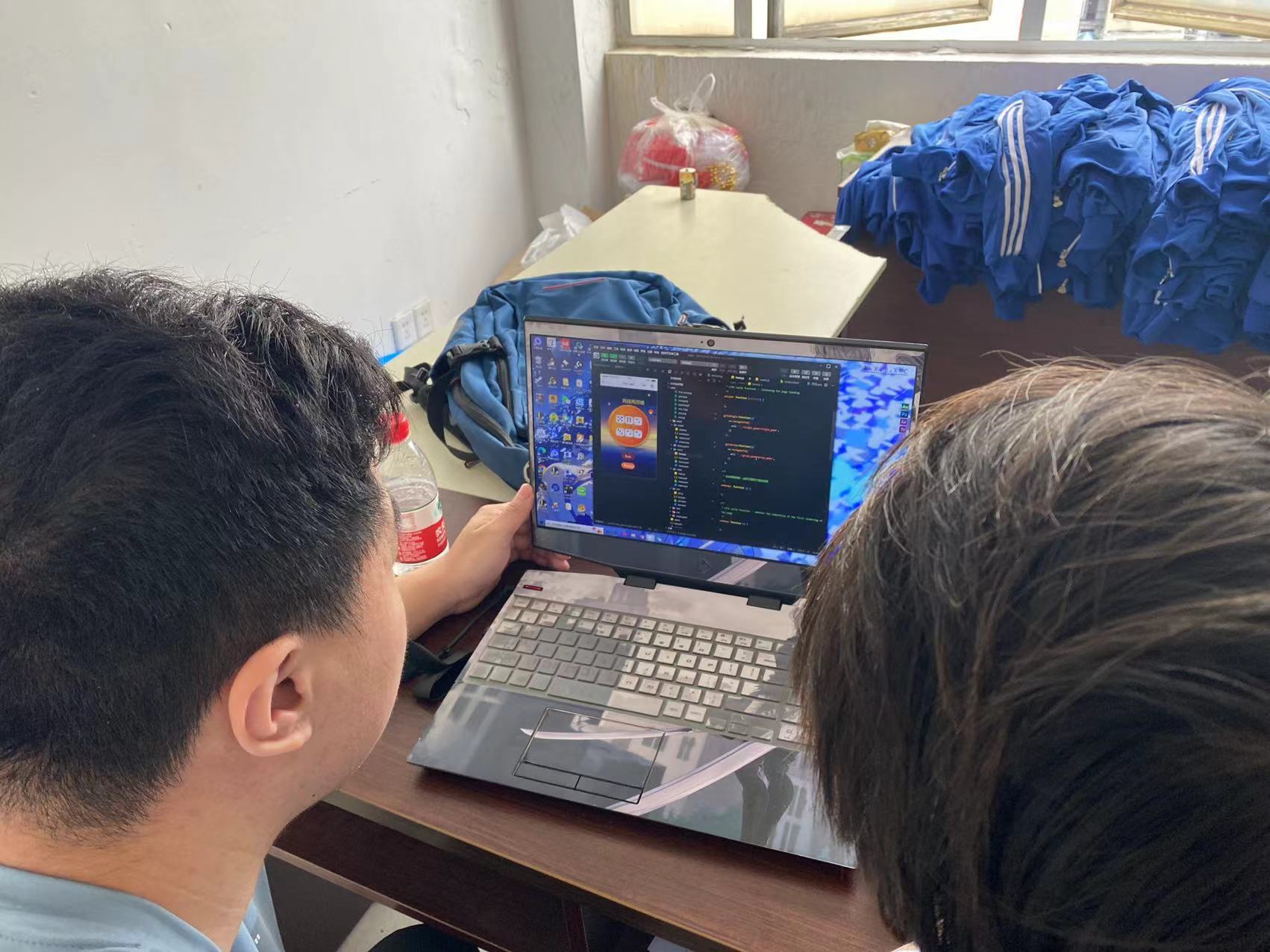
In large-scale projects, our team developed "Sports Mei" APP, a college student sports app integrating sports socializing, sports planning and data recording. In this process, I found that demand analysis and reasonable division of labor of the team are very important. In requirements analysis, I learned how to draw uml diagrams and write requirements documents. In teamwork, we assign different tasks according to people's abilities and priorities, and each person needs to complete the assigned tasks. Team collaboration also requires careful data definition to prevent massive changes later in the programming process.
tools: Wechat developer tool, Android Studio
technology summary:
1. Id can not be the same in the same HTML file. Ids are named with underscores (_), class (_), and variable hump type
2. The timer must be cleared before use. If there are multiple timers on a page at the same time, the timer can be clearly written in a function to avoid the nested call of the timer
3. The Js file is introduced in order. For dependent files, for example, jquery.js should be imported between bootstrap.js; A js file that does not rely on event handling that is not related to the DOM tree for the initial rendering of the page is introduced at the bottom of the body to facilitate browser rendering of the page
4. Reduce the use of global variables in the js file to avoid redefinition coverage; Reduce the use of closures to avoid memory overflow
5. Determine the front-end technology and project architecture construction, and specify the adapted device, browser and screen resolution
6. Modular development, high cohesion and low coupling, improve code reusability, reduce redundancy
7. Js to achieve hierarchical processing, base layer (compatible with different browsers), common layer (packaging common processing function)
8. Page layer unified entry function init(), easy maintenance
After learning this software engineering course, my ability has been greatly improved, and a lot of knowledge which had been vacant has been supplemented. I also have a clearer orientation for the future. After completing the undergraduate study, I will go abroad for further study and pursue a master's degree until I get a job in the future. I really hope to have the opportunity to engage in software development in the future!

Software Project Demonstration Video: Video
Github link:
TeamCode: Code
TeamFile:File

