


164
社区成员
 发帖
发帖 与我相关
与我相关 我的任务
我的任务
 分享
分享| Assignment 2 | Team up & Topic selection (组队和选题) |
|---|---|
| Class link | 2501_MU_SE_FZU |
| Assignment requirement | Second assignment - Team up and Topic selection |
| Team name | FOCUS_2025 |
| Objectives | Establish a structured plan for team projects, including team building / project topic selection / task allocation / team member evaluation methods / clarity of overall project vision. |
| Other reference documents |
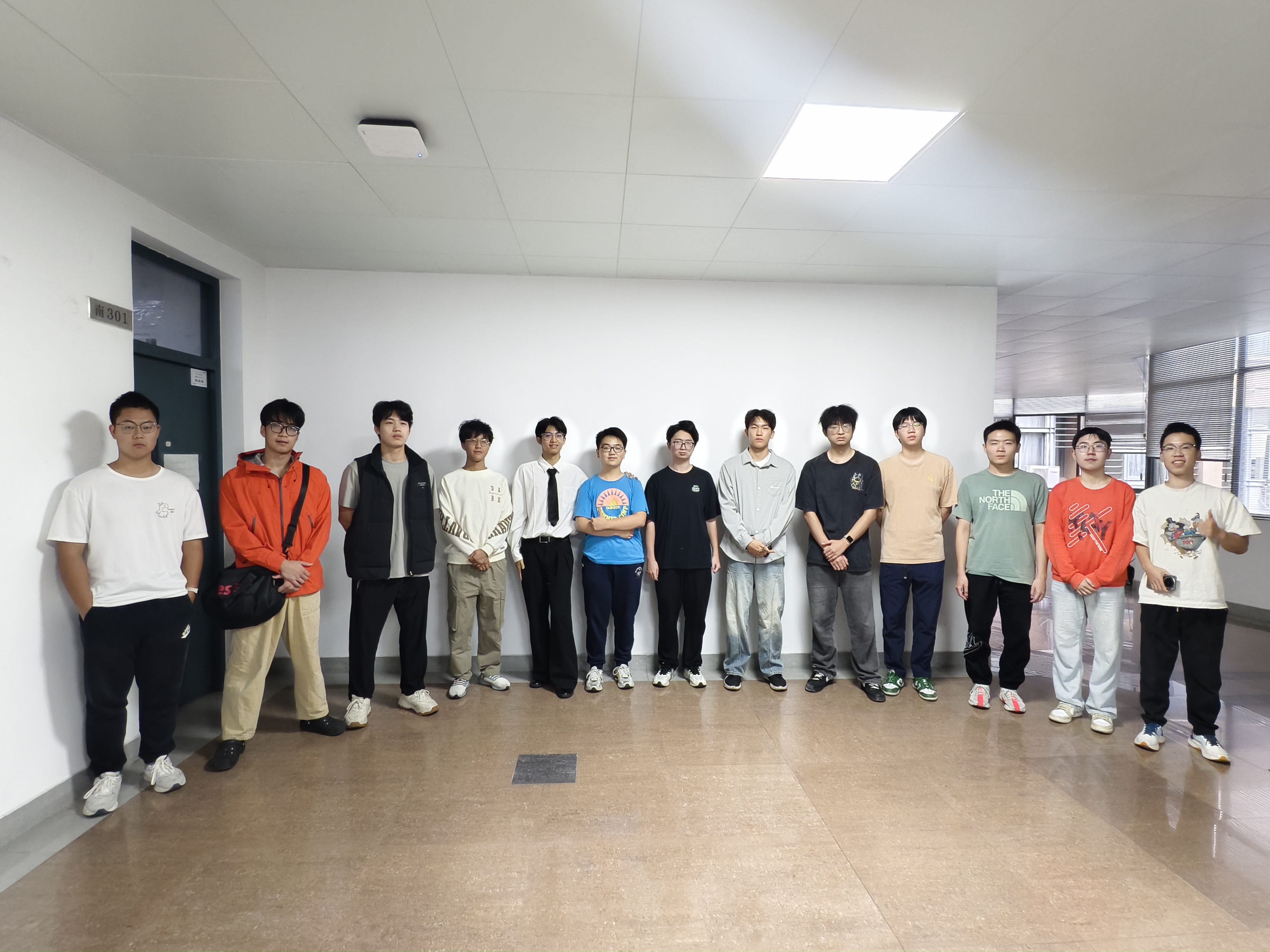
"FOCUS_2025" embodies our team's dedicated mission. The name signifies a unified Framework for Optimizing and Collaborative User-Solutions.
Our purpose is to channel concentrated effort into delivering a precise, high-impact software engineering project by 2025. Every aspect of our work—from design to deployment—will be driven by clarity, efficiency, and a shared vision for creating meaningful user-centric applications. The name serves as a constant reminder to maintain this sharp, forward-looking trajectory.

| Jiayao Hu (胡嘉耀) | Introduction |
|---|---|
| FZU ID | 832301310 |
| MU ID | 23125381 |
| CSDN Profile | Jiayao Hu |
| Personality | ENTJ-T |
| Technical Expertise | Python, C/C++, MATLAB |
| Hobbies | Hiking & Traveling |
| Desired Software Engineering Role | Project Manager & Backend Architect |
| Hantao Wu (吴韩韬) | Introduction |
|---|---|
| FZU ID | 832302129 |
| MU ID | 23125586 |
| CSDN Profile | taohuaracing |
| Personality | ENFJ |
| Technical Expertise | Python, Java, C/C++ |
| Hobbies | Embedded systems & Guitar |
| Desired Software Engineering Role | Backend developer |
| Zhihao Liu (刘志濠) | Introduction |
|---|---|
| FZU ID | 832301110 |
| MU ID | 23126396 |
| CSDN Profile | Destinyawareness |
| Personality | ENFP |
| Technical Expertise | Python, C/C++ |
| Hobbies | Table tennis |
| Desired Software Engineering Role | Backend developer |
| Yitan Fang (方议谈) | Introduction |
|---|---|
| FZU ID | 832302110 |
| MU ID | 23125578 |
| CSDN Profile | YITAN FANG 23125578 |
| Personality | ENTJ |
| Technical Expertise | Python, Java, C/C++, MATLAB |
| Hobbies | Table tennis & Go Game |
| Desired Software Engineering Role | Frontend developer |
| Jianyuan Wu (吴建远) | Introduction |
|---|---|
| FZU ID | 832302126 |
| MU ID | 23126787 |
| CSDN Profile | 2401_87495314 |
| Personality | ISTJ |
| Technical Expertise | Python, Java, C/C++ |
| Hobbies | Photography & Badminton |
| Desired Software Engineering Role | Backend developer |
| Yuxiang Xie (谢宇翔) | Introduction |
|---|---|
| FZU ID | 832301327 |
| MU ID | 23124237 |
| CSDN Profile | 谢宇翔 |
| Personality | INTP |
| Technical Expertise | Python, C/C++ |
| Hobbies | Jogging |
| Desired Software Engineering Role | DevOps Engineer |
| Pengxiang Hu (胡鹏翔) | Introduction |
|---|---|
| FZU ID | 832301309 |
| MU ID | 23126566 |
| CSDN Profile | 832301309 胡鹏翔 |
| Personality | ENFJ |
| Technical Expertise | Python, C/C++, MATLAB |
| Hobbies | Sports & Video games |
| Desired Software Engineering Role | DevOps Engineer |
| Feijie Zheng (郑飞捷) | Introduction |
|---|---|
| FZU ID | 832301306 |
| MU ID | 23126078 |
| CSDN Profile | 百組 |
| Personality | INTP |
| Technical Expertise | Python, C/C++, Embedded systems dev |
| Hobbies | Music |
| Desired Software Engineering Role | Test Engineer |
| Hongzhi He (贺鸿志) | Introduction |
|---|---|
| FZU ID | 832302220 |
| MU ID | 23125390 |
| CSDN Profile | 2401_82721023 |
| Personality | ISFJ |
| Technical Expertise | Python |
| Hobbies | Basketball & Music |
| Desired Software Engineering Role | Frontend Engineer |
| Weixiang Zhou (周伟翔) | Introduction |
|---|---|
| FZU ID | 832301303 |
| MU ID | 23126531 |
| CSDN Profile | 2303_79878400 |
| Personality | ISFP |
| Technical Expertise | Python |
| Hobbies | Sports & Music |
| Desired Software Engineering Role | Test Engineer |
| Jiazhuo He (何嘉卓) | Introduction |
|---|---|
| FZU ID | 832302130 |
| MU ID | 23124768 |
| CSDN Profile | 2301_80367395 |
| Personality | INTJ |
| Technical Expertise | Java, C/C++ |
| Hobbies | Reading |
| Desired Software Engineering Role | Frontend Developer |
| Shengpeng Yang (杨升鹏) | Introduction |
|---|---|
| FZU ID | 832301120 |
| MU ID | 23126434 |
| CSDN Profile | Justin1315 |
| Personality | ENFP |
| Technical Expertise | Python, C, STM32 dev, OpenCV, Machine vision |
| Hobbies | Fitness |
| Desired Software Engineering Role | Database Engineer |
| Chenhe Zhu (朱晨赫) | Introduction |
|---|---|
| FZU ID | 832301108 |
| MU ID | 23125047 |
| CSDN Profile | 832301108朱晨赫 |
| Personality | ENFP |
| Technical Expertise | Python, C |
| Hobbies | Basketball & Video game |
| Desired Software Engineering Role | Database Engineer |
Our goal is to combat the chaos of modern student life. We see our peers struggling with scattered deadlines, digital distractions, and a lack of insight into their own learning habits. Our mission is to build FocusFlow—not just another task manager, but a intelligent, all-in-one platform that seamlessly integrates planning, deep work, and progress tracking. We are committed to creating a tool that is both powerful in its functionality and serene in its user experience, helping students transition from feeling overwhelmed to being in control.
We envision that FocusFlow will become every student's trusted digital companion for academic success. From the moment a user logs in and is greeted by a personalized dashboard, to the satisfying completion of a focused study session, every interaction is designed to build confidence and momentum. We see a future where our technique, combined with intuitive task management, empowers users to enter a state of "flow" more easily, turning daunting workloads into a series of achievable, rewarding steps. By visualizing their effort and progress, we believe students can build not only better grades but also healthier, more sustainable learning habits.
In the long run, we aspire for FocusFlow to grow beyond an individual tool into a supportive learning ecosystem. We imagine features like moderated subject-specific communities for knowledge sharing, and insightful, AI-driven analytics that offer personalized study recommendations. Ultimately, our success will not be measured just by the code we write, but by the positive impact we have on the academic journey of our users, helping them unlock their full potential and rediscover the joy of this valuable experience of project-based learning.
"FocusFlow" is a web-based personalized learning management and focus-enhancement platform. The project uses Python as the primary backend development language, combined with CSS and JavaScript for frontend design and interaction. Its goal is to provide users with an all-in-one service for study task planning, time management, and learning progress tracking.
Team Leader: Project management, communication, and requirement finalization.
Frontend Team: Frontend architecture design and framework setup.
Backend Team: Backend architecture and API design.
/api/auth/login, /api/tasks).Database Architect: Database schema design.
Frontend Team: Core frontend function development.
Backend Team: Core backend function implementation.
Database Architect: Database optimization and integration.
Testing Team: Test case development and initial system integration testing.
Frontend Team: Feature integration and UI refinement.
Backend Team: Feature finalization and performance tuning.
DevOps Engineers: System deployment and monitoring setup.
Team Leader: Final review, demo preparation, and team coordination.
Testing Team: Final pre-release testing.
Team Leader: Collect user feedback and plan iterative development.
DevOps Engineer: Production environment monitoring and maintenance.
| Name | Role | Work Distribution | Contribution |
|---|---|---|---|
| Jiayao Hu | Project Manager & Backend Architect | Overall project planning, scheduling, and team coordination. Designing the core backend system architecture using Flask. Defining API specifications for frontend-backend communication. Overseeing code integration and final deployment. | 7.8% |
| Hantao Wu | Backend Developer | Developing the user authentication and authorization system (login, registration, session management). Implementing the user profile and settings API endpoints. | 7.7% |
| Zhihao Liu | Backend Developer | Building the core task management API (CRUD for tasks, subtasks, and tags). Implementing the logic for task priorities, repetition, and course association. | 7.7% |
| Jianyuan Wu | Backend Developer | Developing the Focus Timer session API to record and track study time. Creating the analytics API for generating weekly/monthly learning reports and statistics. | 7.7% |
| Shengpeng Yang | Database Engineer | Designing the initial database schema (ER diagram). Creating and optimizing database tables using SQLAlchemy. Ensuring data integrity and relationships. | 7.7% |
| Chenhe Zhu | Database Engineer | Writing and optimizing complex queries for data analytics and reports. Managing database performance, security, and the migration from SQLite to MySQL for production. | 7.7% |
| Yitan Fang | Frontend Developer | Designing the overall frontend application structure and state management. Implementing the core routing and navigation. Developing the main dashboard and user greeting components. | 7.7% |
| Jiazhuo He | Frontend Developer | Building the entire task management user interface (task list, creation/editing modals). Implementing features for subtasks, tags, and search/filter functionality. | 7.7% |
| Hongzhi He | Frontend Developer | Developing the Focus Timer full-screen interface and its interactive logic. Implementing data visualization charts for learning reports using libraries like Chart.js. Building the personal center page. | 7.7% |
| Yuxiang Xie | DevOps Engineer | Configuring the production server environment (Nginx, Gunicorn). Orchestrating the application deployment and managing the cloud server infrastructure. | 7.7% |
| Pengxiang Hu | DevOps Engineer | Setting up the CI/CD pipeline for automated testing and deployment. Managing the GitHub repository, branches, and version control. Monitoring system health post-deployment. | 7.7% |
| Feijie Zheng | Test Engineer | Designing the overall test strategy and plan. Writing and executing comprehensive test cases for all backend API endpoints. Leading bug tracking and regression testing. | 7.7% |
| Weixiang Zhou | Test Engineer | Writing and executing test cases for all frontend components and user workflows. Conducting end-to-end (E2E) and cross-browser compatibility testing. | 7.7% |
*Subject to change.
To ensure the successful development and high-quality delivery of the FocusFlow project, and to fairly reflect each member's contribution, this team performance assessment plan is established. The total assessment score is 100 points, consisting of two parts: Objective Work (70%) and Subjective Attitude (30%).
1. Quality of Work (30%)
2. Efficiency of Work (15%)
3. Technical Skills (15%)
4. Risk Management (10%)
1. Teamwork & Communication (10%)
2. Work Attitude & Responsibility (10%)
3. Peer Evaluation (10%)


