


165
社区成员
 发帖
发帖 与我相关
与我相关 我的任务
我的任务
 分享
分享| Course | 2501_MU_SE_FZU |
|---|---|
| Assignment Requirement | Sixth Assignment - Beta Sprint |
| Team Name | Focus_2025 |
| Goal of this assignment | Clarify Code Standards, Sprint Tasks, and Plans for the team Beta Sprint |
| Other references | IEEE Std 830-1998, GB/T 8567-2006 |
| SN | Time Arrangement | What Needs To Be Done | Task Completion |
|---|---|---|---|
| 1 | 12.28-12.29 (2 days) | Improve the logic of registering an account and forgetting a password | Completed According to Schedule |
| 2 | 12.30-12.31 (2 days) | Add gradient color effect to the welcome bar on the homepage | Completed According to Schedule |
| 3 | 1.1-1.2 (2 days) | Modify the task section and change it to card format | Completed According to Schedule |
| 4 | 1.3-1.4 (2 days) | Tomato Clock with Perfect Focus Mode | Completed According to Schedule |
| 5 | 1.4-1.5 (2 days) | Complete Chinese version software | Completed According to Schedule |
| 6 | 1.6 (1 day) | Web Testing and Sprint Summary | Completed According to Schedule |
| 7 | 1.6-1.7 (2 days) | Upload to the Cloud | Completed According to Schedule |
The code can be found in our repository: FocusFlow
Coding Standards Link: FocusFlow β Sprint Code Standards
🔗Project website:http://116.62.193.147/
During the Beta Sprint, the FocusFlow team focused on validating and completing the improvement plans proposed at the end of the Alpha Sprint. Based on user feedback, test results, and internal reviews, we iteratively optimized both functional logic and user experience.
From a functional perspective, we enhanced the account registration and password recovery workflow, improving validation logic, exception handling, and user guidance. This significantly reduced potential failure cases during onboarding and improved overall system robustness.
On the UI and interaction side, several visible improvements were completed. A gradient color effect was added to the homepage welcome bar to enhance visual appeal and brand consistency. The task management module was refactored from a list-based layout into a card-based design, improving readability and information hierarchy. In addition, the Pomodoro (Tomato Clock) feature was integrated with a refined Focus Mode, ensuring accurate timing, smooth state transitions, and reliable data recording.
To improve accessibility and usability, a Chinese language version of the system was fully implemented, covering interface text, prompts, and key user flows. This ensured consistency across multilingual environments and expanded the system’s target user base.
Finally, comprehensive Beta testing and sprint summarization were conducted, followed by successful cloud deployment, enabling real-user access and validating system behavior in a production-like environment. Overall, all planned improvements were completed within schedule and met the expected quality standards.
Member 1: Yuxiang Xie
Student ID (FZU):832301327
Student ID (MU):23124237
CSDN Profile: https://blog.csdn.net/2302_79919049?type=bbs
Gains and insights: In this project, I spearheaded interface prototyping, user interaction flow definition, and acceptance criteria formulation, gaining profound insight into how prototypes serve as the core bridge for cross-team collaboration. During sprint phases, I rapidly addressed feedback from product, engineering, and testing teams, ensuring alignment on interaction logic consistency and prototype visualization accuracy to balance user needs with technical feasibility. Quantified acceptance criteria—such as interaction response times and operational path completeness—provided clear validation benchmarks, significantly reducing sprint-phase rework. This experience confirmed that precise prototypes and clear acceptance criteria are essential for delivering high-quality, efficient outcomes.
Member 2: Pengxiang Hu
Student ID (FZU):832301309
Student ID (MU):23126566
CSDN Profile: https://blog.csdn.net/2401_83837877?type=bbs
Gains and insights: During the development of interface prototypes, interaction flow design, and acceptance criteria, I focused on “user experience implementation” and “cross-team collaboration efficiency.” During the sprint phase, tight timelines demanded rapid prototype iterations. I coordinated with visual design and development teams to validate interaction feasibility, resolving conflicts between prototypes and technical implementation through focused communication. Acceptance criteria balanced functional completeness with test executability, where clear rules significantly boosted issue feedback efficiency. This experience reinforced my understanding that prototypes serve not only as vehicles for user experience but also as core coordination tools ensuring efficient project delivery.
Member 3: Jianyuan Wu
Student ID (FZU):832302126
Student ID (MU):23126787
CSDN Profile: https://blog.csdn.net/2401_87495314?type=bbs
Gains and insights: During the beta testing phase, I focused on standardizing UX requirements for multilingual support and theme customization, gaining a deep understanding of their core value to the product's universality. During the sprint phase, I rapidly addressed cross-team feedback by focusing communication to finalize solutions for multilingual layout adaptation and theme loading performance. Given limited iteration scope, I prioritized standardizing requirements by incorporating multilingual switching fluidity and theme compatibility into CI/CD testing workflows to proactively prevent experience gaps. This experience underscored that optimizing UX requirements necessitates upfront consideration of technical feasibility, with standardization and efficient collaboration being the cornerstones for ensuring delivery quality during sprints.
Member 4: Hongzhi He
Student ID (FZU):832302220
Student ID (MU):23125390
CSDN Profile: lhttps://blog.csdn.net/2401_82721023?type=bbs
Gains and insights: During the beta testing phase, I was responsible for optimizing and standardizing user experience requirements such as multilingual support and theme customization. During the sprint period, I needed to rapidly coordinate with design, development, and testing teams to align details like language encoding adaptation and theme style compatibility, preventing user acceptance issues caused by experience discrepancies. Considering the tight iteration schedule, I proactively produced a standardized adaptation manual, clearly defining multilingual copywriting specifications and theme switching interaction guidelines. I collaborated with the testing team to integrate automated compatibility testing, ensuring consistent user experiences. This experience reinforced my understanding that UX standardization must balance functionality with user perception, and cross-team collaboration is essential for efficient sprint delivery.
Member 1: Hantao Wu
Student ID (FZU):832302129
Student ID (MU):23125586
CSDN Profile: https://blog.csdn.net/taohuaracing?type=bbs
Gains and insights: During the beta testing phase, I spearheaded the detailed requirements definition for the user account system and authentication/authorization modules. I mapped out business scenarios and decomposed user permission levels, gaining a profound understanding of how rigorous requirements definition critically impacts subsequent development. This process also clarified the core role of authentication and authorization mechanisms in ensuring system security. Throughout the process, I balanced functional utility with security compliance, repeatedly communicating to confirm requirement boundaries and effectively minimizing potential disagreements. This experience enhanced my requirements analysis and logical decomposition skills. Moving forward, I will place greater emphasis on integrating security design thinking during the requirements phase to build a solid foundation for stable system operation.
Member 2: Zhihao Liu
Student ID (FZU):832301110
Student ID (MU):23126596
CSDN Profile: https://blog.csdn.net/Destinyawareness?type=bbs
Gains and insights: During the beta testing phase, I spearheaded the detailed requirements definition for the user account system and authentication authorization module. By dissecting user operation scenarios and mapping out permission logic hierarchies, I gained a profound understanding that the accuracy of requirements definition directly determines system security and usability. Throughout the process, I engaged in iterative discussions with development and testing teams to ensure functional requirements were met while balancing technical feasibility and seamless user experience. This experience not only sharpened my skills in requirement decomposition and logical analysis but also reinforced the critical role of authentication and authorization modules as the foundational pillars of system security. Moving forward, I will integrate scenario-based thinking into the requirements phase to enhance the implementability and foresight of our specifications.
Member 3: Yitan Fang
Student ID (FZU):832302110
Student ID (MU):23125578
CSDN Profile: https://blog.csdn.net/2401_83199391?type=bbs
Gains and insights: During the beta testing phase, I spearheaded the detailed requirements definition for the user account system and authentication authorization module. By dissecting user operation scenarios and mapping out permission logic hierarchies, I gained a profound understanding that the accuracy of requirements definition directly determines system security and usability. Throughout the process, I engaged in iterative discussions with development and testing teams to ensure functional requirements were met while balancing technical feasibility and seamless user experience. This experience not only sharpened my skills in requirement decomposition and logical analysis but also reinforced the critical role of authentication and authorization modules as the foundational pillars of system security. Moving forward, I will integrate scenario-based thinking into the requirements phase to enhance the implementability and foresight of our specifications.
Member 4: Jiazhuo He
Student ID (FZU):832302130
Student ID (MU):23124768
CSDN Profile: https://blog.csdn.net/2301_80367395?type=bbs
Gains and insights: During the beta testing phase, I was responsible for learning the business logic and designing the data model for the task management and annotation system. During the sprint period, I coordinated with multiple teams to rapidly align core details such as task association rules and label classification systems, ensuring the design balanced business adaptability with technical practicality. Given the tight timeline, I focused on standardizing the data model and achieving logical closure, proactively adapting it for automated testing and CI/CD pipelines to help quickly expose potential issues. This experience reinforced my understanding that rigorous foundational design and efficient cross-team communication are critical to ensuring system stability and delivery efficiency.
Member 5: Shengpeng Yang
Student ID (FZU):832301120
Student ID (MU):23126434
CSDN Profile: https://blog.csdn.net/2401_83255022?type=bbs
Gains and insights: During the beta testing phase, I focused on the Pomodoro timer, achievement tracking, and report generation modules, defining functional and non-functional requirements (performance, security). During sprints, I coordinated multiple teams to rapidly align on details, prioritizing early performance optimization and data security validation. By integrating automated test scenarios into design requirements and adapting them to CI/CD pipelines, I efficiently identified performance bottlenecks and security vulnerabilities. This experience reinforced my understanding that precise definition of non-functional requirements is fundamental to system stability, while cross-team communication and focus are critical for high-quality sprint delivery.
Member 6: Chenhe Zhu
Student ID (FZU):832301108
Student ID (MU):23125047
CSDN Profile: https://blog.csdn.net/2401_87000327?type=sub&subType=column
Gains and insights: During the beta testing phase, I managed end-to-end requirements for the Pomodoro timer, performance tracking, and reporting modules, gaining deep insight into the critical importance of aligning functional and non-functional requirements. Throughout sprints, I responded swiftly to feedback from product, engineering, and testing teams, maintaining frequent communication on key points like timing accuracy and data encryption to prevent requirement deviations. Leveraging continuous integration processes, I automated requirement validation to proactively identify performance bottlenecks and security risks. This experience taught me that requirement definition must balance functional completeness with implementation feasibility, and that efficient cross-team collaboration is central to mitigating delivery risks.
Member 1: Feiiie Zheng
Student ID (FZU):832301306
Student ID (MU):23126078
CSDN Profile: https://blog.csdn.net/2302_79874906?type=bbs
Gains and insights: During the beta testing phase, I was responsible for ensuring the testability of requirements. My role spanned from early involvement in drafting detailed acceptance verification guidelines for each functional requirement to developing the comprehensive verification plan and participating in full-process reviews. I gained a profound understanding that clear testing standards significantly reduce the risk of requirement ambiguity. During sprints, well-defined validation criteria enabled efficient testing, while cross-team reviews ensured alignment between requirements and development, operations, and testing teams. This experience highlighted that testability of requirements is crucial for safeguarding delivery quality and efficiency during the beta phase.
Member 2: Weixiang Zhou
Student ID (FZU):832301303
Student ID (MU):23126531
CSDN Profile: https://blog.csdn.net/2303_79878400?type=bbs
Gains and insights: During the beta testing phase, I focused on end-to-end control of requirement testability, deeply involved in drafting acceptance guidelines, formulating validation plans, and conducting various reviews. By preemptively identifying test points, I ensured requirements were clear and unambiguous, laying a solid foundation for subsequent testing. During the sprint period, tight deadlines highlighted how prior testability design significantly reduced rework caused by ambiguous requirements. Through cross-team reviews, I learned to balance requirement completeness with test feasibility, gaining a deep understanding that end-to-end requirement quality control is the core enabler for enhancing project collaboration efficiency and delivery quality.
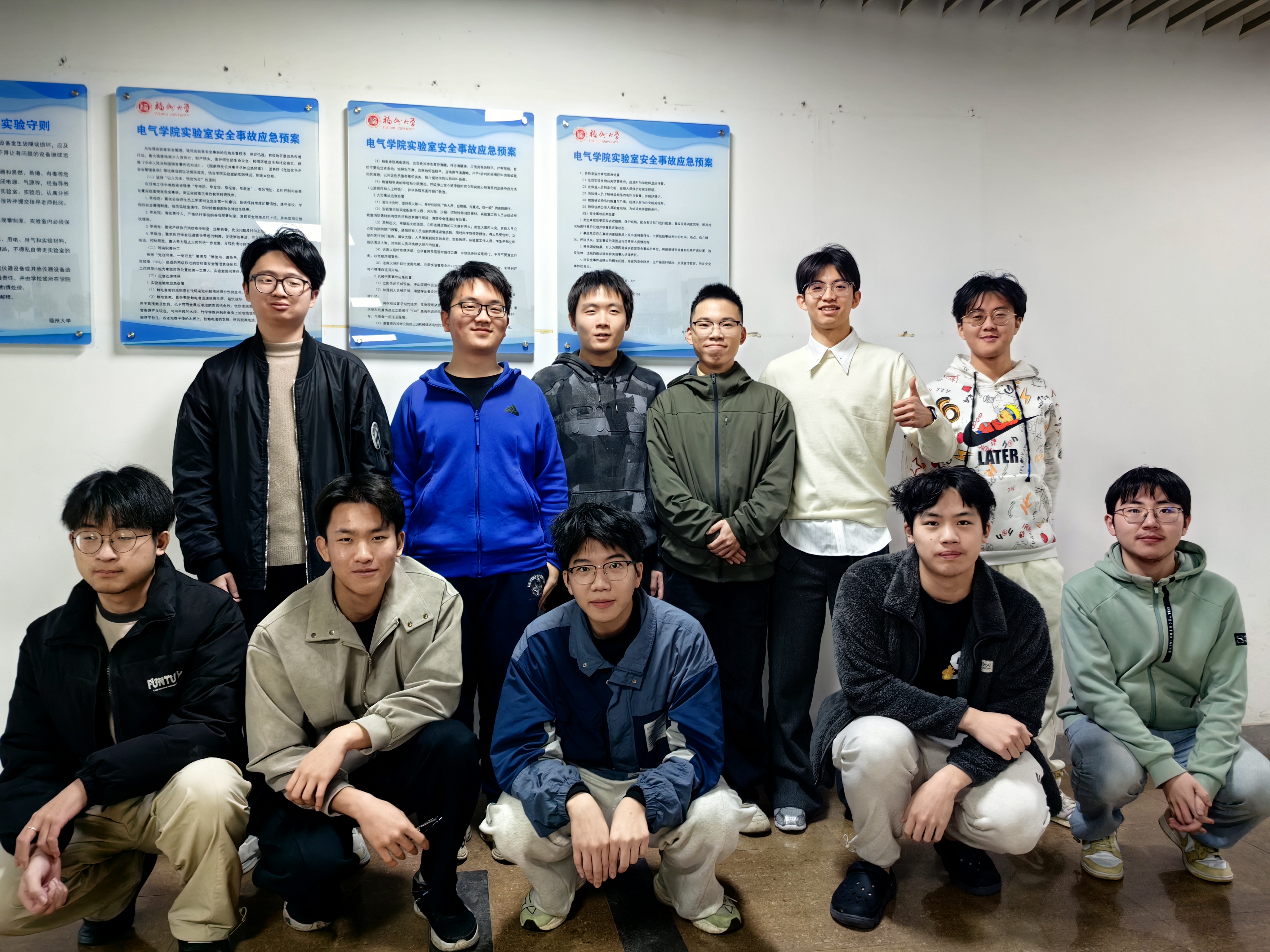
The Beta Sprint highlighted the importance of efficient teamwork and structured collaboration across all roles. Compared with the Alpha phase, the team demonstrated stronger cross-functional coordination and clearer responsibility boundaries.
Project management maintained continuous synchronization between UI design, backend development, and testing teams through regular reviews and progress checkpoints. UI designers closely collaborated with backend and test teams to ensure that interaction designs were both technically feasible and testable. Backend members actively participated in requirement clarification and testing discussions, reducing integration risks early in the sprint.
The testing team was involved throughout the sprint rather than only at the end, providing early feedback on requirement clarity, testability, and potential edge cases. This shift toward test-driven awareness helped minimize rework and improved delivery efficiency.
Overall, the Beta Sprint benefited from transparent communication, timely feedback loops, and a shared understanding of sprint goals. This collaborative approach ensured that improvements were implemented smoothly and that the system reached a higher level of stability and usability.
| Team/Role | Member(s) | Work Description | Contribution |
|---|---|---|---|
| Project Management | Jiayao Hu | Led requirement analysis, created the project schedule, coordinated between different teams, managed deliverables, and facilitated team meetings. | 10% |
| UI Design Team | Yuxiang Xie, Pengxiang Hu, Jianyuan Wu, Hongzhi He | Conducted user research, created wireframes, designed the high-fidelity interactive prototype in Figma, established the visual design system, and designed this project blog. | 31% (~7.75% each) |
| Backend Team | Hantao Wu, Zhihao Liu, Yitan Fang, Jiazhuo He, Shengpeng Yang, Chenhe Zhu | For this Prototype Phase: Defined the system architecture, created the data models and schemas for users, tasks, and grades, and specified the API endpoints required to support the frontend functionality. | 39% (~6.5% each) |
| Test Team | Feijie Zheng, Weixiang Zhou | Developed the test strategy, created test cases based on functional requirements, and conducted usability testing on the interactive prototype to identify UI/UX issues. | 20% (10% each) |
| Total | 13 Members | 100% |
Based on the outcomes of the Beta Sprint, the next development phase will focus on extending FocusFlow with an Admin Interface, enabling more efficient system management, monitoring, and configuration.
From a frontend perspective, the Admin Interface will prioritize clarity, efficiency, and role-based usability. Planned features include:
The frontend will continue to follow responsive design principles and reuse the existing design system to ensure visual consistency with the main user-facing application.
On the backend, future work will focus on:
Performance and security considerations will remain a priority, especially for operations involving sensitive user data.
The Beta Sprint marked a critical milestone for the FocusFlow project. Through iterative improvements, comprehensive testing, and effective teamwork, the system has evolved into a stable and user-ready product. The experience gained during this phase—particularly in user feedback integration, testability design, and cross-team collaboration—has laid a solid foundation for future expansion.
Moving forward, the team will build upon this foundation to develop the Admin Interface and further enhance system scalability, maintainability, and overall user experience.


